 Domain RegistrationFind and register the perfect domain for your website.
 .COM DomainChoose a widely recognized domain to build global credibility.
 Domain TransferSeamless domain transfers with zero downtime and complete control.
 All TLDsFind and register your perfect domain. Choose from local and global extensions.
 SSL CertificatesKeep your website safe with reliable SSL Certificates that protect customer data and build trust.
 whoisCheck domain ownership details, expiration dates, and registrar information.
 US DomainRegister a .US domain and build trust in the USA.
 Web HostingEverything your website needs to run smoothly
 WordPress HostingWordPress hosting that just works
 Windows HostingReliable hosting for Windows environments
 Reseller HostingTurn hosting into your business
 Email HostingEmail that looks professional and works anywhere
 cPanel HostingFull control of your hosting with cPanel
 Affiliate ProgramJoin as a partner and earn commissions on every referral you send our way.
 Vps HostingScalable virtual servers that expand as you need.
 Dedicated ServersGet complete access and full control over your dedicated physical server.
 Managed vpsNot tech-savvy? We will take care of everything with our fully managed VPS hosting for you.
 AI Website BuilderCreate stunning websites in seconds with AI.
 Online ShopSet up a professional online store. No coding required.
 Web design serviceGet a tailored website designed to match your brand and support your goals.
 BlogFind helpful guides on web hosting, online selling, digital marketing, and more.
 Contact USYou can reach us anytime, day or night, through chat or email.
 SupportBrowse helpful guides and answers for all of our services.
Got a domain name sitting in your account collecting dust?
Maybe you bought it thinking you’d start a business. Or you snagged a great name, and now someone wants to buy it. Either way, you’re looking at renewal fees piling up and wondering how to turn that domain into cash.
Here’s the problem.
When you try to sell your domain name, you run into confusion at every turn.
- You have no clue what your domain is worth
- Pricing feels like throwing darts blindfolded
- Dozens of marketplaces exist, and you don’t know which ones work
- Scammers and lowball offers flood your inbox
- The transfer process sounds scary and complicated
- You worry about getting paid before handing over your domain
Nearly 133 million domains are registered in the U.S. alone, and most owners have no idea how to sell their domain name properly.
This guide walks you through the exact process, step by step.
Here’s what you’ll learn:
- How to figure out what your domain is worth (using free tools)
- Where to list your domain to find real buyers
- How to price it right so it sells
- How to negotiate without getting ripped off
- How to transfer safely and get your money
By the end, you’ll know exactly how to sell your domain name from start to finish.
Let’s get started.
Step 1: Figure Out If Your Domain Is Worth Selling
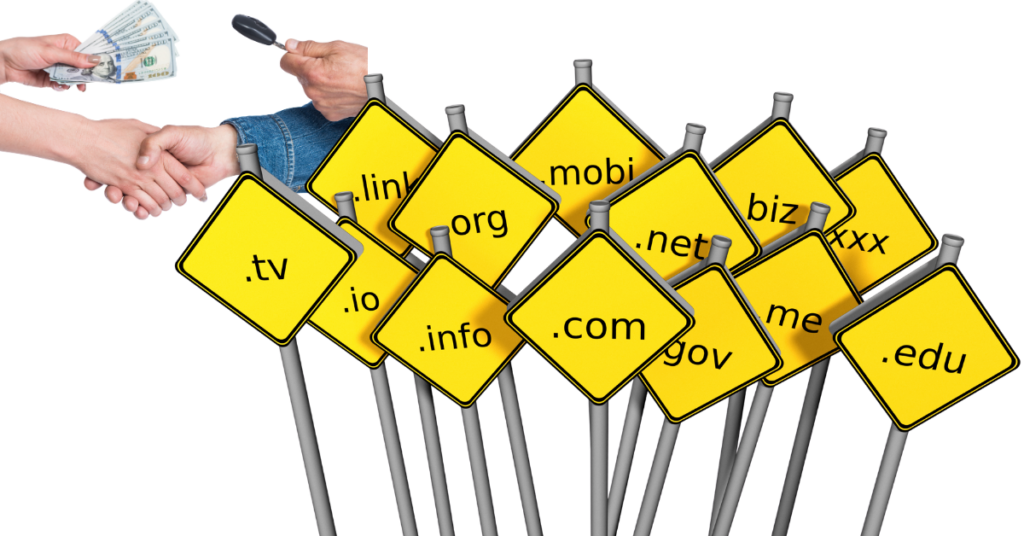
Before you do anything else, you need to know if your domain has real value.
Not every domain sells. In fact, most don’t. Quality matters way more than quantity when you sell your domain name.
What Makes a Domain Valuable?
a)Short domains sell better.
The fewer letters or words, the more valuable. Compare “BestCheapShoesOnlineStore.com” to “Shoes.com.” Which one would you rather own?
b) Keywords that people search for add value.
If your domain contains words people type into Google regularly, businesses want it.
c) The extension comes into play.
Everyone wants .com because that’s what people remember. Extensions like .ai are hot right now for AI companies. But .xyz or .biz? Much harder to sell.
d) Age helps.
Older domains with clean histories are more valuable than brand-new registrations.
e) Traffic and backlinks make a huge difference.
If your domain already gets visitors or has other websites linking to it, that’s gold.
Should You Sell?
Here are good reasons to sell your domain name.
You’re not using it and paying renewal fees for nothing.
You’re rebranding your business and don’t need the old domain anymore. Someone reached out offering to buy it. You bought it specifically to flip for profit.
Get this. Some domains fetch crazy prices.
Tesla.com reportedly sold for $11 million. The domain tp.com went for $1.2 million. Now, your domain won’t hit those numbers, but there’s definitely money to be made.
The domain aftermarket industry is projected to reach $1.17 billion by 2033. That means buyers are out there actively looking.
Step 2: Find Out What Your Domain Is Worth
This is where most people mess up. They either price way too high and nobody buys, or price too low and lose money.
Use Free Valuation Tools
Don’t guess. Use professional tools that analyze real sales data.
GoDaddy Domain Appraisals uses machine learning trained on over 20 years of actual sales from 82 million domains. Just type in your domain and get an instant estimate.
EstiBot appraises over 2 million domains daily. It’s fast and gives you a baseline number to work with.
HumbleWorth lets you check up to 2,000 domains at once if you own multiple.
DNRater uses AI to recommend a “Buy It Now” price based on market data.
These tools won’t give you the exact price, but they’ll put you in the right ballpark.
What Affects Your Domain’s Value?
Several factors determine how much buyers will pay:
Length: Shorter beats longer every single time. One-word domains are premium. Two-word domains are great. Three-plus words? Much less valuable.
Keywords: Domains with high-demand business keywords are worth more. Think “Insurance.com” or “Loans.com.”
Extension: .com is king. Everyone else is fighting for second place.
Age: Older domains with clean histories command higher prices.
SEO metrics: Traffic, backlinks, and domain authority add serious value.
Check What Similar Domains Sold For
Head over to NameBio or check recent sales on Sedo and Flippa. Look for domains similar to yours, same length, same type of keywords, same extension.
For example, if you own “BlueShoes.com,” search what other two-word shoe domains sold for recently. This gives you real market data, not just guesses.
Step 3: Set Your Price Strategy
Now that you know what your domain is worth, you need to decide how to sell your domain name.
Three Main Pricing Models
Fixed Price (Buy It Now): You set the price, and buyers can purchase immediately. This works great if you want a quick sale and know your domain’s value.
Auction Format: Let buyers bid against each other. The highest bid wins. This works well for premium domains where competition drives up the price.
Make Offer: Buyers submit offers, and you negotiate. This gives you flexibility and often leads to higher final prices.
Price It Right
Start about 20-30% above the valuation estimate. Why? Because buyers love to negotiate. If your domain is appraised at $1,000, list it at $1,200 or $1,300.
This leaves room to come down during negotiations while still getting your target price.
Don’t overprice based on emotion. Just because you love your domain doesn’t mean buyers will pay crazy money for it. Stick to market data.
Also, don’t underprice out of desperation. A domain worth $5,000 won’t sell faster at $500. It’ll just make buyers suspicious that something’s wrong with it.
Step 4: Pick the Right Marketplaces
This step matters more than you think. Where you list determines who sees your domain and how likely you are to sell your domain name.
Top Marketplaces for 2026
For Premium Domains
Sedo is one of the oldest and most trusted platforms out there. They have a massive inventory, strong brokerage services, and run auctions regularly. Great for serious buyers with money to spend.
Afternic connects to over 100 registrars automatically, putting your domain in front of millions of potential buyers. They offer premium support and have a solid reputation.
Dan.com makes everything fast with automated escrow and even offers installment payment options for buyers who can’t pay everything up front.
For Quick Sales
Flippa closed deals, including StockPhoto.com for $250,000. They offer enhanced listings that boost your visibility and attract buyers actively browsing.
GoDaddy Auctions reaches millions of users. If you want eyeballs on your listing, this is it.
Namecheap Marketplace keeps fees low and the process straightforward.
List on Multiple Platforms
Here’s a pro tip: don’t just list on one marketplace. Cross-post to several platforms unless you sign exclusive agreements.
More listings mean more visibility, meaning more potential buyers. More buyers mean better offers.
Just keep your pricing consistent across platforms. Nothing confuses buyers faster than seeing your domain listed at different prices in different places.
Step 5: Create a Listing That Sells
Your listing needs to convince buyers why your domain is worth the money.
What Every Good Listing Needs
A clear title: Just the domain name works fine. Don’t get fancy.
A detailed description: Explain why this domain is valuable. What keywords does it include? What industry would use it? Does it get traffic?
Use cases: Help buyers imagine using it. “Perfect for an e-commerce shoe store” or “Ideal for a marketing agency” paints a picture.
Data: Include traffic numbers if you have them. Mention backlinks. Show SEO metrics. Facts sell.
Professional presentation: Check your spelling. Use proper grammar. Look legit.
Make It Easy for Buyers
Respond to every inquiry quickly. Even lowball offers deserve a professional response.
Highlight what makes your domain unique. It may be aged, it has great SEO, and it’s a perfect match for a growing industry.
Include your contact information clearly. Make it easy for serious buyers to reach you.
If you want to go the extra mile, create a simple “For Sale” page on the actual domain with your contact info and key stats. This catches buyers who type your domain directly into their browser.
Step 6: Negotiate and Close the Deal
When offers start coming in, it’s negotiation time.
Handle Negotiations Like a Pro
First, respond fast. Buyers contact multiple sellers. If you take three days to reply, they’ve already moved on.
When someone makes an offer, justify your asking price with data. Point to comparable sales, keyword value, and traffic metrics.
Be willing to negotiate reasonably. Coming down 10-20% is normal. Coming down 50% means you priced it wrong from the start.
Understand what the buyer wants the domain for. This helps you position its value better. Selling to a small startup? A different conversation from selling to an established company.
Dealing with Lowball Offers
You’ll get offers that insult you. Someone offers $100 for your $5,000 domain. Don’t lose your cool.
Counter professionally with data backing up your price. Explain the domain’s value clearly. Stay polite but firm.
Know your absolute bottom line before negotiations start. Once offers dip below that number, walk away politely.
Always Use Escrow Services
This is non-negotiable when you sell your domain name.
Escrow.com is the heavyweight champion here. They’ve completed over a billion dollars in domain transactions. The government licenses them, and they’ve been the industry leader for six years running.
Here’s how it works.
Escrow holds the buyer’s money safely while you transfer the domain. Once the buyer confirms they received the domain, Escrow releases your payment.
For a $2,000 transaction, Escrow.com charges between $65 and $126. That small fee protects both of you from scams.
Never, ever transfer your domain before receiving payment. And never send money before receiving a domain. Escrow protects everyone.
Step 7: Transfer the Domain Securely
You’ve agreed on a price, the buyer paid into escrow, and now it’s time to transfer ownership.
Two Ways to Transfer
Account Transfer (Push): If the buyer uses the same registrar, you can push the domain directly to their account. This happens almost instantly.
Authorization Code Transfer (EPP): If the buyer uses a different registrar, you’ll need to provide an authorization code. This takes longer, but it’s still secure.
Before You Transfer
Make sure you’ve done these things:
Unlock your domain: Most registrars lock domains by default to prevent unauthorized transfers. You need to turn this lock off.
Cancel private registration: If you’re hiding your contact info with privacy protection, turn that off for the transfer.
Verify your contact information: Make sure your email address in the domain settings is current and working.
Check eligibility: Domains must be at least 60 days old from registration to transfer between registrars. Newly registered domains can only do account pushes at the same registrar.
Get your authorization code: Your registrar provides this. You’ll give it to the buyer to initiate the transfer.
The Complete Transfer Process
Here’s exactly how it goes when you sell your domain name.
- You and the buyer agree on terms and register with Escrow.com
- Buyer submits payment to Escrow
- Escrow verifies the payment and tells you to start the transfer
- You initiate the domain transfer to the buyer’s account
- Buyer confirms they received the domain and have complete control
- Escrow releases your money
The whole process takes anywhere from minutes (for account pushes) to 5-7 days (for transfers between registrars).
Protect Yourself During Transfer
Document everything. Take screenshots of each step. Some sellers even record a video of the transfer process.
Use the buyer’s contact information in the WHOIS records when transferring. This proves they received it.
Keep all email communication. If anything goes wrong, you have proof of what happened.
Follow up until the buyer confirms everything works perfectly. Don’t consider it done until they say so.
Bonus Tips to Sell Your Domain Name Faster
Want to maximize your chances? Here are extra strategies.
Market Your Domain Actively

Don’t just list and wait. Reach out to companies that might want your domain directly.
Use LinkedIn to find marketing directors or business owners in relevant industries. Send polite, professional messages explaining why your domain fits their business.
Share your listing on social media. You never know who’s looking.
Join domain investor forums and communities. Network with other domainers who might have buyers.
Timing Matters
Market trends affect domain values. The .ai extension exploded in value because AI became huge. Keep an eye on industry growth and trends.
Economic conditions impact buying. During recessions, fewer people buy premium domains. During boom times, budgets are looser.
Your personal situation matters too. If you need money fast, you might accept lower offers. If you can wait patiently for the right buyer, you can hold out for top dollar.
When to Hire a Broker
For high-value domains worth five or six figures, consider professional brokers.
Domain brokers have been instrumental in deals totaling over $125 million. They have connections, negotiation skills, and industry knowledge you probably don’t.
Brokers also handle confidential negotiations, which matters for premium sales. They market your domain professionally to qualified buyers.
Expect to pay 10-20% commission, but for six-figure deals, that expertise pays for itself.
Common Mistakes That Kill Domain Sales
Avoid these errors when you sell your domain name.
Pricing Disasters
Overpricing based on personal attachment is the number one killer. Your domain might mean everything to you, but buyers only care about market value.
Ignoring comparable sales data leads to unrealistic expectations. Do your homework.
Pricing too low signals something’s wrong. Buyers get suspicious of domains listed way below market value.
Marketplace Mistakes
Listing on only one platform limits your visibility drastically. Use multiple marketplaces.
Writing lazy, vague descriptions doesn’t convince anyone to buy. Put in the effort.
Being unresponsive to inquiries wastes opportunities. Buyers move fast, and so should you.
Skipping escrow services opens you up to scams. Never skip this protection.
Transfer Mistakes
Not unlocking your domain properly delays everything and frustrates buyers.
Rushing without documentation leaves you vulnerable if disputes arise.
Poor communication during transfer creates confusion and mistrust.
Not verifying transfer completion can lead to problems later. Always confirm the buyer has full control before considering the sale complete.
Your Action Plan to Sell Your Domain Name
Let’s recap the seven steps:
- Evaluate your domain: Make sure it has real selling potential
- Get it valued: Use professional tools and comparable sales data
- Set your price: Choose a fixed price, auction, or make an offer strategy
- List it everywhere: Use multiple reputable marketplaces for maximum visibility
- Create great listings: Write compelling descriptions with solid data
- Negotiate confidently: Always use escrow protection
- Transfer securely: Document everything and confirm completion
Here’s what you need to remember:
Quality domains take time to sell. Don’t panic if it doesn’t happen overnight. The right buyer will come along.
Documentation protects you at every stage. Screenshot everything, save all emails, and keep records.
Escrow services are mandatory, not optional. They’re your protection against scams.
A professional presentation increases your sale price. Take this seriously.
Multiple listings give you way better odds. Don’t put all your eggs in one marketplace basket.
Ready to turn that domain into cash?
Start with valuation, list strategically on multiple platforms, and use trusted escrow for secure transfer. Thousands of domain sales happen every day. Yours could be next.
Now go sell your domain name and get paid.
How to Sell Your Domain Name FAQs
It varies wildly. Some domains sell within days if they’re hot and priced right. Others sit for months or even years. Premium domains with realistic pricing typically sell faster than overpriced ones. Patience pays off.
Not for most sales. You can handle everything yourself using marketplaces and escrow services. But for high-value domains worth $50,000+, brokers earn their commission through professional marketing and negotiation skills.
Always use escrow services like Escrow.com. Never transfer your domain before getting paid, and never accept payment outside of escrow. This protects both you and the buyer from scams.
Marketplace listing fees range from free to about $99. Escrow typically charges 3-5% of the sale price or a flat fee. Some platforms take 10-20% success fees. Factor these costs into your pricing.
Yes, but there’s a catch. Domains must be 60+ days old to transfer between different registrars. If your buyer uses the same registrar as you, you can push it immediately through an account transfer.
Don’t take it personally. Counter with your price and explain the domain’s value using real data. Stay professional. Many lowball offers turn into real sales after negotiation.
Use multiple marketplaces, Sedo, Afternic, Flippa, GoDaddy Auctions, and Dan.com all work great. More listings mean more potential buyers seeing your domain.