 Domain RegistrationFind and register the perfect domain for your website.
 .COM DomainChoose a widely recognized domain to build global credibility.
 Domain TransferSeamless domain transfers with zero downtime and complete control.
 All TLDsFind and register your perfect domain. Choose from local and global extensions.
 SSL CertificatesKeep your website safe with reliable SSL Certificates that protect customer data and build trust.
 whoisCheck domain ownership details, expiration dates, and registrar information.
 US DomainRegister a .US domain and build trust in the USA.
 Web HostingEverything your website needs to run smoothly
 WordPress HostingWordPress hosting that just works
 Windows HostingReliable hosting for Windows environments
 Reseller HostingTurn hosting into your business
 Email HostingEmail that looks professional and works anywhere
 cPanel HostingFull control of your hosting with cPanel
 Affiliate ProgramJoin as a partner and earn commissions on every referral you send our way.
 Vps HostingScalable virtual servers that expand as you need.
 Dedicated ServersGet complete access and full control over your dedicated physical server.
 Managed vpsNot tech-savvy? We will take care of everything with our fully managed VPS hosting for you.
 AI Website BuilderCreate stunning websites in seconds with AI.
 Online ShopSet up a professional online store. No coding required.
 Web design serviceGet a tailored website designed to match your brand and support your goals.
 BlogFind helpful guides on web hosting, online selling, digital marketing, and more.
 Contact USYou can reach us anytime, day or night, through chat or email.
 SupportBrowse helpful guides and answers for all of our services.

Starting a reseller hosting business is the easy part.
Finding people who’ll actually pay for hosting is the real challenge.
So where to market your reseller hosting business is the question worth spending time on.
The best prospects are usually people who already need websites.
That includes businesses that want to get online, web designers who manage client sites, freelancers building websites and agencies hunting for a hosting partner.
They already have the problem you solve.
This article skips how reseller hosting works.
It focuses on where to find these buyers and how to reach them.
You’ll get eleven channels, a short process for turning prospects into paying customers.
Pick two or three channels to start. Trying everything at once usually means doing everything badly.
Where to Market Your Reseller Hosting Business
1) Web Design and Development Agencies

Agencies are the most direct target. They already build websites for clients, and those websites need hosting.
Many agencies would happily hand that job to someone reliable.
Start by finding small web design agencies, freelance developers and website maintenance companies.
Look for ones that build sites but don’t advertise their own hosting. That gap is your opening.
Then make a simple offer. You handle hosting, and they focus on website projects.
Where it makes commercial sense, propose a referral arrangement or wholesale pricing.
One more thing. Make it easy for the agency to move new clients onto your service.
If onboarding takes three emails and a phone call, they won’t bother. A short checklist or a quick setup call can win the deal.
2) Freelance Web Designers and Developers
Freelancers who create WordPress sites, business websites and online stores often need a hosting provider for several clients.
Most don’t want to manage server infrastructure themselves. They’d rather build sites and move on.
You can find them on freelance marketplaces, in professional communities, on LinkedIn and through local developer networks.
Look at who’s posting work or answering questions in those spaces.
When you reach out, be clear about the offer. Hosting for their client websites.
Straightforward account management. A single point of contact when something goes wrong.
That last part is bigger than it sounds. A freelancer’s reputation takes the hit when a client’s site goes down.
Someone who answers fast and fixes things is worth a lot to them.
3) Small Businesses Without Websites or With Outdated Websites
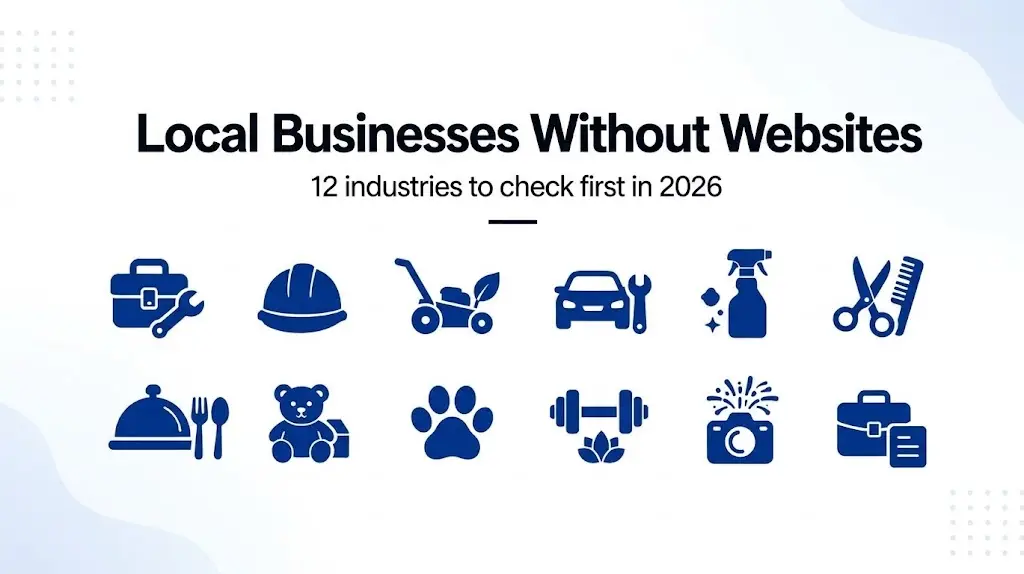
Think local service businesses, consultants, restaurants, salons, tradespeople, retailers and other small firms.
Plenty of them either have no website or run an old one that barely works.
You can find them through business directories, Google Maps, local business associations and in-person networking.
Look for businesses that already advertise their services but have no site, an outdated site or no clear business email.
When you reach out, lead with the business need. That might be getting a website online or hosting an existing one.
Talk about what it does for them, like being found by customers.
Avoid sending the same generic bulk message to every business you find. It reads like spam and gets ignored.
A short note that mentions their actual business gets a far better response.
4) Digital Marketing and SEO Agencies
Agencies that manage SEO, paid advertising and content marketing often work with businesses that need their websites to stay online and perform well.
They already care about site speed and uptime.
So offer hosting as an extra service they can provide to clients. It gives them another thing to sell and another reason for clients to stay.
Focus on agencies that already manage website changes or technical SEO. They’re closer to the hosting side of things.
Be upfront about the details. Spell out how support responsibilities, billing and client ownership would work.
Who talks to the client when the site is slow? Who sends the invoice? Who owns the account? Settle this early and the partnership runs smoothly.
5) LinkedIn
LinkedIn is a strong place to reach agency owners, web developers, IT consultants and small business decision-makers.
Here’s how to use it well.
- Search by job title and company type.
- Connect with people who build or manage websites.
- Share useful hosting advice and explain your service clearly.
- Send personalized outreach based on the prospect’s actual business.
- Use conversations to spot potential partnerships instead of pushing a sales pitch right away.
The last point is the one people skip. A cold pitch in the first message rarely works.
A helpful chat often turns into a partnership a few weeks later.
Post regularly too.
Short tips on domains, site speed or backups show you know your stuff, and people remember that when they need hosting.
6) Facebook Groups and Online Business Communities
Facebook groups and similar communities are full of business owners, developers, freelancers and entrepreneurs swapping advice.
Many of them have hosting questions.
Find relevant groups, then be useful. Answer questions. Share information when promotion is allowed.
Good contributions include explaining how to set up a domain, helping someone diagnose a hosting problem or sharing a website launch guide.
Do this consistently and people start to recognize you. When they need hosting, you’re the helpful person they remember.
One warning. Don’t spam group members with repeated promotional posts. It gets you muted or removed fast.
Read each group’s rules and follow them. Some groups ban promotion completely, and that’s fine. Just be helpful and let people find you.
7) Freelance Marketplaces
Platforms such as Upwork and Fiverr are where businesses hire people to build and maintain websites. That makes them a good spot to look for demand.
The opportunity isn’t only selling hosting to buyers on the platform.
You can also connect with freelancers who build sites again and again. They may need a hosting partner for their future projects.
If your skills allow it, offer a combined website setup and hosting service. A buyer who wants a site online gets both in one package.
If you’d rather not build sites, partner with freelancers who provide the development work and handle the hosting side.
Check each platform’s rules before you promote anything. Some limit how you can contact people or move conversations off the platform.
8) Search Engines and Your Own Website

Some people are already searching for hosting. Your own website can meet them there.
- Create pages for the hosting packages and audiences you serve.
- Publish helpful guides on hosting, domains, WordPress and business email.
- Target specific customer needs, not just broad phrases like web hosting.
- Make pricing, features, support arrangements and contact details easy to find.
- Track inquiries and paid signups to see which pages attract customers.
Specific beats broad here. “Web hosting for photographers” is easier to win than “web hosting.” It also draws people who are closer to buying.
Be patient. SEO takes time, and rankings are never guaranteed. Think of it as a slow build that pays off later.
9) Google Ads and Paid Social Advertising
Paid ads can work when you have a clear offer, a defined audience and a way to measure sales.
Without those, you’re mostly paying for clicks.
Here’s where each option fits:
- Search ads: Good for high-intent hosting searches, where people are ready to buy.
- LinkedIn ads: Useful for agency or business audiences, where the economics make sense. They can cost more per click.
- Facebook and Instagram ads: Handy for local businesses or website setup packages.
Send clicks to a landing page that matches the ad. If the ad promises reseller hosting for agencies, the page should say exactly that.
Track qualified inquiries, customer acquisition cost and paid conversions. Start with a small test budget.
If a campaign brings clicks but no qualified leads or sales, pause it and try something else.
10) Business Networking and Local Events
Meetups, startup events, trade associations, coworking spaces and professional networking groups all put you in the same room as potential customers.
Introduce your hosting business to website designers, consultants and business owners.
Some will become customers. Others will become referral partners who send people your way.
Aim for the people who repeatedly meet businesses that need websites.
A designer, an accountant or a business consultant might hear about a new website need every month.
Don’t just collect business cards. Have a follow-up plan.
Send a short message within a few days, remind them where you met and offer something useful.
Contacts you never follow up with are just paper.
11) Existing Customers and Referral Partners
Happy customers are one of the best sources of new customers.
People trust a recommendation from someone they know.
- Ask clients to refer businesses that need hosting.
- Create a referral offer with clear terms.
- Partner with designers and consultants who serve the same audience.
- Follow up with existing clients when they need extra hosting accounts or related services.
- Track referrals and pay any rewards according to the agreed terms.
That last step builds trust. If you promise a reward, pay it on time and keep records. Referral partners who feel treated fairly keep sending business.
Check in with existing clients now and then, too. A client with one site today may need three next year.
How to Turn a Prospect Into a Reseller Hosting Customer
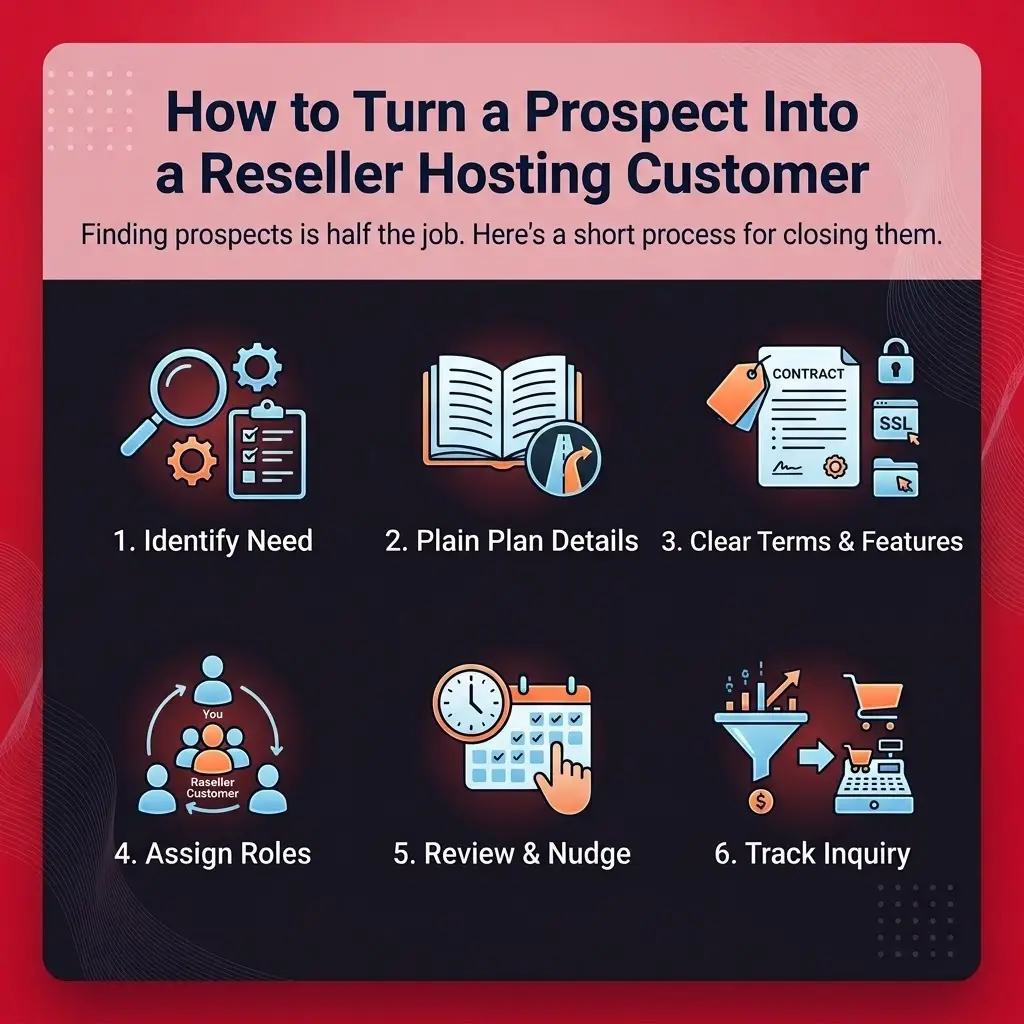
Finding prospects is half the job. Here’s a short process for closing them.
- Identify the prospect’s actual hosting need. Ask what kind of site they run and what’s frustrating them.
- Explain the plan and its limits in plain language. Skip the jargon. Say what’s included and what isn’t.
- Show the price, renewal terms and included features. No surprises later.
- Explain who handles billing, migration and technical support. Clear roles prevent arguments.
- Follow up after they’ve had time to review the offer. A polite nudge a few days later works well.
- Track the inquiry through to a paid account. That’s how you learn which channels earn their keep.
Start Building Your Reseller Hosting Business With Truehost
Here’s the main point. Where to market your reseller hosting depends on who you want to sell to.
Start with web designers, agencies and businesses that already need website services. Then test channels like LinkedIn, SEO, communities and paid ads.
Track paying customers, not just messages sent or clicks received.
Put more effort into the channels that bring in profitable, repeat business, and drop the ones that don’t.
If you want to sell hosting under your own brand, Truehost offers reseller hosting for exactly that.
Before you sign up, review the current plan features, pricing, account-management tools and support arrangements.
Make sure they fit the customers you plan to serve.
Explore Truehost reseller hosting and choose a plan that fits the customers you want to serve.