 Domain RegistrationFind and register the perfect domain for your website.
 .COM DomainChoose a widely recognized domain to build global credibility.
 Domain TransferSeamless domain transfers with zero downtime and complete control.
 All TLDsFind and register your perfect domain. Choose from local and global extensions.
 SSL CertificatesKeep your website safe with reliable SSL Certificates that protect customer data and build trust.
 whoisCheck domain ownership details, expiration dates, and registrar information.
 US DomainRegister a .US domain and build trust in the USA.
 Web HostingEverything your website needs to run smoothly
 WordPress HostingWordPress hosting that just works
 Windows HostingReliable hosting for Windows environments
 Reseller HostingTurn hosting into your business
 Email HostingEmail that looks professional and works anywhere
 cPanel HostingFull control of your hosting with cPanel
 Affiliate ProgramJoin as a partner and earn commissions on every referral you send our way.
 Vps HostingScalable virtual servers that expand as you need.
 Dedicated ServersGet complete access and full control over your dedicated physical server.
 Managed vpsNot tech-savvy? We will take care of everything with our fully managed VPS hosting for you.
 AI Website BuilderCreate stunning websites in seconds with AI.
 Online ShopSet up a professional online store. No coding required.
 Web design serviceGet a tailored website designed to match your brand and support your goals.
 BlogFind helpful guides on web hosting, online selling, digital marketing, and more.
 Contact USYou can reach us anytime, day or night, through chat or email.
 SupportBrowse helpful guides and answers for all of our services.
Your personal brand is simply how people see you, both online and off. It’s the impression that forms the moment someone Googles your name, reads your LinkedIn bio, or hears you speak on a podcast.
Personal branding used to sound like something reserved for celebrities and influencers. That’s changed. Freelancers, consultants, job seekers, and business owners now build personal brands to win trust, land opportunities, and stand out in crowded fields, and the barrier to entry has never been lower.
Here’s the reassuring part: you don’t need a huge following or a viral moment to pull this off. You need a clear plan and the willingness to show up consistently, even when it doesn’t feel like anyone’s watching yet. This article walks you through how to build a personal brand, step by step, from defining who you are to growing a presence people actually remember.
Ready to claim your name online right now? Search and register your domain with Truehost in minutes, then keep reading for the full roadmap to turn that domain into a brand people trust.

Why Building a Personal Brand Matters
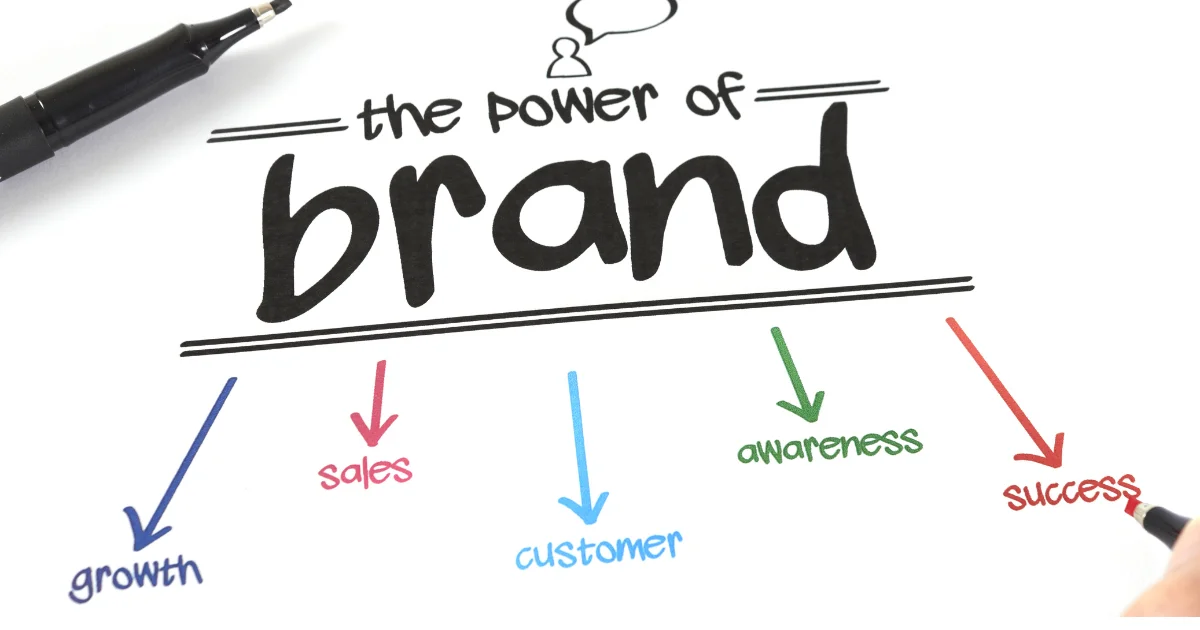
A strong personal brand pays off in ways that compound over time. It’s not about vanity metrics or chasing attention; it’s about building an asset that keeps working for you long after any single post or project ends.
- Builds trust and credibility. People do business with people they recognize and trust.
- Helps you stand out. In a crowded market, your name becomes the differentiator.
- Attracts career opportunities. Recruiters and hiring managers often look you up before they ever call.
- Wins more clients. A recognizable brand shortens the trust-building process with new leads.
- Grows your business. Your name becomes an asset that markets for you, even while you sleep.
- Expands your network. People remember and refer people they know something about.
- Creates multiple income streams. Speaking, consulting, courses, and partnerships often follow a strong brand.
- Puts you in control of your reputation. If you don’t shape your online presence, search results will do it for you.
Consider two freelance designers with identical skills. One has a polished website, a handful of published case studies, and a LinkedIn presence that shows their thinking. The other has none of that. When a potential client is deciding who to trust with a project, the first designer wins almost every time, not because their work is better, but because their brand made the decision feel safer.
What You Need Before Building Your Personal Brand
A few things to have in place before you start building anything public-facing:
- Clear personal and professional goals
- A defined niche
- A target audience
- A professional website
- A custom domain name
- A professional email address
- Social media profiles
- A content strategy
Step-by-Step Guide to Build a Personal Brand
Step 1: Define Your Personal Brand

Start by getting honest about what you actually bring to the table.
- Identify your strengths and areas of real expertise, not just what sounds impressive.
- Define your mission and the values that guide your work.
- Figure out what makes you different from others in your field.
- Set both short-term goals (next 90 days) and long-term goals (next 3 years).
A marketing consultant who’s spent a decade in SaaS companies has a different story to tell than one fresh out of an agency job. Neither is wrong, but each should lean into what’s actually true about their path.
Step 2: Identify Your Target Audience
You can’t build a brand that resonates with everyone, so stop trying.
- Define exactly who you want to reach, by role, industry, or life stage.
- Understand the specific challenges that audience deals with day to day.
- Find out where they actually spend time online, not where you assume they do.
- Build a simple audience persona: name, role, biggest frustration, and what they’re searching for.
If you’re a career coach targeting mid-level managers, your content and tone will look nothing like a coach targeting recent college grads. Get specific here, since it shapes everything downstream.
Step 3: Choose Your Personal Brand Niche

A focused niche beats a broad one almost every time.
- Pick a specific angle within your field instead of trying to cover everything.
- Research competitors already active in that space to see what’s working.
- Validate that real demand exists before committing fully.
- Position yourself as the go-to person for that specific problem, not a generalist.
“Marketing consultant” is vague. “Email marketing consultant for DTC skincare brands” tells a potential client exactly why they should reach out to you specifically.
Step 4: Build Your Brand Identity
Consistency here is what makes your brand feel real instead of thrown together.
- Choose a brand name, whether that’s your own name or a business name.
- Write a short, memorable tagline that captures what you do.
- Design a simple logo, even a clean text-based one works.
- Pick 2–3 brand colors and stick with them everywhere.
- Choose typography that matches your tone, whether that’s polished or playful.
- Define your brand voice: formal, conversational, bold, warm, whatever fits you.
- Apply all of this consistently across your website, social profiles, and content.
Consistency doesn’t mean rigid or boring. It means someone should be able to recognize your content in their feed before they even read your name, just from the colors, tone, and visual style you’ve settled on.
Step 5: Register Your Domain Name
Your domain is your permanent home base online, so treat it like one.
- Choose a memorable domain name, ideally your own name or a close variation.
- Select the best extension for your goals, usually
.comfor maximum trust. - Register your domain with Truehost.
- Enable WHOIS privacy to keep your personal details off public records.
- Consider registering a few additional extensions to protect your name from being taken elsewhere.
Step 6: Build Your Personal Website
Social media profiles come and go. Your website is the one piece of digital real estate you fully own.
- Choose reliable web hosting that keeps your site fast and available.
- Write an About page that tells your story, not [email protected] your resume.
- Build a portfolio showcasing your best work or results.
- Add testimonials from clients, colleagues, or past employers.
- Create a simple Contact page that makes it easy to reach you.
- Optimize everything for mobile, since most visitors will land on their phone.
- Keep load times fast and navigation simple.
Truehost Web Hosting is a solid choice here, built for speed and reliability without requiring technical know-how to manage.
Your website doesn’t need to be flashy to work. It needs to load quickly, clearly explain who you are and what you do, and make it easy for the right people to reach out. Everything else is secondary. A valid SSL certificate also matters here, since browsers flag unsecured sites and that’s the last impression you want to make on a potential client.
Step 7: Create Professional Email
A Gmail address doesn’t hurt you at 22. It starts to hurt you once you’re pitching clients or interviewing for senior roles.
- A custom email address like
[email protected]signals credibility instantly. - It reinforces your brand every time someone sees it in their inbox.
- It makes your communication feel more polished and intentional.
- It builds trust faster with clients, employers, and collaborators who notice these details.
Think about the last time you got a pitch from someone using a free email address versus one from their own domain. The second one just reads as more established, even if the actual message is identical.
Step 8: Optimize Your Social Media Profiles
You don’t need to be everywhere. You need to be intentional wherever you show up.
- LinkedIn: Ideal for professionals, consultants, and B2B audiences. A custom profile URL makes you easier to find and share.
- Facebook: Useful for community-building and local audiences.
- Instagram: Strong for visual storytelling and personal connection.
- X (Twitter): Good for thought leadership and real-time engagement.
- TikTok: Powerful for reach, especially with younger or trend-driven audiences.
- YouTube: Best for in-depth content and long-term searchable authority.
Across every platform you choose, keep your branding consistent: the same photo, a clear bio that says who you help and how, a link to your website, and content that actually reflects your niche.
Step 9: Create Valuable Content
Content is how strangers become familiar with your name before they ever talk to you.
- Blog posts build long-term SEO value and demonstrate depth.
- Videos build connection faster than almost any other format.
- Podcasts work well for detailed, conversational expertise.
- Social media posts keep you visible in people’s daily feeds.
- Email newsletters turn casual followers into a real, owned audience.
- Case studies prove your results instead of just claiming them.
Build a simple content calendar, publish consistently even if it’s just once a week, and repurpose one solid piece of content across multiple formats instead of starting from scratch every time.
A single well-researched blog post can become a LinkedIn carousel, three social captions, a newsletter section, and a short video script. You did the thinking once; let it work across every channel your audience actually uses.
Step 10: Network and Build Relationships
A personal brand isn’t a broadcast channel. It’s a relationship engine.
- Reply to comments and messages instead of just posting and disappearing.
- Join online communities where your audience already gathers.
- Show up at networking events, virtual or in person.
- Collaborate with other professionals in adjacent niches.
- Ask happy clients or colleagues for testimonials and recommendations directly.
Most opportunities don’t come from strangers stumbling onto your website. They come from people you’ve already had a real conversation with, who thought of you when the right moment came up.
Step 11: Grow Your Online Visibility

Once the foundation is set, these strategies compound your reach over time.
- SEO helps people find you through search instead of just social feeds.
- Guest blogging puts your name in front of someone else’s established audience.
- Podcast interviews lend you credibility through association.
- Public speaking builds authority quickly, even at small local events.
- Digital PR gets your name into press coverage and industry roundups.
- Email marketing keeps your audience engaged between the big visibility wins.
Used together, these strategies reinforce each other. A podcast interview drives traffic to your website, your website captures emails, and your newsletter keeps that audience warm long after the episode airs.
Step 12: Monitor and Improve Your Personal Brand
Building a brand isn’t a one-time project. Treat it like something you tend to.
- Track website traffic to see what’s actually resonating.
- Watch your search rankings for your name and key topics.
- Monitor social media engagement, not just follower counts.
- Keep an eye on email subscriber growth.
- Update your portfolio regularly with new work and results.
- Ask your audience directly what’s working and what isn’t.
Review your strategy every few months and adjust based on what the data actually shows you, not just what feels exciting.
Social Media Platforms for Personal Branding
| Platform | Best For | Content Format | Ideal Audience |
|---|---|---|---|
| Professionals, consultants, B2B | Articles, posts, updates | Career-focused, business audiences | |
| Community building | Posts, groups, live video | Broad, local, older demographics | |
| Visual storytelling | Photos, reels, stories | Consumer brands, creatives | |
| X (Twitter) | Thought leadership | Short-form text, threads | Industry peers, media, tech |
| TikTok | Reach and discovery | Short-form video | Younger, trend-driven audiences |
| YouTube | Long-term authority | Long-form video | Search-driven, in-depth learners |
Common Mistakes to Avoid
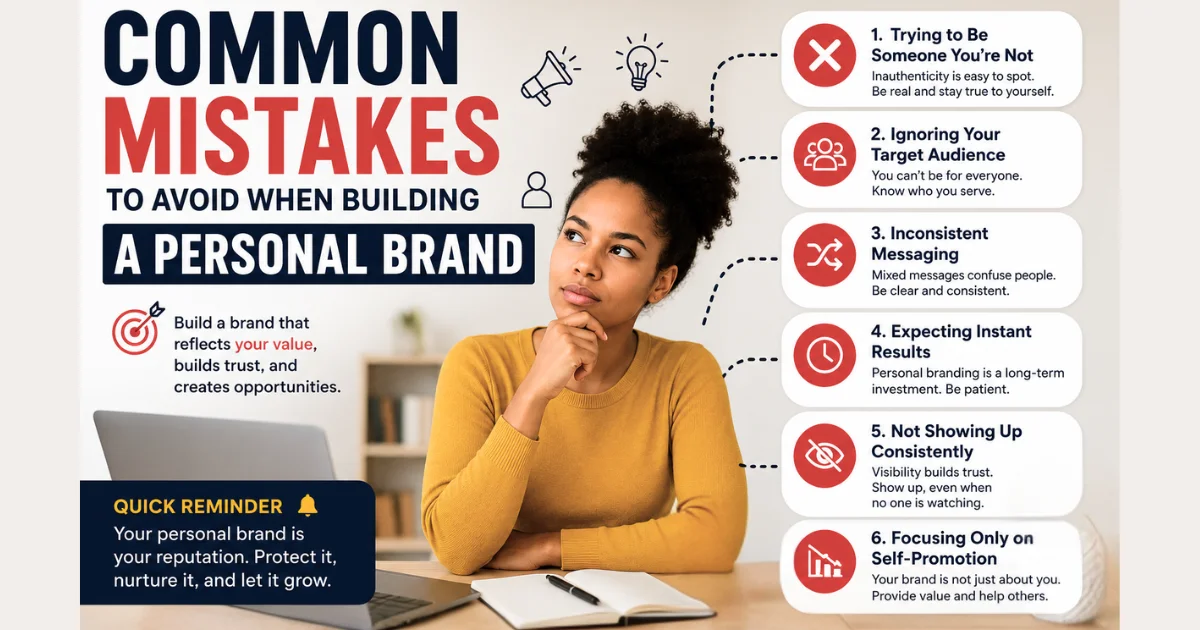
- Trying to appeal to everyone. A brand for everyone resonates with no one. Get specific, even if it feels like you’re narrowing your options.
- Being inconsistent across platforms. Mismatched branding makes you harder to recognize and trust. A different photo, tone, or bio on every platform forces people to work harder to figure out who you are.
- Copying competitors. Borrowed positioning rarely feels authentic, and audiences can usually tell. What worked for someone else’s story won’t necessarily land the same way in yours.
- Ignoring your website. Social platforms can change their rules overnight; your website is yours. Treat it as your home base, not an afterthought.
- Publishing without a strategy. Random content rarely compounds into anything meaningful. A loose plan beats no plan every time.
- Neglecting SEO. Without it, people can’t find you outside your existing followers. That means every new opportunity depends entirely on people already knowing your name.
- Focusing only on follower count. A smaller, engaged audience often outperforms a larger passive one, especially when it comes to actual business results.
- Expecting overnight success. Real personal brands are usually built over months, not days. Give the process the time it actually needs before judging whether it’s working.
Best Tools for Building a Personal Brand
- Website builders: WordPress, Wix, Squarespace, for launching your site quickly.
- Graphic design tools: Canva, Adobe Express, for creating consistent visuals without a designer.
- Social media scheduling tools: Buffer, Later, for staying consistent without daily manual posting.
- Email marketing platforms: Mailchimp, ConvertKit, for building and nurturing your list.
- SEO tools: Google Search Console, Ubersuggest, for tracking and improving your visibility.
- Analytics tools: Google Analytics, for understanding what’s actually working.
How Long Does It Take to Build a Personal Brand?
There’s no universal timeline, but a few factors shape how fast you’ll see traction.
- Consistency matters more than any single viral post or perfect piece of content.
- Niche clarity speeds things up; vague positioning slows everything down.
- Starting audience size affects early momentum, but isn’t a requirement to begin.
- Content quality and frequency compound over months, not days.
Most people see meaningful traction after 6 to 12 months of consistent effort. Set realistic expectations, track your progress against your own baseline, and remember that consistency beats speed almost every time in this game.
It helps to think of your personal brand less like a launch and more like compound interest. The first few months rarely feel like much is happening. Then, somewhere around month six or eight, the content you’ve published, the relationships you’ve built, and the search visibility you’ve earned all start reinforcing each other, and growth stops feeling linear.
Personal Branding Checklist
- Define your strengths, values, and unique positioning
- Identify your target audience and their biggest challenges
- Choose a focused niche
- Build a consistent brand identity (name, colors, voice)
- Register your domain name
- Launch a professional website
- Set up a custom professional email address
- Optimize your key social media profiles
- Create and publish valuable content consistently
- Network and build genuine relationships
- Grow visibility through SEO, PR, and guest appearances
- Monitor performance and refine your strategy regularly
FAQs
Can I build a personal brand without a website?
You can start with social media alone, but a website gives you a permanent, owned space that isn’t subject to platform algorithm changes. It also gives you a single place to send people, whether that’s a recruiter, a client, or a journalist looking to feature you.
How often should I post content to grow my personal brand?
Consistency matters more than volume. Once or twice a week, done reliably, beats daily posting that fizzles out after a month. Pick a frequency you can sustain for a full year, not just a few enthusiastic weeks.
Should I use my own name or a business name for my personal brand?
If you’re the face of your expertise, your own name usually works best. A business name makes more sense if you plan to eventually build a team around the brand, since it separates the company’s identity from your own.
Which social media platform is best for personal branding?
It depends on your audience. LinkedIn suits professionals and consultants, while Instagram or TikTok may work better for creators and consumer-facing brands. Go where your specific audience already spends their time, not where everyone else in your industry happens to be.
How do I make money from my personal brand?
Common paths include consulting, coaching, speaking, courses, affiliate partnerships, and brand collaborations, often layered together over time. Most people don’t rely on just one income stream once their brand matures.
Can I build a personal brand while working a full-time job?
Yes. Many successful personal brands start as a side project, built consistently in the evenings and weekends before ever becoming a full-time focus. Starting small and staying consistent matters far more than how many hours you can dedicate on day one.
Ready to Build Your Personal Brand?
A strong personal brand doesn’t happen by accident. It’s built one deliberate step at a time: defining who you are, understanding who you’re for, and showing up consistently across a website and platforms that actually reflect that.
The technical side doesn’t have to slow you down. Truehost makes it simple to register your domain name, launch a fast and secure website, set up professional email, and host everything reliably as your brand grows.
Ready to take the first step? Build your personal brand with Truehost and give your name a home online that works as hard as you do.