 Domain RegistrationFind and register the perfect domain for your website.
 .COM DomainChoose a widely recognized domain to build global credibility.
 Domain TransferSeamless domain transfers with zero downtime and complete control.
 All TLDsFind and register your perfect domain. Choose from local and global extensions.
 SSL CertificatesKeep your website safe with reliable SSL Certificates that protect customer data and build trust.
 whoisCheck domain ownership details, expiration dates, and registrar information.
 US DomainRegister a .US domain and build trust in the USA.
 Web HostingEverything your website needs to run smoothly
 WordPress HostingWordPress hosting that just works
 Windows HostingReliable hosting for Windows environments
 Reseller HostingTurn hosting into your business
 Email HostingEmail that looks professional and works anywhere
 cPanel HostingFull control of your hosting with cPanel
 Affiliate ProgramJoin as a partner and earn commissions on every referral you send our way.
 Vps HostingScalable virtual servers that expand as you need.
 Dedicated ServersGet complete access and full control over your dedicated physical server.
 Managed vpsNot tech-savvy? We will take care of everything with our fully managed VPS hosting for you.
 AI Website BuilderCreate stunning websites in seconds with AI.
 Online ShopSet up a professional online store. No coding required.
 Web design serviceGet a tailored website designed to match your brand and support your goals.
 BlogFind helpful guides on web hosting, online selling, digital marketing, and more.
 Contact USYou can reach us anytime, day or night, through chat or email.
 SupportBrowse helpful guides and answers for all of our services.
Maybe you are tired of the nine-to-five grind. Maybe you want to turn a skill or hobby into income. Or maybe you just want more freedom over your time and how you earn money.
Whatever brought you here, knowing how to start an online business in the USA is more valuable than ever. The market is massive, the startup costs are low, and the tools available today make it easier than at any point in history. But success still takes the right plan, the right setup, and consistent effort over time.
This article walks you through every step, from picking your idea to getting your first sale.
Ready to get your online business online? Register your domain name with Truehost and take the first real step today.
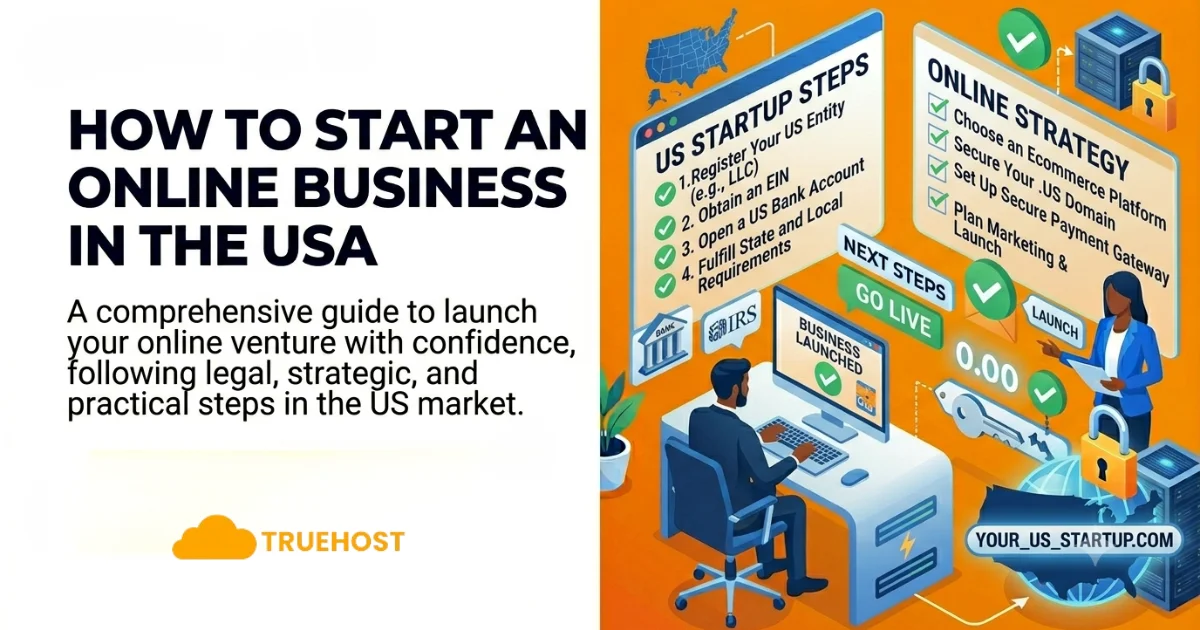
Why Start an Online Business in the USA?
The USA offers one of the most favorable environments in the world for online business owners.
Growing E-commerce Market
US e-commerce sales continue to grow year over year, with consumers spending hundreds of billions of dollars online annually. The demand is there, and it keeps expanding.
Low Startup Costs
Unlike a brick-and-mortar business, an online business doesn’t require physical premises, expensive equipment, or large upfront inventory. You can start lean and scale as revenue grows.
Flexible Working
You set your own hours, work from anywhere, and build a business that fits your life rather than the other way around. For many people, that flexibility alone is worth the effort.
Access to a Large Customer Base
With over 300 million people in the US and internet access reaching virtually every household, your potential audience is enormous before you even consider international customers.
Scalability
An online business can grow without the same overhead increases that limit physical businesses. Adding new products, customers, or markets doesn’t require hiring more staff or renting more space right away.
1) Choose the Right Online Business Idea
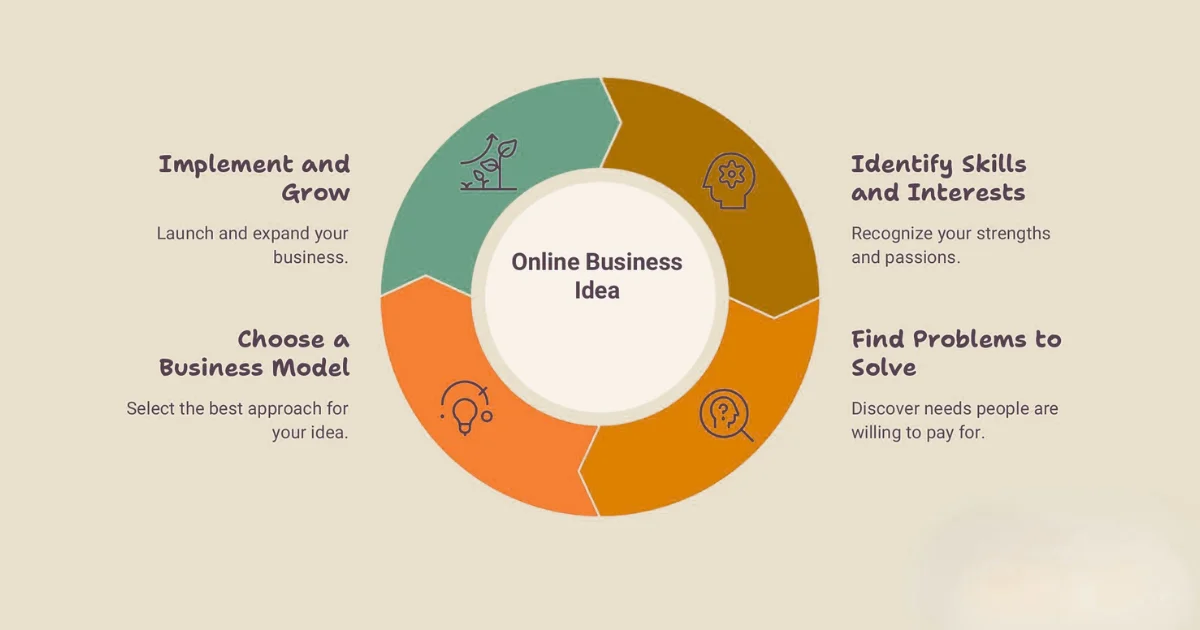
The best online business idea is one that matches your skills, interests, and the problems people are willing to pay to solve.
E-commerce Store
Selling physical or digital products online is one of the most straightforward online business ideas. You can sell your own products or use dropshipping to fulfill orders without holding inventory.
Service-Based Business
If you have a skill, whether that’s writing, design, accounting, coaching, or consulting, you can sell it directly to clients. Service businesses have low overhead and can be started with just a laptop and an internet connection.
Freelancing
Freelancing is a faster version of a service business. Platforms like Upwork and Fiverr help you find clients quickly while you build your reputation and eventually move toward direct client relationships.
Digital Products
E-books, online courses, templates, and software can be sold repeatedly with no shipping or inventory costs. Once created, a digital product can generate income with minimal ongoing effort.
Blogging or Content Creation
Building an audience through a blog, YouTube channel, or podcast takes time, but it creates long-term income through advertising, sponsorships, and affiliate partnerships.
Reseller Hosting
Reseller hosting is one of the most underrated online business ideas in 2026. You buy hosting resources in bulk from a provider, then sell hosting packages to your own clients under your own brand. Truehost reseller hosting gives you everything you need to start a web hosting business without managing servers or infrastructure. It’s a great fit if you are already building websites for clients and want to add a recurring income stream.
Affiliate Marketing
Affiliate marketing means promoting other people’s products and earning a commission on each sale. It’s a good starting point if you don’t have your own product yet and want to understand online marketing first.
2) Create a Business Plan
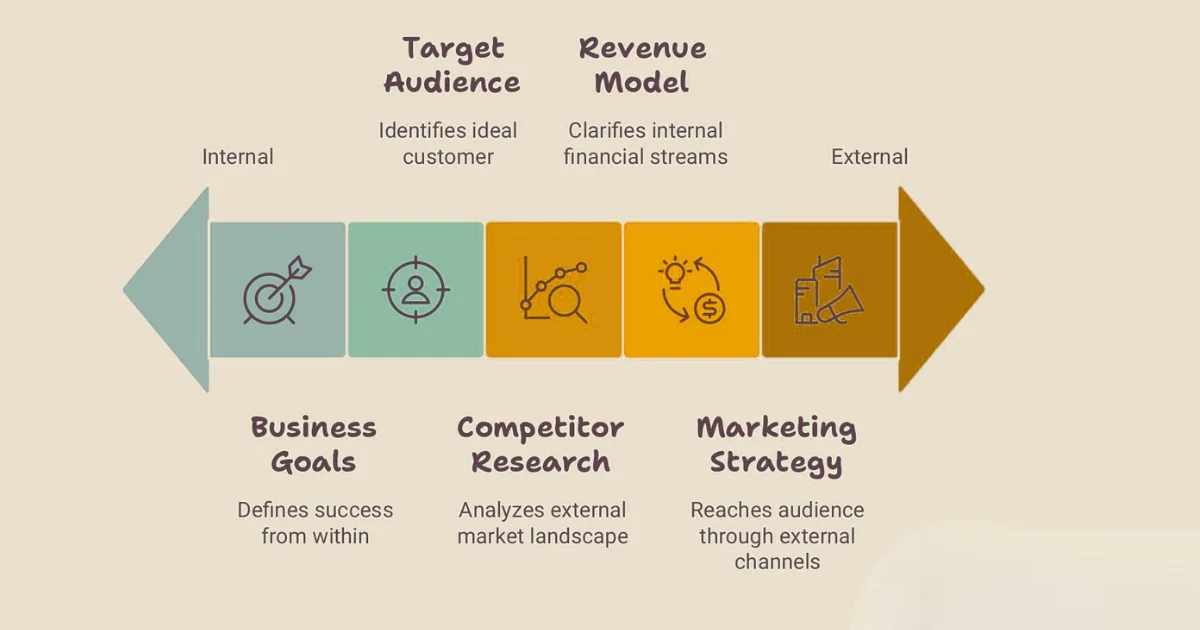
A business plan doesn’t need to be a lengthy formal document. It just needs to answer the key questions before you start spending money.
Business Goals
Define what success looks like for you. Is it replacing your current income? Building a side income stream? Knowing your goal shapes every decision after it.
Target Audience
Who are you selling to? The more specific you are about your ideal customer, the easier it is to create products, write content, and run ads that actually connect.
Competitor Research
Look at what similar businesses are doing well and where they fall short. This tells you where the gaps are and how you can position yourself differently.
Revenue Model
How will you make money? Whether it’s product sales, service fees, subscriptions, or advertising, your revenue model should be clear before you launch.
Marketing Strategy
Decide how you’ll reach your audience. Organic search, social media, email marketing, or paid ads, pick the channels that match your budget and your strengths.
3) Register Your Business
Running a legal business in the USA means getting the right registrations in place early.
Choosing a Business Structure
Most solo online business owners start as a sole proprietor or form an LLC. An LLC provides liability protection that a sole proprietorship doesn’t, which is worth considering as your business grows. The US Small Business Administration has a clear breakdown of each structure.
Registering Your Business Name
If you’re operating under a name other than your own legal name, you’ll need to register a DBA (Doing Business As) with your state. Requirements vary, so check your state’s official business registration website.
Obtaining Required Licenses or Permits
Depending on your industry and state, you may need specific business licenses or permits to operate legally. Check with your local and state government offices to confirm what applies to your business type.
Getting an EIN
An Employer Identification Number (EIN) is issued by the IRS and used for tax purposes. You’ll need one if you form an LLC, hire employees, or open a business bank account. It’s free to apply online and takes just a few minutes.
4) Register a Domain Name
Every serious online business needs a domain name. It’s your address on the internet and a core part of your brand identity.
Choosing a Memorable Domain Name
Pick something short, easy to spell, and easy to remember. Avoid numbers, hyphens, and anything that requires explanation. Your domain name should reflect your business and be easy to share verbally.
Selecting the Right Domain Extension
A .com extension is still the most trusted and widely recognized option. If your preferred .com is taken, .co, .net, or industry-specific extensions can work as alternatives.
Registering Your Domain
Register your domain as soon as you’ve settled on a name. Truehost makes the process quick and straightforward, with competitive pricing, a wide range of extensions, and free WHOIS privacy on eligible domains. The whole thing takes less than five minutes.
Protecting Your Brand
Once you’ve registered your primary domain, consider registering common variations and misspellings to prevent competitors from claiming them. Enable WHOIS privacy protection to keep your personal contact details out of public domain records.
5) Build Your Website
Your business website is where first impressions are made and where sales happen.
Choosing Web Hosting
Web hosting is the service that keeps your website online. Look for a provider with strong uptime, fast loading speeds, and reliable customer support. Truehost’s web hosting plans are built for small businesses and beginners who want performance without complexity.
If you’re a web designer or developer planning to host multiple client sites, Truehost reseller hosting is worth looking at. It lets you manage all your clients’ hosting under one account and even resell hosting as a service.
Selecting a Website Builder or CMS
WordPress powers over 40% of websites on the internet and is the most flexible option for most small businesses. Shopify is purpose-built for e-commerce businesses. Both are beginner-friendly and have large communities of support resources.
Creating Essential Pages
Every business website needs a homepage, an about page, a contact page, and a page describing your products or services. If you’re running an e-commerce business, you’ll also need product pages, a shopping cart, and a checkout flow.
Optimizing for Mobile Devices
More than half of all web traffic comes from mobile devices. Choose a theme or template that looks great on smaller screens and loads quickly on mobile connections.
6) Set Up Business Email
A free Gmail or Yahoo address may work for personal use, but it doesn’t build trust with customers or partners.
Why Business Email Matters
An email address like [email protected] immediately signals that you’re a legitimate, professional operation. It builds confidence in customers who are deciding whether to buy from you.
Choosing an Email Hosting Provider
Most web hosting plans include business email as part of the package. Set up your business email at the same time you launch your website so your brand is consistent from day one.
Building Customer Trust
Every email you send is a touchpoint with your audience. A professional address, a clear signature, and consistent communication all contribute to the credibility of your small business USA brand.
7) Set Up Payments
You can’t run an online business without a reliable way to accept money.
Credit and Debit Cards
Card payments are expected by most online shoppers. Make sure your website supports major card networks through a secure payment gateway.
PayPal
PayPal remains one of the most widely trusted payment options among US online shoppers. Offering it as a checkout option can reduce cart abandonment, especially for first-time buyers who don’t want to enter card details.
Stripe
Stripe is a developer-friendly payment processor that handles cards, digital wallets, and recurring subscriptions. It’s the go-to choice for many e-commerce businesses and SaaS products.
Digital Wallets
Apple Pay, Google Pay, and similar options are growing fast. Supporting these at checkout reduces friction and speeds up the buying process for mobile shoppers.
8) Market Your Online Business
Building a website is step one. Getting people to visit it is an ongoing job.
Search Engine Optimization (SEO)
SEO helps your website rank in Google search results when potential customers search for what you offer. Focus on writing helpful content, using relevant keywords, and building links from reputable sites. Moz’s beginner SEO guide is a great starting point.
Social Media Marketing
Pick one or two platforms where your target audience spends time and show up consistently. Social media builds awareness, trust, and a community around your brand over time.
Email Marketing
An email list is one of the most valuable assets your online business can build. Unlike social media followers, your email list is something you own and control completely.
Content Marketing
Blog posts, videos, podcasts, and guides that answer your audience’s questions bring in steady traffic over time. Content marketing is slower than paid ads but far more cost-effective long-term.
Paid Advertising
Google Ads and social media ads can drive traffic quickly, but they require a budget and some testing before they become profitable. Start small, track results carefully, and scale what works.
Common Mistakes to Avoid
- Trying to sell to everyone. A specific, well-defined audience converts far better than a broad, undefined one. Niche down and own your space.
- Starting without a plan. Jumping straight to building a website without clarity on your audience and revenue model wastes time and money.
- Choosing the wrong domain name. A domain that’s hard to spell or too long creates friction. Take the time to get it right before you build around it.
- Ignoring SEO. If you’re not thinking about search from day one, you’re giving away long-term traffic to competitors who are.
- Neglecting customer service. One bad experience shared publicly can undo weeks of marketing effort. Respond to customers quickly and professionally.
- Failing to budget for ongoing costs. Hosting, email, tools, and advertising all have recurring costs. Factor these into your plan from the beginning.
FAQs
How much does it cost to start an online business in the USA?
Basic costs include a domain name ($10 to $20 per year), web hosting ($5 to $30 per month), and any tools you need for your specific business. Many online businesses launch for under $200.
Do I need to register my online business?
Yes, in most cases. At minimum, you’ll need to choose a business structure and register your business name with your state. An LLC offers liability protection that sole proprietorships don’t.
Can I start an online business from home?
Absolutely. Most online businesses start from home with nothing more than a laptop and a reliable internet connection.
What is the easiest online business to start?
Freelancing or a service-based business has the lowest barrier to entry. You can start with skills you already have and find clients through freelance platforms or your existing network.
Do I need a website for an online business?
Yes. While social media can supplement your presence, a professional business website gives you full control over your brand, your content, and your customer relationships.
How do I choose a domain name?
Keep it short, easy to spell, and relevant to your business. Avoid numbers and hyphens. Check availability early and register it as soon as you’ve settled on a name.
Ready to Start Your Online Business?
Learning how to start an online business in the USA doesn’t have to be overwhelming. The steps are clear, the tools are affordable, and the market is waiting. What matters most is making a start and building consistently from there.
Choose a business idea that fits your skills. Build a professional online presence with the right domain, hosting, and website. Market consistently and treat your customers well.
Take the first step now: Register your domain name with Truehost and choose a hosting plan that fits your goals. If you want to build a hosting business on the side, explore Truehost reseller hosting and start earning recurring income from clients. Everything else builds from there.