 Domain RegistrationFind and register the perfect domain for your website.
 .COM DomainChoose a widely recognized domain to build global credibility.
 Domain TransferSeamless domain transfers with zero downtime and complete control.
 All TLDsFind and register your perfect domain. Choose from local and global extensions.
 SSL CertificatesKeep your website safe with reliable SSL Certificates that protect customer data and build trust.
 whoisCheck domain ownership details, expiration dates, and registrar information.
 US DomainRegister a .US domain and build trust in the USA.
 Web HostingEverything your website needs to run smoothly
 WordPress HostingWordPress hosting that just works
 Windows HostingReliable hosting for Windows environments
 Reseller HostingTurn hosting into your business
 Email HostingEmail that looks professional and works anywhere
 cPanel HostingFull control of your hosting with cPanel
 Affiliate ProgramJoin as a partner and earn commissions on every referral you send our way.
 Vps HostingScalable virtual servers that expand as you need.
 Dedicated ServersGet complete access and full control over your dedicated physical server.
 Managed vpsNot tech-savvy? We will take care of everything with our fully managed VPS hosting for you.
 AI Website BuilderCreate stunning websites in seconds with AI.
 Online ShopSet up a professional online store. No coding required.
 Web design serviceGet a tailored website designed to match your brand and support your goals.
 BlogFind helpful guides on web hosting, online selling, digital marketing, and more.
 Contact USYou can reach us anytime, day or night, through chat or email.
 SupportBrowse helpful guides and answers for all of our services.
Have you ever clicked on a website and waited… and waited… then just left? I’d leave too. Slow website loading is one of the leading reasons people leave a site before it opens. If you own a website or are considering starting one, this is a problem you can’t ignore.
Here’s what’s frustrating.
Most people don’t even wait five seconds. They bounce. They go somewhere else. And if your site continues to lose visitors like that, your business suffers, no matter how great your content or product is.
So join me as we cover;
- Why website loading speed is a big deal
- What the ideal page load time looks like
- What slows down a website
- How mobile speed plays a huge role
- How page speed affects your Google ranking
- Simple ways to make your website faster
Let’s get into it.
What Is the Ideal Page Load Time?
Most websites should load in 2 to 3 seconds. That’s the sweet spot.
If your site loads in under 2 seconds, that’s great. You’re ahead of many sites out there. If it takes 4 or 5 seconds, or more, you have a real problem.
But wait, why does website loading speed matter so much at the 3-second mark specifically? Because that’s where user patience runs out. Studies show that even a one-second delay in website loading speed can reduce conversions by up to 7%. That means fewer sign-ups, fewer purchases, fewer clicks.
So when people talk about fast website speed, they mean pages that respond quickly, load all the content without lag, and let visitors do what they came to do — fast.
Honestly? Slow hosting kills conversions. Get your site on Truehost and stop losing people before they even land.
Why Website Loading Speed Is a Big Deal

Think of website loading speed like a door. If a door opens fast, you walk right in. If it sticks and takes forever to open, you find another door.
Your website is the same way. When a visitor lands on your page, they expect it to open quickly. If it doesn’t, they leave. It’s that simple.
According to Google, 53% of mobile users leave a page if it takes more than three seconds to load. That’s more than half your visitors, gone, just because of slow page speed.
Website loading speed isn’t just a technical issue. It directly affects how many people stay on your site, read your content, and purchase your products or services.
What Slows Down a Website?
Before you can fix slow website performance, you have to know what causes it.
Here are the most common reasons your website is slow.
1) Large, Uncompressed Images
Images are one of the biggest reasons for slow website loading speed. When you upload a photo that’s 5MB or 10MB and don’t compress it, the browser must download the entire file before displaying it to the visitor. That takes time.
Always compress your images before uploading them.
2) Heavy Scripts and Plugins
JavaScript files, third-party widgets, and too many plugins can significantly slow your site. Each script the browser has to load adds time: the more scripts, the slower the site’s response time.
Keep your plugins lean and use only what you need.
3) Slow or Cheap Hosting Servers
Your web hosting provider plays a huge role in your website’s loading speed. If your hosting server is slow, your website will be slow, regardless of how well you optimize your images or code.
A good host delivers fast server response times and keeps your site running smoothly.
Other factors that can slow your site include too many HTTP requests, no browser caching configured, bloated HTML and CSS files, and not using a content delivery network (CDN).
Mobile Speed Expectations

Most people who browse the internet today are on their phones. Not desktops. Not laptops. Phones.
So if your website loads fast on a computer but drags on mobile, you’re already losing a big chunk of your audience.
Mobile users are often on slower connections as well. That means your site needs to be even more lightweight and well-optimized to keep up. Large images, heavy scripts, and poor mobile design are all killers of mobile performance.
A slow mobile experience increases your bounce rate. Bounce rate is the percentage of people who leave your site without clicking anything else. The higher your bounce rate, the worse your site is performing and the more visitors you’re losing every day.
How Website Loading Speed Affects Your Google Ranking
I’m sure you didn’t know this: Google uses website loading speed as one of its ranking signals. That means if your site is slow, Google is less likely to show it at the top of search results.
In 2021, Google rolled out Core Web Vitals, a set of metrics that assess how fast and smoothly your website loads. Metrics such as Largest Contentful Paint (LCP), First Input Delay (FID), and Cumulative Layout Shift (CLS) are part of this. They directly tie into how Google ranks your page.
Faster website loading speed = better Core Web Vitals scores = better chance of ranking on page one.
And here’s why that’s a big deal for your traffic: the first result on Google gets about 27.6% of all clicks, according to Backlinko. The second gets far fewer.
By the time you’re on page two, almost nobody is finding you.
So improving your page load time isn’t just about keeping visitors happy. It’s also about getting found in the first place.
How to Test Your Website Speed
Before you fix anything, you need to know how fast (or slow) your site actually is. The good news? Testing your website’s loading speed is free and easy.
Here are some tools you can use:
- Google PageSpeed Insights: This is a free tool from Google. Enter your URL and get a performance score out of 100, plus specific suggestions to improve.
- GTmetrix: Shows your load time, total page size, and a breakdown of what’s slowing things down.
- Pingdom Tools: Tests speed from different locations around the world so you can see how fast your site loads globally.
Run your site through one of these tools and look at your load time and performance score. Aim for a score above 80 on Google PageSpeed Insights and a load time of 3 seconds or less.
Simple Ways to Improve Your Website Loading Speed
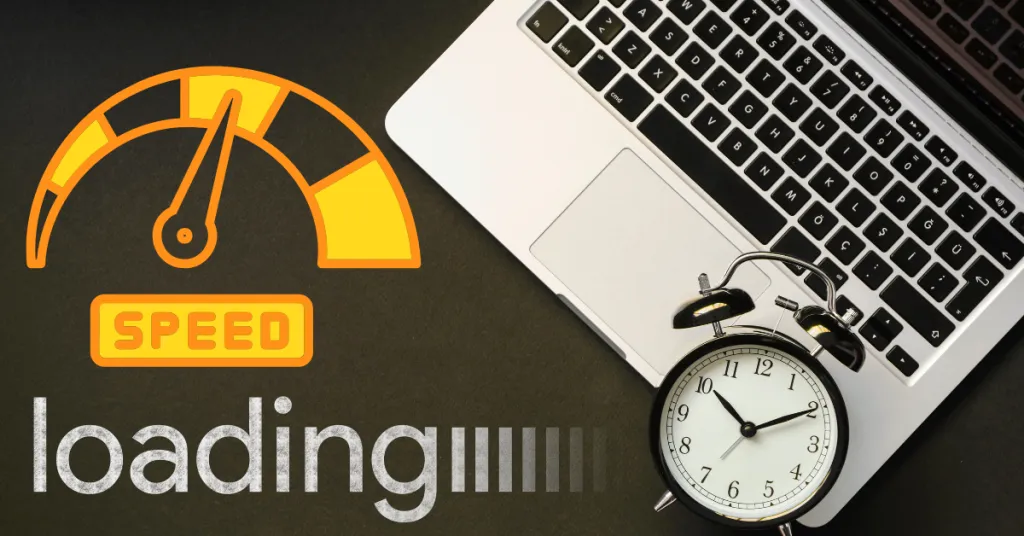
Now let’s talk about solutions.
Here are practical, beginner-friendly steps you can take to speed things up.
a) Compress Your Images
Use tools like TinyPNG or ShortPixel to shrink your image file sizes without losing quality. Smaller images mean faster load times.
b) Enable Browser Caching
Caching stores parts of your site on a visitor’s browser so it loads faster the next time they visit. Most caching plugins for WordPress make this easy to set up.
c) Minify CSS, HTML, and JavaScript
Minification removes extra spaces and characters from your code files, making them smaller and faster to load. Tools like W3 Total Cache or Autoptimize can do this automatically.
d) Use a Content Delivery Network (CDN)
A CDN stores copies of your site on servers across different countries. So when someone in a different location visits your site, they get the content from a server near them, which loads faster.
e) Upgrade Your Hosting
Sometimes the easiest fix is switching to a better hosting provider. Shared hosting can get very slow when a server is overloaded with too many websites. A faster host with dedicated resources makes a huge difference to your overall website loading speed.
Use Truehost Hosting
You can spend hours compressing images and cleaning up code, then wonder why your site is still slow. Here’s the truth: if your hosting server is weak, nothing else you do will fix your website’s loading speed.
Your host is the engine. Everything else is just the bodywork.
When a visitor lands on your page, their browser sends a request to your hosting server. If that server is slow, overloaded, or poorly maintained, the response crawls. That delay shows up as a slow page, even if your images are tiny and your code is spotless.
That’s exactly where we come in as Truehost.
Reliable servers
AT Truehost, we run fast, reliable servers built to deliver quick response times. From the moment someone clicks your link, the server kicks in fast and starts sending your content without lag.
No waiting. No spinning loaders. Just a clean, quick load.
Speed
And it’s not just about speed at the moment. Stable performance means your site holds up consistently, during traffic spikes, busy seasons, and everyday use. A lot of cheap hosting providers promise speed, but fall apart when real traffic hits.
Truehost keeps things steady, so your website’s loading speed stays strong whether you have ten visitors or ten thousand.
Performance
Fast hosting also supports everything else you do to improve site performance. Your caching works better. Your CDN delivers faster. Your Core Web Vitals scores improve. It all stacks up.
If you’ve done everything right;
- Optimized images
- Cleaned your code
- Cut unnecessary plugins, and your site is still dragging; your host is the problem.
Switch to Truehost and give your website the foundation it actually needs to load fast, stay fast, and keep your visitors from leaving.
In Summary
Website loading speed is one of those things that quietly drives everything:
- Visitor experience
- Bounce rate
- Search rankings
- Even sales
The ideal website loading speed target is under 3 seconds. Miss that, and you’re losing people before they even see your page.
The good news is that fixing slow page speed doesn’t have to be hard. Start by testing your site, then work through the improvements one step at a time: better images, cleaner code, and stronger hosting.
Want faster website loading speed without the headaches? Truehost gives you high-performance hosting built for speed, stability, and real results.
Switch to Truehost today and feel the difference from your very first load.