 Domain RegistrationFind and register the perfect domain for your website.
 .COM DomainChoose a widely recognized domain to build global credibility.
 Domain TransferSeamless domain transfers with zero downtime and complete control.
 All TLDsFind and register your perfect domain. Choose from local and global extensions.
 SSL CertificatesKeep your website safe with reliable SSL Certificates that protect customer data and build trust.
 whoisCheck domain ownership details, expiration dates, and registrar information.
 US DomainRegister a .US domain and build trust in the USA.
 Web HostingEverything your website needs to run smoothly
 WordPress HostingWordPress hosting that just works
 Windows HostingReliable hosting for Windows environments
 Reseller HostingTurn hosting into your business
 Email HostingEmail that looks professional and works anywhere
 cPanel HostingFull control of your hosting with cPanel
 Affiliate ProgramJoin as a partner and earn commissions on every referral you send our way.
 Vps HostingScalable virtual servers that expand as you need.
 Dedicated ServersGet complete access and full control over your dedicated physical server.
 Managed vpsNot tech-savvy? We will take care of everything with our fully managed VPS hosting for you.
 AI Website BuilderCreate stunning websites in seconds with AI.
 Online ShopSet up a professional online store. No coding required.
 Web design serviceGet a tailored website designed to match your brand and support your goals.
 BlogFind helpful guides on web hosting, online selling, digital marketing, and more.
 Contact USYou can reach us anytime, day or night, through chat or email.
 SupportBrowse helpful guides and answers for all of our services.
So you’re thinking about starting a website, and everyone keeps telling you to “get a domain name.”
But honestly, “Do I need a domain name, or is that just something tech people say to sound smart?”
If you’re confused about what a domain even does, this one is for you.
You’ve heard you can build websites for free on platforms like Wix or WordPress. Perhaps you’re wondering if having an Instagram account is enough. You might be worried about spending money on something you don’t fully understand, or you may not know if domains are even worth it when you’re just starting out.
Here’s what’s really going on.
You’re trying to figure out if a domain name is necessary for your goals, or if it’s just another expense you can skip.
In this guide, you’ll learn:
- Whether you need a domain name (honest answer for your situation)
- What domains do and why they count
- Real alternatives to buying a domain (and when they work)
- How much domains cost (spoiler: way less than you think)
- When you can skip getting one versus when you absolutely can’t
- What happens if you don’t get a domain name
Ready to get a straight answer without confusing tech talk?
Get in.
Do I Need a Domain Name?

Here’s the truth.
It depends on what you’re building.
If you’re starting any kind of real business, want people to take you seriously, or plan to make money online, then yes, you definitely need a domain name.
If you’re just testing ideas or sharing hobby content with a handful of friends, maybe you can wait.
Think of it this way.
Your domain is like your digital home address. Without it, you’re basically living in someone else’s apartment complex with an address like “yourname.theirplatform.com.” For example, I had this one from WordPress, thepitchherperfect.wordpress.com. That means WordPress owns it.
You don’t own it, you can’t customize it, and if the landlord changes the rules, you’re stuck.
But when you own yourname.com, that’s yours. You control it completely. Nobody can take it away. You can move it anywhere, change anything about it, and build real value that belongs to you.
According to current data, there are over 368 million active domain names registered worldwide. That’s not because people enjoy wasting money. It’s because domains matter for credibility, ownership, and long-term success.
So, the real question isn’t “do I need a domain name?” It’s “am I serious about this project/business?”
If yes, you already know the answer.
What a Domain Name Does
Let’s clear up the confusion.
A domain name is just your website’s address on the internet. When someone wants to visit your site, they type your domain into their browser, like google.com, amazon.com, or yourname.com.
Without a domain, your website gets stuck with whatever ugly address the platform gives you. Think yoursite.wixsite.com or yourname.wordpress.com. I showed you an example of a WordPress site I once owned.
These work technically, but they scream “I’m not serious about this” to every visitor.
Here’s what people often mess up.
They confuse domains with website hosting.
- Your domain is the address. What people type to find you.
- Hosting is where your website lives, like the building at that address.
You need both for a working website, but they’re totally different things.
Now, why does owning your domain count so much? Because when you build on someone else’s platform without your own domain, you’re basically working for them.
All the authority, all the SEO value, all the trust you build, it belongs to their platform, not you.
If you spend two years building content on freewebsite.com/yourname, then decide to switch to your own domain, you start from scratch.
Google sees your new domain as brand new.
All those backlinks people created? They point to the old address.
Your audience has to relearn a new URL. You lose everything you built.
Free Alternatives: When They Work and When They Don’t
Let’s talk about your options besides buying a domain.
Website builders like Olitt, Wix, Weebly, and WordPress.com offer free subdomains. You get something like yourname.olitt.com without paying anything.
These platforms work great for specific situations, such as learning web design, testing if you enjoy creating content, or building a simple site for a school project.
But here’s the catch. You’re building on rented land.
That free subdomain includes the platform’s branding everywhere. Visitors see that you couldn’t afford (or didn’t bother with) a real domain. And if that platform changes its rules, raises prices, or even shuts down, everything you built vanishes.
Millions of people also use social media as their entire online presence. An Instagram bio link, a Facebook business page, or a TikTok profile costs nothing and reaches tons of people. This works fine initially, especially when testing business ideas.
The problem?
You own exactly 0% of that audience. Instagram changes its algorithm tomorrow, and your reach drops 80% overnight. Your account gets hacked or banned? Years of work gone instantly. You’re entirely at the mercy of platforms that don’t care about your individual success.
Here’s a sobering reality.
Research shows that 44% of all domain registrations worldwide use the .com extension. That massive percentage exists because businesses discovered that professional domains work better than free alternatives.
Free platforms serve a purpose: helping you get started with zero investment. But calling them “free” isn’t quite accurate. You’re paying with a lack of control, damaged credibility, and limited growth potential.
Those costs add up fast.
When You Absolutely Need a Domain Name
Let’s get specific about situations where skipping a domain is a terrible idea.
Running any business? You need a domain. Period.
Whether you’re selling products, offering services, or freelancing, customers judge your credibility in seconds. Someone who sees yourshop.com trusts you infinitely more than someone who sees yourshop.freewebsite.com. That trust directly affects sales.
If you plan to make money online through any method, such as affiliate marketing, sponsored content, online courses, or digital products, you need your own domain.
Potential sponsors and advertisers won’t work with someone operating on a free subdomain. It signals you’re not serious, even if you are.
Building a brand requires a consistent, memorable identity across everything. You can’t build an authentic brand on someone else’s platform. Your brand needs to be yours completely.
That means owning your domain from day one, not three years from now when switching becomes painful and expensive.
Here’s something many beginners don’t consider: professional email addresses.
Nobody trusts business communication from [email protected]. But [email protected] looks immediately credible. You can only create custom email addresses if you own a domain. For many businesses, the domain is worth it for professional email alone.
SEO matters too.
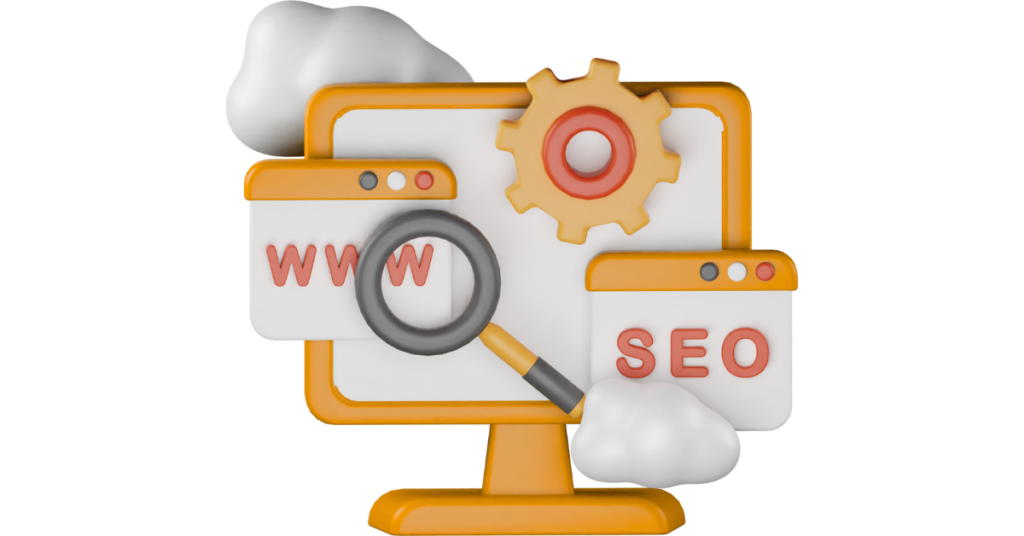
Websites with their own domains rank better in Google than subdomains. More importantly, all the SEO authority you build belongs to you. Build that authority on someone else’s subdomain?
They keep it when you leave. You’re doing free SEO work for their platform.
Currently, about 33,000 new domains register every single day. That’s one every 2.61 seconds. This constant registration happens because people launching serious projects understand domains aren’t optional extras. They’re foundational requirements.
When You Can Skip Buying a Domain
Fair is fair.
Let’s talk about situations where you genuinely don’t need a domain yet.
Experimenting and learning?
Go ahead and use free platforms. If you’re teaching yourself web design, testing whether you enjoy blogging, or figuring out what kind of content you want to create, free tools work perfectly. No point spending money before you know this is something you’ll stick with.
That’s what I did. Do I need to remind you about my PitcherPerfect WordPress domain?
Purely personal projects also don’t require domains.
Family photo galleries only relatives see, a private journal for your thoughts, and a one-time event website for your wedding. These don’t need professional domains. You’re not building a business or public brand.
Starting on social media first makes sense for many creators.
You can build an audience on Instagram or TikTok while validating your concept. Once you’ve proven people want what you’re offering, then invest in a domain and website. This approach tests ideas without upfront costs.
Budget constraints are real.
If spending $10-25 USD genuinely isn’t possible right now, focus on creating content first. Build your skills and audience using free tools. Just understand you’ll need to upgrade eventually, and switching later is harder than starting right.
The key question;
Is this temporary or permanent? Using free platforms temporarily while you figure things out? Fine.
Planning to stay on free platforms permanently while running a serious business? That’s a mistake.
How Much Does a Domain Cost?
Let’s kill the myth that domains are expensive, because they’re really not.
Standard domain names cost between $5 and $20 per year. That breaks down to less than $1.5 per month, cheaper than a couple of cups of coffee. For context, that’s less than your Netflix subscription, mobile data plan, or any other monthly expense.
Looking at Truehost’s pricing, a .com domain (the most popular and trusted extension) costs just $7.79 to register and $9.69 to renew annually. That’s incredibly affordable for something so critical to your business.
A .net domain runs $13.62 for both registration and renewal. Even specialty extensions like .us domains are registered for only $1.99.
Different extensions have different price points.
The .info domain name registers for super cheap at $3.58, though it renews at $29.27. The .org extension, popular with nonprofits and organisations, costs $10.67 to register and $12.23 to renew.
These Truehost prices are competitive and transparent. What you see is what you pay.
Now, premium domains cost more.
If someone already owns PerfectBusiness.com and you want to buy it from them, expect to pay hundreds or thousands of dollars. But for new domains that aren’t taken yet? You’re looking at that standard $5-$20 annual cost.
Remember that domains and hosting are separate expenses.
Your domain is just the address.
Hosting, where your website files live, costs additional money, typically $20-$110 per year, depending on your needs. Many hosts, including Truehost, bundle domain and hosting together, often including a free domain with annual hosting plans.
Hidden costs to watch for.
Some registrars offer cheap first-year pricing, then jack up renewal costs.
Privacy protection (hiding your personal information from public WHOIS databases) sometimes costs extra, though many registrars now include it for free.
Always check renewal pricing, not just the first-year promotional price.
What Happens If You Don’t Get a Domain
Let’s talk about the consequences of not having a domain name, because they’re significant.
Credibility takes a massive hit.
When potential customers see yoursite.wix.com or yourbusiness.wordpress.com, they immediately question your legitimacy.
Are you a real business or someone playing around?
Can they trust you with their money?
That unprofessional URL plants doubt before they even see your content.
Research indicates that when people forget a domain extension, they’re 3.8 times more likely to assume it’s .com. This means that if you’re using a free subdomain and people try to remember your URL later, they’ll probably type yourname.com, which will land them on an error page or, worse, a competitor’s site.
Platform dependency becomes your reality.
You’re completely at the mercy of that platform’s rules, prices, and decisions.
- They decide to raise prices? You pay or lose everything.
- Do they change features you rely on? Too bad.
- They shut down? Your website vanishes.
You have zero control.
Growth limitations hurt, too.
Free platforms restrict customization, limit which tools and features you can add, cap your bandwidth or visitors, and severely limit monetization options.
- Want to add e-commerce? Nope.
- Need specific functionality? Can’t do it.
Every limitation becomes a wall blocking your success.
Here’s the brutal part.
Every day you spend building on a free platform is a day of lost investment. You’re creating content, attracting visitors, earning backlinks, and building authority, all for someone else’s domain.
When you finally switch to your own domain (and you will eventually), you lose all that accumulated value and start over.
It takes time to build your authority.
Domain authority, which measures how much Google trusts your site, takes months or years to build.
The Professional Email Factor
Here’s something that surprises beginners: professional email addresses alone justify domain costs.
Think about receiving business emails from [email protected] versus [email protected]. The difference in perceived professionalism is enormous. That custom email address instantly communicates you’re established, credible, and serious.
You cannot create professional email addresses without owning a domain. The email address uses your domain name after the @ symbol.
Want [email protected]? You need to own yourbusiness.com first. It’s that simple.
Most hosting plans include email accounts with your domain.
Some people use Google Workspace or Microsoft 365 with their custom domain for even more features. Either way, one domain enables unlimited email addresses, sales@, support@, yourname@, whatever you need.
For $5-$20 per year, you get your website address and a professional email address. That’s an insanely good deal for the credibility boost alone. Clients, customers, and partners take you dramatically more seriously when your email looks professional.
Why Social Media Can’t Replace Owning a Domain
Social media is powerful, but it’s not a replacement for your own domain. It’s a compliment.
Think of social media as renting attention in someone else’s building. You can reach tons of people there, but you own nothing.
Your Instagram account, Facebook page, or TikTok profile exists entirely at that platform’s discretion. They can change rules, limit your reach, or even ban you without warning.
Platform risk is very real.
Remember when Instagram changed its algorithm, and countless businesses saw their reach drop by 80% overnight? Or when TikTok faced potential bans in multiple countries? Building your entire business on platforms you don’t control is extremely risky.
Your domain and website represent what you own.
You control every aspect, design, features, functionality, content, and monetization. No algorithm decides who sees your content. No platform takes a percentage of your revenue. You answer to nobody except yourself.
The smart strategy? Use both.
Build your audience on social media, where people already spend time, then drive them to your own website.
Social media for reach and engagement, your domain for ownership and control.
This combination gives you the best of both worlds while protecting against platform risk.
Making Your Decision
So, “Do I need a domain name”? Let’s make this concrete based on your specific situation.
You definitely need a domain if you’re starting any kind of business, want to make money online, need professional credibility, plan to build a brand, want custom email addresses, or aim for long-term growth.
If you’re serious about your online presence, you need a domain.
You can wait if you’re just experimenting and learning, working on temporary personal projects, validating an idea on social media first, or genuinely can’t afford $5-$20 annually right now.
Just remember that waiting costs you time to build authority, and your perfect domain might get taken.
Ask yourself these questions:
- Do I want people to take me seriously?
- Am I building something long-term?
- Will I need a professional email?
- Do I want to own what I create?
- Can I afford less than $1.5 per month?
- Am I okay being tied to someone else’s platform?
Your answers make the decision obvious.
Getting Your First Domain
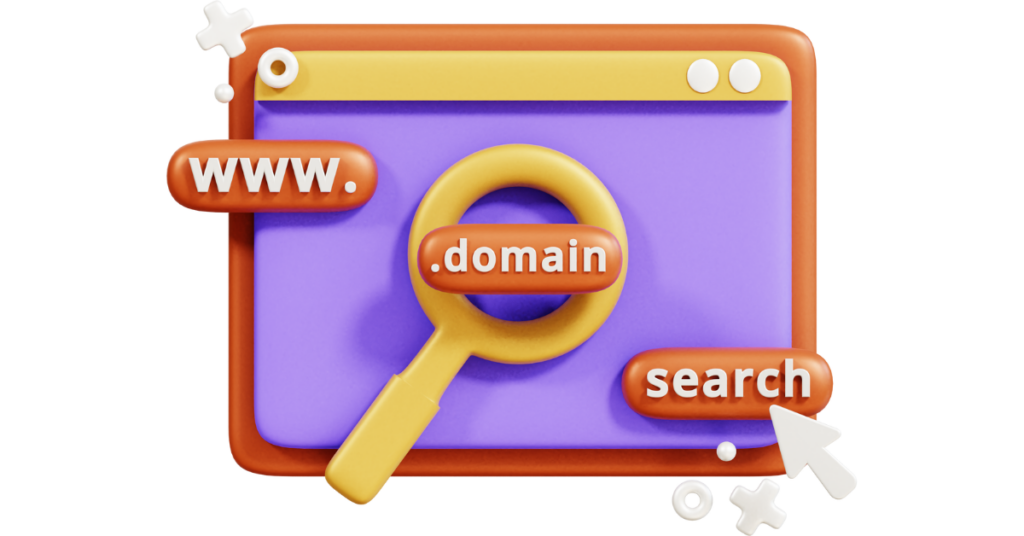
If you’ve decided you need a domain, getting one takes about five minutes.
Choose a domain name carefully.
Keep it short, simple, memorable, and professional. Use your business name or brand. Avoid numbers and hyphens. Try for a .com if possible. Around 44% of websites use .com, making it the most familiar and trusted extension.
Select an ICANN-accredited registrar like Truehost. At Truehost, we meet strict security and technical standards, ensuring your domain stays safe and properly managed.
The registration process is dead simple: search your desired domain, add it to the cart if available, provide contact information, choose registration length (typically 1-10 years), and complete payment.
You’re done.
After registration, connect your domain to website hosting, set up professional email addresses, and enable privacy protection to keep your personal information off public databases. Most registrars, including TrueHost, make this process straightforward with helpful guides.
The Bottom Line
Do I need a domain name? If you’re serious about your online presence, absolutely yes.
The cost is minimal, roughly $5-$20 per year, less than $2 monthly. Truehost offers .com domains starting at just $7.79, with transparent renewal pricing and no hidden fees.
That tiny investment gets you credibility, ownership, a professional email address, SEO benefits, and complete control over your online presence.
Ready to claim your professional domain? Truehost offers affordable domain registration with transparent pricing, free privacy protection, and expert support. Get your .com domain for just $7.79 and start building something you own. Visit Truehost today and take control of your online presence the right way.