 Domain RegistrationFind and register the perfect domain for your website.
 .COM DomainChoose a widely recognized domain to build global credibility.
 Domain TransferSeamless domain transfers with zero downtime and complete control.
 All TLDsFind and register your perfect domain. Choose from local and global extensions.
 SSL CertificatesKeep your website safe with reliable SSL Certificates that protect customer data and build trust.
 whoisCheck domain ownership details, expiration dates, and registrar information.
 US DomainRegister a .US domain and build trust in the USA.
 Web HostingEverything your website needs to run smoothly
 WordPress HostingWordPress hosting that just works
 Windows HostingReliable hosting for Windows environments
 Reseller HostingTurn hosting into your business
 Email HostingEmail that looks professional and works anywhere
 cPanel HostingFull control of your hosting with cPanel
 Affiliate ProgramJoin as a partner and earn commissions on every referral you send our way.
 Vps HostingScalable virtual servers that expand as you need.
 Dedicated ServersGet complete access and full control over your dedicated physical server.
 Managed vpsNot tech-savvy? We will take care of everything with our fully managed VPS hosting for you.
 AI Website BuilderCreate stunning websites in seconds with AI.
 Online ShopSet up a professional online store. No coding required.
 Web design serviceGet a tailored website designed to match your brand and support your goals.
 BlogFind helpful guides on web hosting, online selling, digital marketing, and more.
 Contact USYou can reach us anytime, day or night, through chat or email.
 SupportBrowse helpful guides and answers for all of our services.
You registered a domain. You built a website. You set up your business email.
Then one morning, everything’s gone.
No website. No email. Just a blank screen and a sinking feeling.
The culprit? A domain that quietly expired while you weren’t paying attention.
This is the domain life cycle in action. And if you don’t understand it, it will cost you.
This guide breaks down every stage. what happens, how long it lasts, and what you can do about it.
Don’t let your domain slip away. Register and manage your domain with Truehost. clear reminders, auto-renewal, and pricing that won’t make you wince.
What Is the Domain Life Cycle?
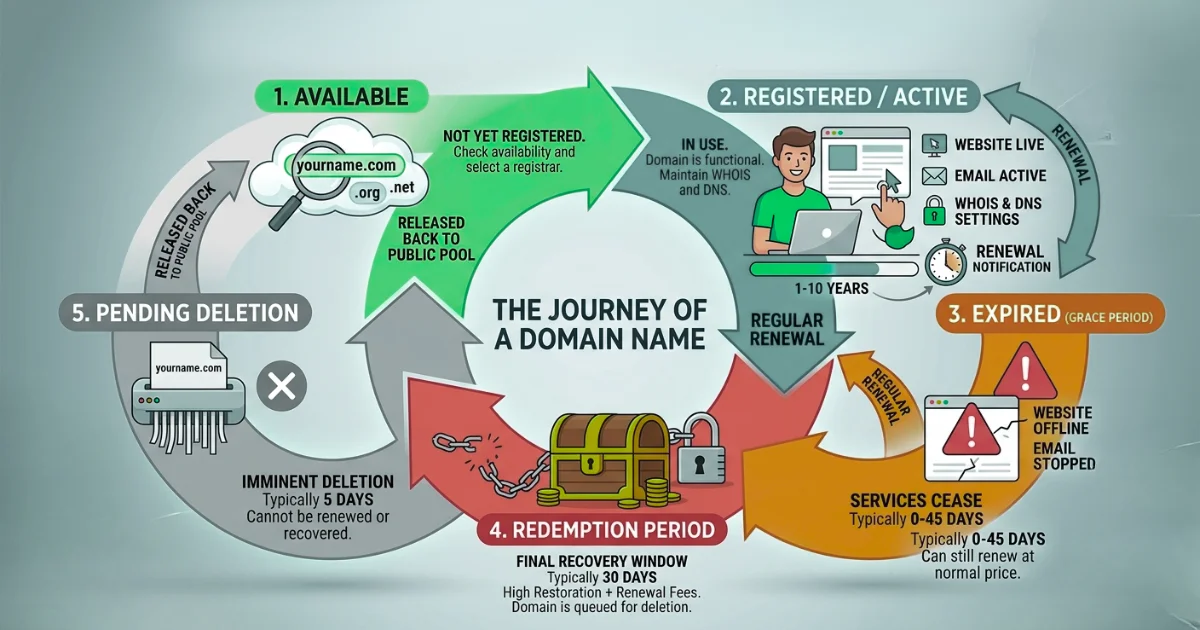
Think of your domain like a lease on an apartment.
You pay for it. You use it. But if you stop paying, it doesn’t stay yours forever.
The domain life cycle is the full journey every domain takes. from the day it’s registered to the day it’s either renewed or released back to the public.
Every domain goes through it. No exceptions.
Miss the renewal window and you don’t just lose the domain. You lose your website, your email, your SEO rankings, and potentially your brand identity. all in one shot.
The Stages of the Domain Life Cycle
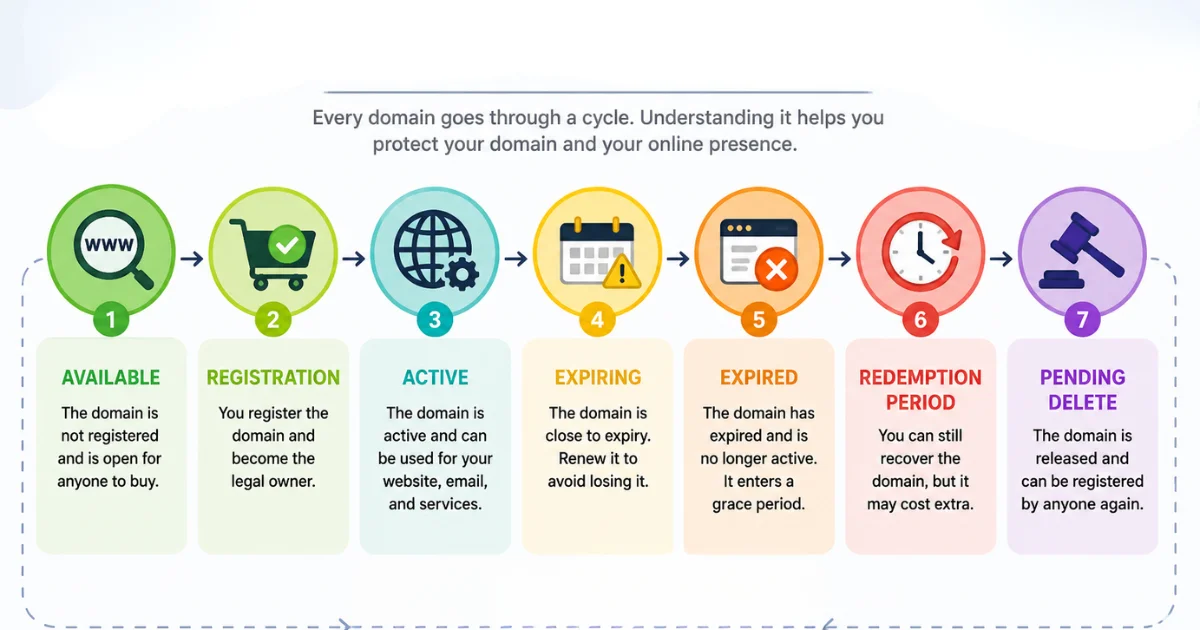
Here’s how it plays out, stage by stage.
Stage 1: Domain Registration
This is where it all starts.
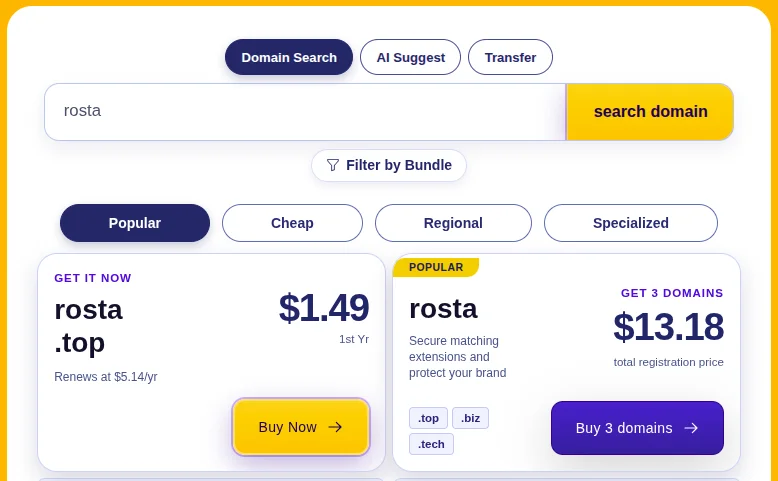
You pick a name, check that it’s available, and register it through a domain registrar. That registration gives you exclusive rights to use that domain for the period you paid for.
Registration periods run from one year minimum to ten years maximum. Pick a longer period if you are serious about the domain. it means fewer renewal cycles to worry about.
Choosing the right registrar matters. Look for one that sends renewal reminders, offers auto-renewal, and doesn’t hide fees at checkout. Truehost ticks all three boxes and keeps the pricing honest from day one.
Stage 2: Active Domain
This is the good part.
Your website is live. Your email works. Customers can find you. Everything runs the way it should.
The only job during this stage is simple: renew before the expiration date.
Most registrars send reminders at 60, 30, and 7 days out. But life gets busy. That’s why auto-renewal exists. Turn it on and your domain renews itself before you even think about it.
Stage 3: Domain Expiration
Miss the renewal date and the domain expires. Simple as that.
Your website stops loading instantly. Business email stops delivering. Any third-party service connected to the domain breaks too.
Customers get error pages. Emails bounce. Your business goes quiet online without warning.
This is the stage most people don’t realize they are heading toward until they are already in it.
Stage 4: Grace Period
Here’s some good news.
Most domains don’t disappear the moment they expire. They drop into a grace period first.
The grace period typically lasts between 0 and 30 days depending on your domain extension and registrar. During this window, you can still renew at the standard price with no penalty.
The domain is technically still yours. It’s just offline.
Act fast. Some extensions skip the grace period entirely and jump straight to the next stage. Don’t assume you have 30 days if you haven’t confirmed it with your registrar.
Stage 5: Redemption Period
Grace period over? Things get more expensive.
The redemption period follows and can last between 30 and 60 days. You can still get the domain back during this stage, but it costs more.
On top of the standard renewal fee, registrars charge a redemption fee. That fee typically runs between $50 and $200 depending on the extension and provider.
This is your last real chance to reclaim the domain. ICANN’s Expired Registration Recovery Policy sets out the rules registrars must follow during this stage.
Don’t wait. Pay the fee and get it back.
Stage 6: Pending Delete
After redemption ends, the domain enters pending delete.
This phase lasts about 5 days. No one can renew or recover the domain during this window. not even the original owner.
It’s queued for deletion. The clock is running and there’s nothing you can do but watch.
Stage 7: Domain Becomes Available Again
Once deletion completes, the domain drops back into the public pool.
Anyone can register it.
And they will. Domain investors run automated tools that grab valuable domains the second they become available. A popular name can be gone within minutes of release.
If someone else registers your old domain, your options are either to contact the new owner directly or search for it on a marketplace like Sedo. Either way, expect to pay far more than a standard registration.
Domain Life Cycle Timeline
Here’s everything in one quick-reference table.
| Stage | Typical Duration | What Happens | What You Can Do |
|---|---|---|---|
| Registration | 1 to 10 years | Domain is active and yours | Manage DNS, set up auto-renewal |
| Active | Ongoing | Website and email are live | Renew early, keep billing current |
| Expiration | Day 0 | Website and email go offline | Renew immediately |
| Grace Period | 0 to 30 days | Domain offline, still recoverable | Renew at standard rate |
| Redemption Period | 30 to 60 days | Recovery possible with extra fee | Pay redemption fee to reclaim |
| Pending Delete | About 5 days | No recovery possible | No options remain |
| Available Again | After deletion | Anyone can register it | Register fast or use a marketplace |
Why the Domain Life Cycle Matters
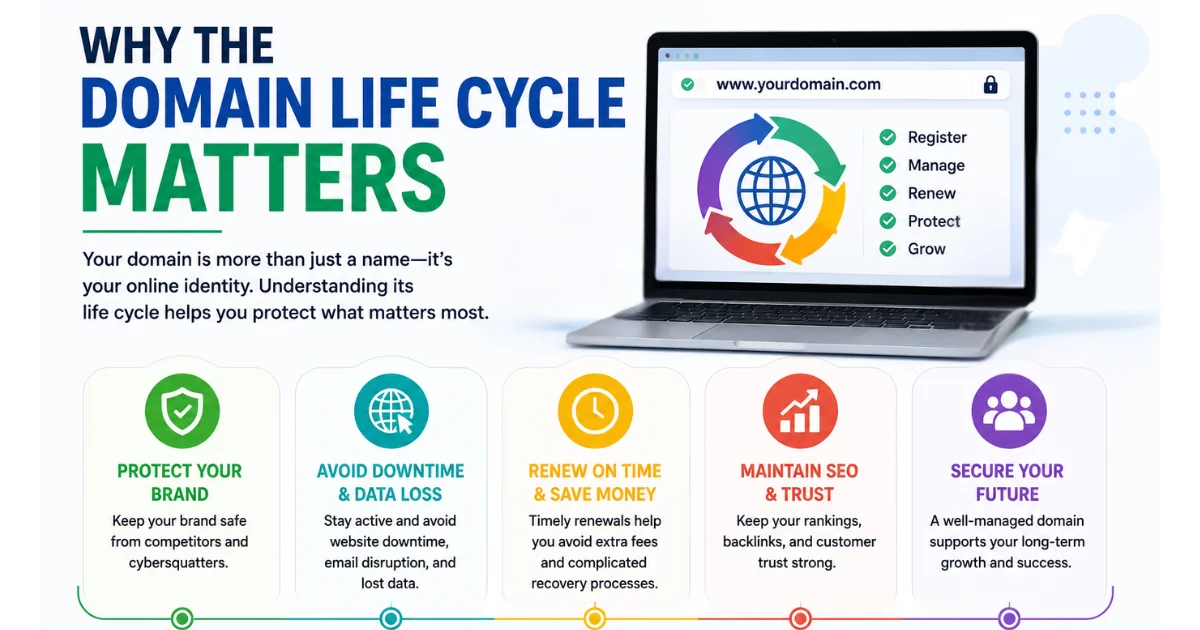
You might be thinking: “I will just set a calendar reminder.”
Sure. But here’s what’s actually at stake if you miss it.
Your website disappears. Every visitor gets an error page. Every day offline is lost traffic, lost sales, and lost trust.
Your email stops working. Clients email you. Nothing arrives. They think you’ve shut down or gone ghost.
Your SEO rankings tank. Google drops offline sites fast. Recovering lost rankings takes months of work even after the domain is restored.
Your brand becomes vulnerable. A competitor or bad actor can register your former domain and point it anywhere they like. Customers searching for you find them instead.
According to Verisign’s domain industry brief, tens of millions of domains expire unintentionally every year. Most of those owners didn’t plan to lose their domain. They just didn’t act in time.
How to Avoid Losing Your Domain
The good news: this is entirely preventable.
- Turn on auto-renewal right now. Log in to your registrar and flip the switch. This single step prevents the vast majority of accidental domain losses. Done.
- Keep your payment method current. Auto-renewal fails if your card is expired. Check your billing details at least once a year.
- Register for multiple years. A two or five-year registration gives you a longer runway and fewer renewal cycles to manage. Jake, a freelance designer, switched from annual to three-year registration and hasn’t thought about renewals since.
- Check expiration dates periodically. Even with auto-renewal on, log in a couple of times a year to confirm your domains are in good standing.
- Use a registrar you can trust. A reliable registrar sends clear reminders, processes renewals without hiccups, and has support available when something goes wrong. Truehost’s domain management tools keep everything visible in one place so nothing gets missed.
FAQs
What is the domain life cycle?
It’s the full sequence of stages a domain goes through from registration to expiration and eventual public release. The key stages are registration, active, expiration, grace period, redemption period, pending delete, and available for re-registration.
What happens when a domain name expires?
Your website and email go offline instantly. The domain enters a grace period where you can still renew at the standard rate, then a redemption period with extra fees, and eventually gets released for anyone to register.
Can I recover an expired domain name?
Yes, during the grace period at no extra cost and during the redemption period with a recovery fee. Once the domain enters pending delete, recovery is no longer possible.
How long is the domain grace period?
Between 0 and 30 days depending on the domain extension and registrar. Some extensions have no grace period at all, so don’t assume you have time without checking first.
What is the redemption period for a domain?
The redemption period follows the grace period and typically lasts 30 to 60 days. You can still get the domain back but must pay a redemption fee on top of the standard renewal cost.
Can someone else register my expired domain?
Yes. Once the domain clears pending delete and is released, anyone can register it. including competitors and domain investors who monitor expiring domains automatically.
Your Domain Won’t Protect Itself. You Have To.
The domain life cycle isn’t complicated. But ignoring it is expensive.
Register early. Enable auto-renewal. Keep your billing details current. Those three things cover 99% of the risk.
Miss them and you could spend hundreds recovering a domain that cost $15 to renew.
Don’t leave it to chance. Register, renew, and manage your domain with Truehost and keep your website, email, and brand exactly where they belong. with you