 Domain RegistrationFind and register the perfect domain for your website.
 .COM DomainChoose a widely recognized domain to build global credibility.
 Domain TransferSeamless domain transfers with zero downtime and complete control.
 All TLDsFind and register your perfect domain. Choose from local and global extensions.
 SSL CertificatesKeep your website safe with reliable SSL Certificates that protect customer data and build trust.
 whoisCheck domain ownership details, expiration dates, and registrar information.
 US DomainRegister a .US domain and build trust in the USA.
 Web HostingEverything your website needs to run smoothly
 WordPress HostingWordPress hosting that just works
 Windows HostingReliable hosting for Windows environments
 Reseller HostingTurn hosting into your business
 Email HostingEmail that looks professional and works anywhere
 cPanel HostingFull control of your hosting with cPanel
 Affiliate ProgramJoin as a partner and earn commissions on every referral you send our way.
 Vps HostingScalable virtual servers that expand as you need.
 Dedicated ServersGet complete access and full control over your dedicated physical server.
 Managed vpsNot tech-savvy? We will take care of everything with our fully managed VPS hosting for you.
 AI Website BuilderCreate stunning websites in seconds with AI.
 Online ShopSet up a professional online store. No coding required.
 Web design serviceGet a tailored website designed to match your brand and support your goals.
 BlogFind helpful guides on web hosting, online selling, digital marketing, and more.
 Contact USYou can reach us anytime, day or night, through chat or email.
 SupportBrowse helpful guides and answers for all of our services.
Email is usually the first tool you set up when starting a business, but it is also one of the first to show its limits as things grow. Storage begins to run out, user caps become restrictive, and features you assumed were included suddenly sit behind a paywall.
At that point, the decision becomes harder to ignore, whether to stick with free email hosting or move to a paid option.
Free email hosting is a basic service that allows you to create and use email accounts at no cost. It typically comes with limited storage, standard security, and a handful of essential features.
It is commonly used by freelancers, small teams, and early-stage businesses. Paid email hosting, however, is designed for more serious use.
It offers custom domain email, more storage, stronger security, and greater control over how your email system runs. The key difference is simple. Free plans cover the basics, while paid plans are built for stability, growth, and a more professional setup.
Platforms like Truehost offer paid email hosting plans built around these exact needs, giving businesses the tools to grow without the friction of a free plan holding them back.
This guide breaks down both options in a clear, practical way so you can decide what fits your current needs and what will still work as your business expands.
Key Differences Between Free and Paid Email Hosting
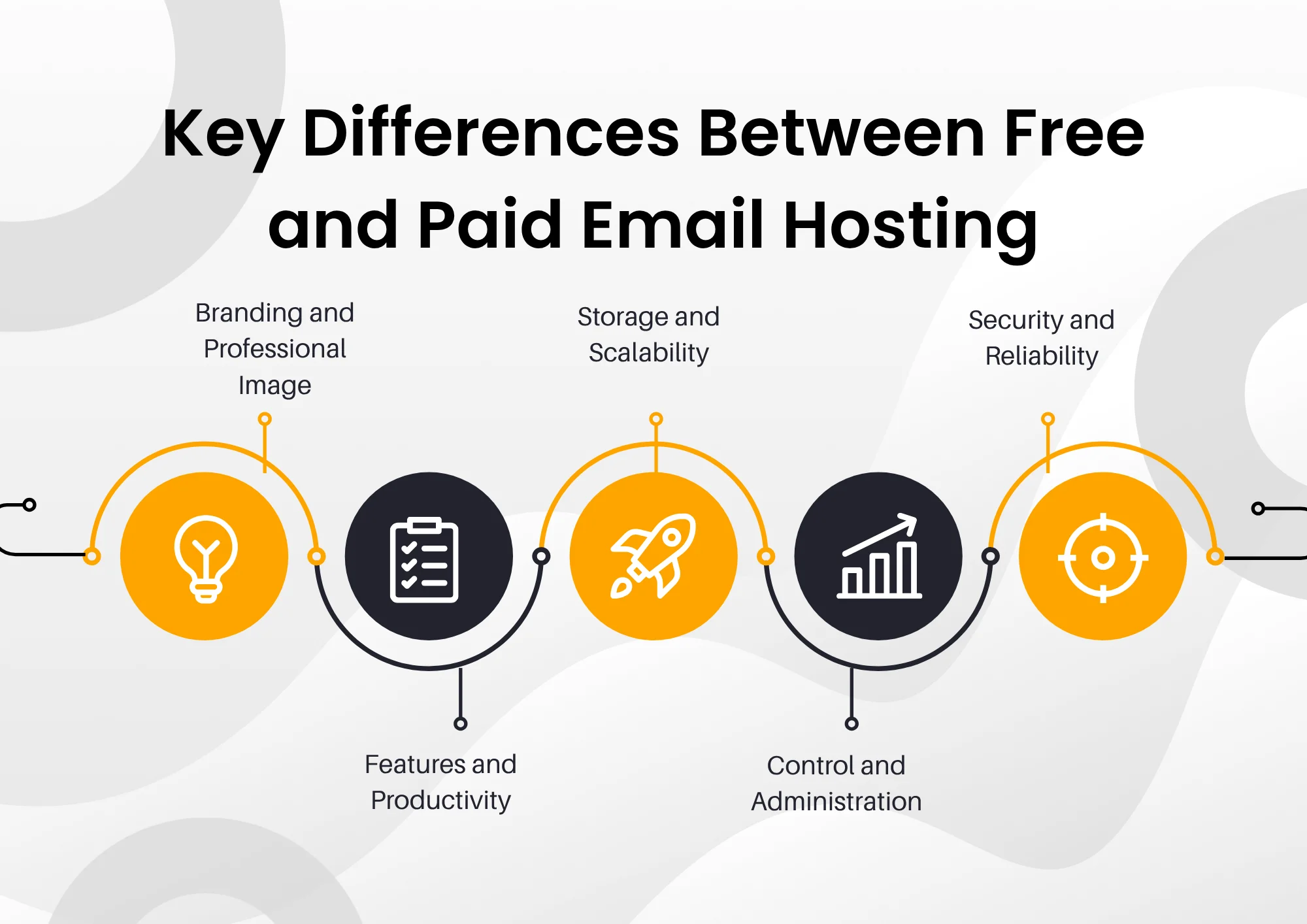
1) Branding and Professional Image
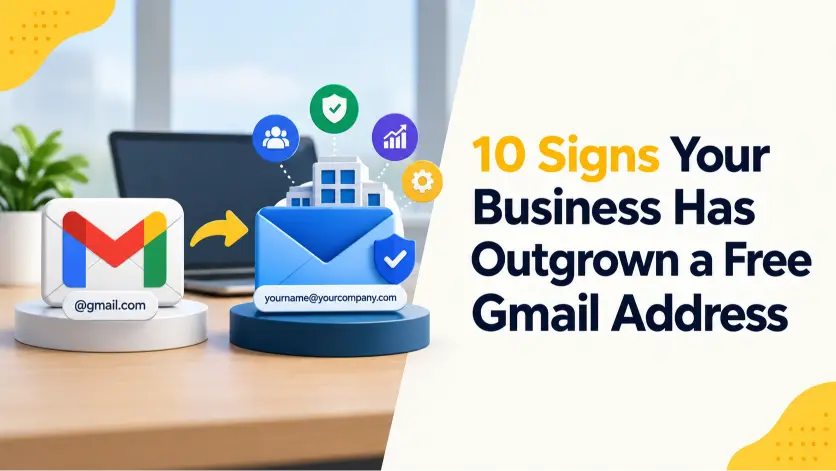
A free email plan ties your address to a shared provider domain. That tells clients and partners something before you have even sent a word. A paid plan gives you a custom domain that matches your website, so every email you send reinforces your business identity.
Sending a proposal from [email protected] carries more weight than the same message from a generic shared address. That gap in perception is real, and it shapes how people respond to you from the first interaction.
2) Storage and Scalability
Free plans give you a fixed storage limit. When you are exchanging files, proposals, and reports on a daily basis, that limit fills up faster than expected. Once it is gone, your inbox stops accepting new messages entirely.
Paid plans come with expandable storage. You can increase capacity as your team and communication volume grow, without moving to a new account or losing any of your existing email history.
3) Security and Reliability
Free plans provide basic spam filtering and standard protection. That level of security is adequate for personal use, but business email carries more risk, and the stakes are higher when client data and sensitive communications are involved.
Paid plans offer encrypted connections, advanced phishing and spam protection, and infrastructure built for consistent uptime. Providers like Truehost build their hosting around the reliability that a business email environment requires.
4) Features and Productivity
Free plans offer limited filtering options, basic forwarding, and stripped-down calendar tools. Auto-responders are either minimal or absent, and there is no admin dashboard to manage multiple accounts from one place.
Paid plans give you advanced filter rules, full alias and forwarding control, integrated collaboration tools, configurable auto-responders, and a proper admin panel.
You can automate routine tasks, organize incoming mail at scale, and manage your team without logging into individual accounts one by one.
5) Control and Administration
On a free plan, each team member manages their own account independently. There is no shared oversight, no central place to reset access, and no way to apply consistent settings or security policies across the group.
Paid hosting gives you a full admin panel. You can add and remove users, assign permissions, enforce password rules, and keep your entire email setup organized from a single dashboard.
Advantages of Free Email Hosting
Free email hosting has a clear role, particularly in the early stages of a business. Here is where it genuinely works:
- No cost. There is no monthly fee, no contract, and no financial commitment. For someone just getting started, that is a real advantage.
- Quick setup. You can have an inbox running within minutes, with no technical configuration needed.
- Broad compatibility. Free plans from major providers connect easily with most apps and devices.
- Practical for early stages. If you are still building your offering or working as a solo operator, a free plan keeps things running without adding overhead.
For very small operations or anyone in the earliest phase of a business, free email covers the basics without getting in the way.
Limitations of Free Email Hosting
The limitations of free email hosting are manageable at first, but they become harder to work around as a business grows. Here is where things tend to break down:
- No custom domain. Your email address carries a shared provider name, not your own, which weakens your brand in every message you send.
- Storage caps. You will reach the limit faster than expected, especially once files and client correspondence start piling up.
- Poor scalability. Adding team members means creating separate accounts with no central structure linking them together.
- Thin feature set. Automation, advanced filters, and admin tools are either missing or too limited to support a growing workload.
- Deliverability issues. Emails sent from free provider domains are more likely to be filtered into spam, particularly by enterprise email systems.
- No dedicated support. When something goes wrong, you are left working through community forums and general help articles on your own.
These are not isolated frustrations. For a business that depends on email to communicate with clients and close deals, each of these gaps carries a real cost.
Advantages of Paid Email Hosting
Paid email hosting changes what your email setup can actually do for your business. Here is what it adds:
- A professional identity. A custom domain email tells clients your business is properly established. It is a small detail with a noticeable effect.
- Reliable deliverability. Paid providers maintain strong sender reputations, so your messages land in inboxes rather than spam folders. You can read more about email deliverability best practices to see how much this affects business communication.
- Room to scale. You can add users and increase storage without switching platforms or rebuilding your email setup.
- Stronger security. Encryption, two-factor authentication, and advanced spam filtering give your communications a level of protection that free plans do not offer.
- Dedicated support. When something breaks, a support team is available to help you fix it quickly.
- Business integrations. Paid plans connect with CRMs, project management tools, and productivity software, keeping your workflow connected.
Together, these features make paid hosting a practical foundation rather than an optional upgrade.
When Should You Upgrade from Free to Paid?
There is no fixed rule for when to make the move, but there are clear signs that a free plan is no longer doing enough.
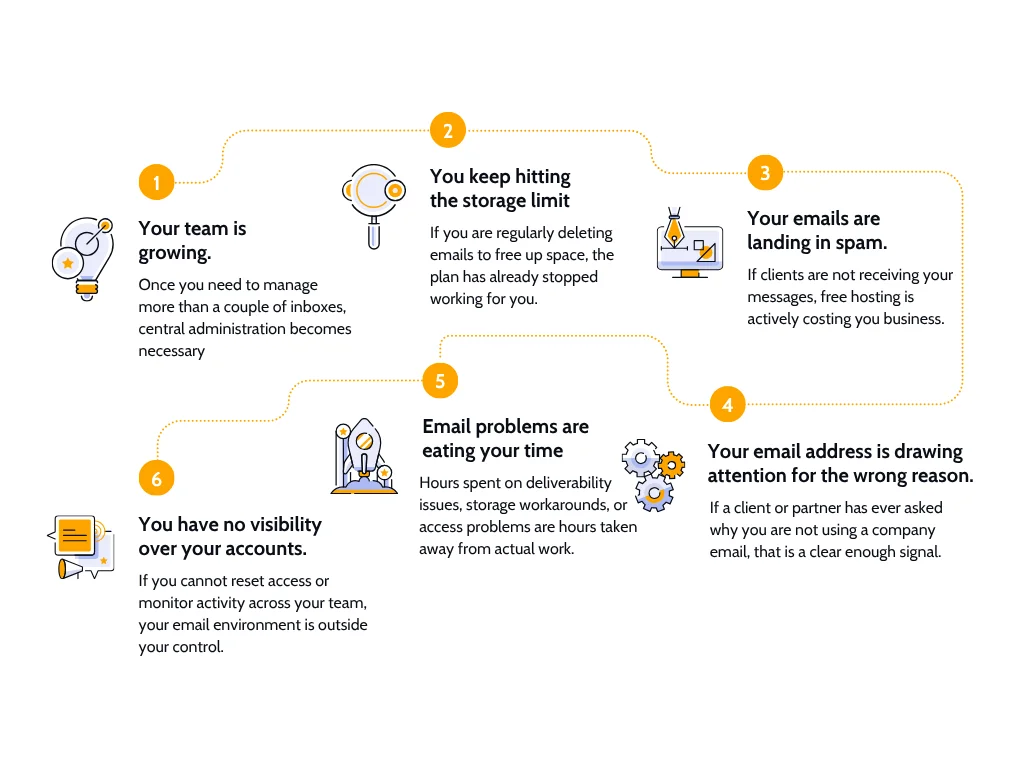
- Your team is growing. Once you need to manage more than a couple of inboxes, central administration becomes necessary. Free plans do not provide that.
- You keep hitting the storage limit. If you are regularly deleting emails to free up space, the plan has already stopped working for you.
- Your emails are landing in spam. If clients are not receiving your messages, free hosting is actively costing you business.
- You have no visibility over your accounts. If you cannot reset access or monitor activity across your team, your email environment is outside your control.
- Your email address is drawing attention for the wrong reason. If a client or partner has ever asked why you are not using a company email, that is a clear enough signal.
- Email problems are eating your time. Hours spent on deliverability issues, storage workarounds, or access problems are hours taken away from actual work.
Any one of these is a reasonable prompt to upgrade. Several at once make it urgent. Learn more about choosing the right business email setup to see what a proper plan includes.
Cost vs Value: Is Paid Email Hosting Worth It?
The price of a free plan is zero. The cost of using it for a growing business is harder to measure, but it is very real.
Every time a client doubts your email address, every time a message ends up in spam, every time you miss an important email because your inbox is full, that is a cost. It may not appear on an invoice, but it affects your business all the same.
Paid email hosting typically comes at a small monthly cost per user, depending on the provider and plan. With Truehost business email plans, you get a clear picture of what the market offers while also getting added value in reliability, security, professional branding, and responsive support.
There is also the time factor. Constantly fixing email issues, managing multiple free accounts, or dealing with limitations that should not exist takes up time you could be using to grow your business. Paid hosting removes that friction and gives you a more stable system to work with.
Best Paid Email Hosting Options
When evaluating paid email hosting providers, there are a few things worth checking before you commit:
- Custom domain support that aligns with your website address
- Scalable storage with a clear path to increase capacity as needed
- Security features including encryption and two-factor authentication
- Uptime reliability backed by a service level agreement
- Admin controls that let you manage users and permissions centrally
- Support availability from a team that can respond when something goes wrong
Truehost is a strong option for businesses looking for affordable, well-rounded email hosting. It provides custom domain email, solid security, scalable storage, and the admin controls a growing team needs, without overcomplicating the setup or the pricing.
Other providers worth looking at include Google Workspace, Microsoft 365, and Zoho Mail. The right fit depends on your team size, your existing tools, and what level of support you need day to day.
Is your current setup still working for your business, or is it holding you back?
Free email hosting and paid email hosting serve different purposes at different points in a business. Free plans make sense when you are starting out. They are low effort, cost nothing, and handle basic communication for solo operators and very small teams.
As your business grows, those same plans start to work against you. Storage limits, no custom domain, weak security, and no central management all create friction that compounds over time.
Paid email hosting is not an extra. It is the infrastructure that keeps your communication credible, consistent, and scalable. The right time to move is before the limitations become costly, not after they already have.
If you are ready to set up a plan that supports where your business is going, Truehost offers business email hosting with custom domain support, strong security, scalable storage, and full admin control. Take a look at their plans and pick the one that fits.