 Domain RegistrationFind and register the perfect domain for your website.
 .COM DomainChoose a widely recognized domain to build global credibility.
 Domain TransferSeamless domain transfers with zero downtime and complete control.
 All TLDsFind and register your perfect domain. Choose from local and global extensions.
 SSL CertificatesKeep your website safe with reliable SSL Certificates that protect customer data and build trust.
 whoisCheck domain ownership details, expiration dates, and registrar information.
 US DomainRegister a .US domain and build trust in the USA.
 Web HostingEverything your website needs to run smoothly
 WordPress HostingWordPress hosting that just works
 Windows HostingReliable hosting for Windows environments
 Reseller HostingTurn hosting into your business
 Email HostingEmail that looks professional and works anywhere
 cPanel HostingFull control of your hosting with cPanel
 Affiliate ProgramJoin as a partner and earn commissions on every referral you send our way.
 Vps HostingScalable virtual servers that expand as you need.
 Dedicated ServersGet complete access and full control over your dedicated physical server.
 Managed vpsNot tech-savvy? We will take care of everything with our fully managed VPS hosting for you.
 AI Website BuilderCreate stunning websites in seconds with AI.
 Online ShopSet up a professional online store. No coding required.
 Web design serviceGet a tailored website designed to match your brand and support your goals.
 BlogFind helpful guides on web hosting, online selling, digital marketing, and more.
 Contact USYou can reach us anytime, day or night, through chat or email.
 SupportBrowse helpful guides and answers for all of our services.
You spent months building your brand.
You finally have the perfect business name.
Then you go to register the domain and someone else already owns it.
And they want $5,000 for it.
That is domain squatting. And it happens to businesses every single day.
This article breaks down exactly what domain squatting is, who does it, and how to make sure it never happens to you.
Don’t let a squatter beat you to your domain. Register your domain with Truehost before someone else does.
What Is Domain Squatting?
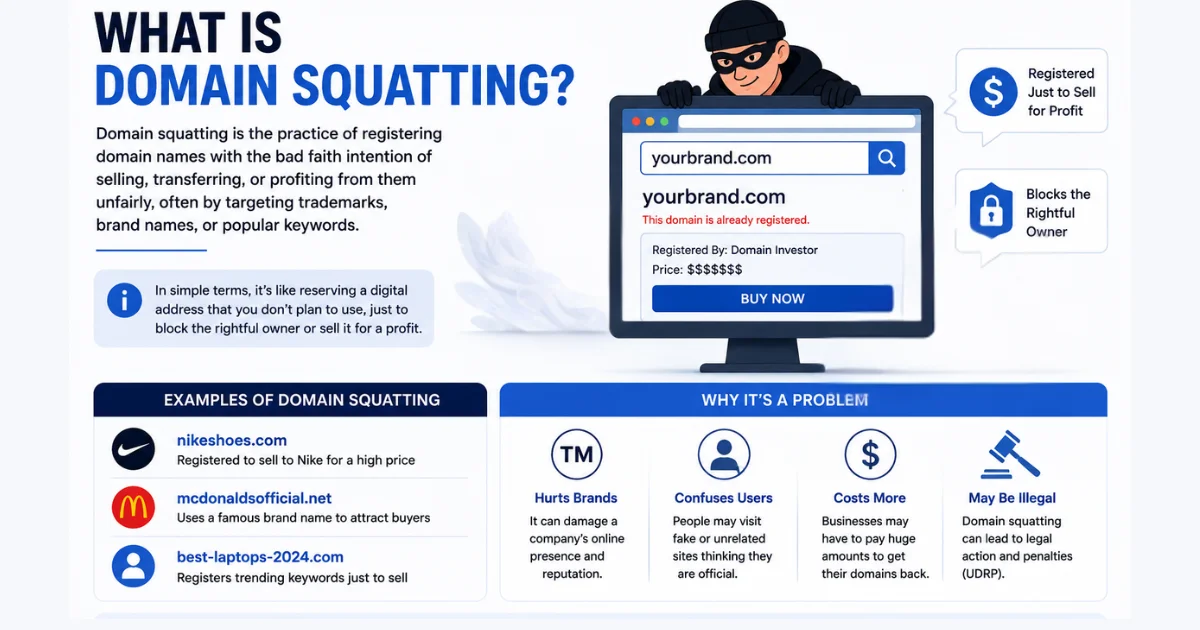
Domain squatting is when someone registers a domain name that belongs to, or is closely tied to, another brand or business. and they do it on purpose.
They are not building a website. They are not starting a company.
They are waiting for you to come knocking so they can charge you a fortune for a name that should have been yours.
What Cybersquatting Means
Cybersquatting is the legal term for the same thing. The Anticybersquatting Consumer Protection Act (ACPA) made it a federal offense in the United States back in 1999.
The law exists because this was already a serious enough problem to need one.
How Domain Squatting Works
A squatter finds a business name gaining traction. maybe a new startup, a trademark filing, or a growing brand. and registers the matching domain before the actual owner does.
Then they sit and wait. Sometimes they put ads on the page. Sometimes they build a fake version of the site. Sometimes they just hold it and wait for an offer.
Why It Has Become a Common Issue
Domains are cheap to register. A squatter can pick up a name for $10 and flip it for thousands if the brand becomes valuable enough.
With automated tools that monitor trademark filings and track trending names, squatters can move faster than most business owners even realize they need to.
How Does Cybersquatting Work?
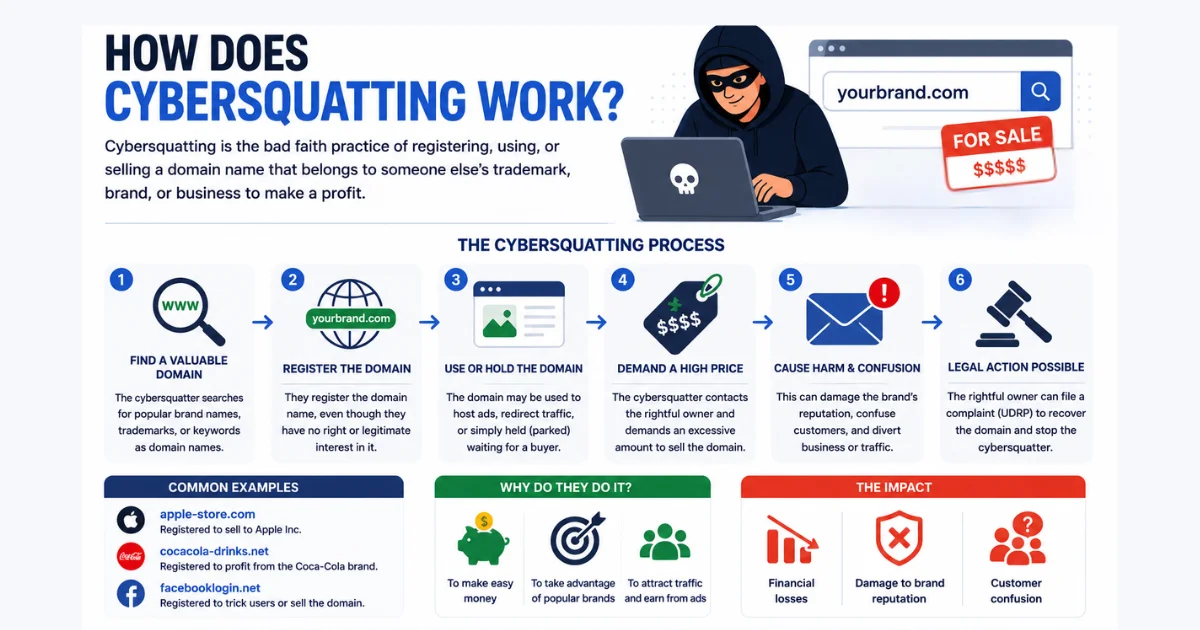
There are several flavors of this problem and each one stings differently.
1) Registering Trademarked Names
This is the most straightforward version. Someone sees your brand name, checks if the domain is available, and registers it before you do.
Now you either pay their price or fight them in court.
2) Buying Expired Domains
You let a domain expire because you forgot to renew it. A squatter picks it up the next day.
Now they have your brand name, your backlinks, your traffic history, and probably your old customers landing on their page instead of yours.
3) Typosquatting
This one is sneaky.
Squatters register common misspellings of popular domains. Think “amzon.com” or “goggle.com.”
Anyone who mistypes your address lands on their site. They collect the traffic, run ads, or worse, run phishing scams pretending to be you.
4) Registering Domains to Resell for Profit
Some squatters are just speculators. They register any name they think might be valuable and list it for sale.
This becomes a problem the moment you need that name and someone else is holding it.
5) Impersonating Businesses or Brands
The most dangerous version. A squatter builds a fake copy of your website on a similar domain.
Customers show up thinking they are dealing with you. They share their credit card details. They download files. They hand over login credentials.
This is not just bad for business. It is illegal and it damages the trust you spent years building.
Why Domain Squatting Is a Problem
Let’s be clear about what is actually at stake here.
- Your brand reputation takes a hit. If customers land on a fake version of your site and get scammed, they blame you. Even if you had nothing to do with it.
- You lose customers and revenue. Every visitor who ends up on the wrong site is a sale you never made. And they probably are not coming back.
- Phishing scams run in your name. A squatted domain can be used to send fake emails that look like they are from you. Your customers get targeted. Your reputation gets torched.
- Trademark disputes eat your time and money. Even if you win a UDRP case, you are spending legal fees and months of your life fighting for something that should have been yours from day one.
- You lose SEO ground. A squatter ranking for your brand name in search results steals organic traffic that should be coming to you.
How to Protect Your Domain from Cybersquatting
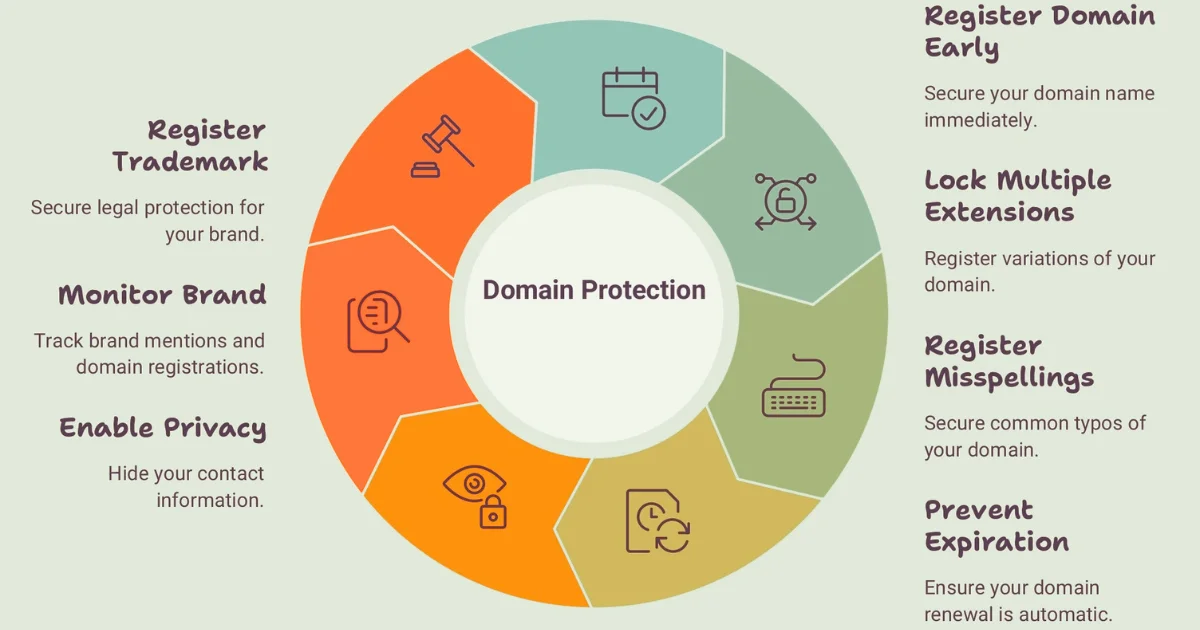
Here is the good news. Most of this is completely avoidable.
- Register your domain the moment you settle on a name. Do not wait until you have a logo or a product ready. Register first. Everything else can come later.
- Lock down multiple extensions. Grab your name across .com, .net, .us, .co, and any extension that makes sense for your market. Truehost makes it simple to register multiple domains and manage them all from one place without juggling separate accounts.
- Register common misspellings. Think about how someone might mistype your name and register those variations too. It costs a few dollars a year per domain. It costs nothing compared to losing customers to a typosquatter.
- Never let your domain expire. A lapsed domain is an open invitation. Turn on auto-renewal and keep your payment method current so the renewal never fails.
- Enable domain privacy protection. WHOIS privacy hides your contact details from public domain records. It keeps squatters from targeting your other domains or spamming you with fake buyout offers.
- Monitor your brand. Set up Google Alerts for your business name. You can also use a WHOIS tool like Truehost domain search to check whether similar domains are being registered near yours.
- Register your trademark. A registered trademark gives you serious leverage in any dispute. If your business name has commercial value, trademark protection is not optional. it is smart business.
What to Do If Someone Cybersquats Your Domain
Already too late? Here is your playbook.
Contact the Domain Owner
Look up the registrant’s contact details through a WHOIS lookup. Some squatters will negotiate, especially if the domain has been sitting idle. Start low. Do not reveal how much you need it.
Negotiate a Purchase
If they are willing to sell at a reasonable price, use an escrow service to handle the transaction. This protects you from paying and getting nothing in return.
File a UDRP Complaint
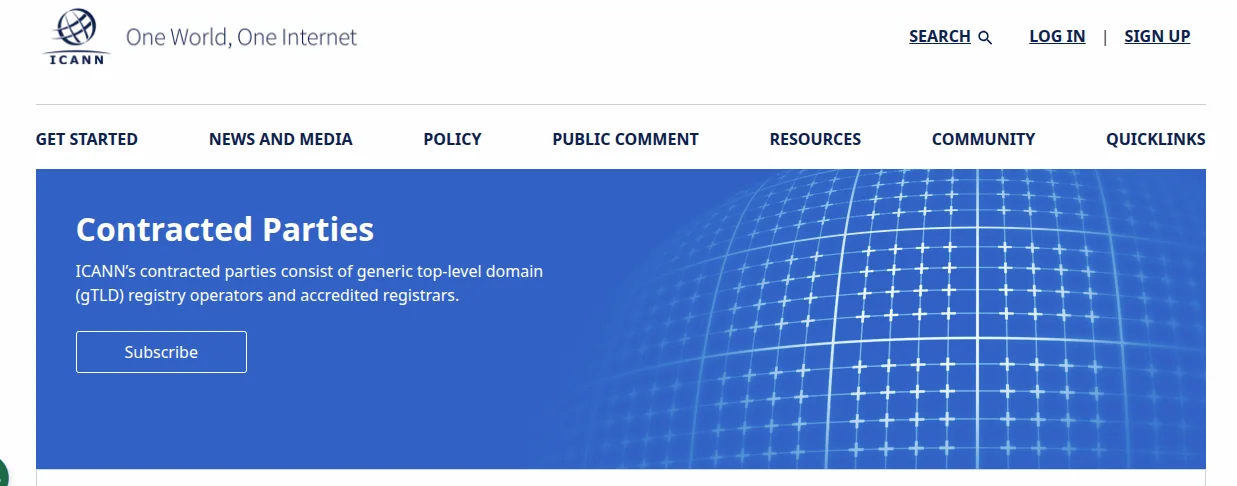
The Uniform Domain-Name Dispute-Resolution Policy, or UDRP, is an administrative process run by ICANN that lets you fight for a domain without going to court.
To win, you need to show three things: the domain is confusingly similar to your trademark, the squatter has no legitimate claim to it, and it was registered in bad faith.
UDRP cases typically resolve in under two months. It is faster and cheaper than litigation.
Take Legal Action When Necessary
If you need financial damages on top of recovering the domain, the ACPA gives you a path to court. Legal action is slower and more expensive, but it is an option when the situation warrants it.
Report Phishing or Fraudulent Websites
If a squatted domain is being used to impersonate your business, report it to Google Safe Browsing, your national cybercrime agency, and your domain registrar. Getting the site flagged reduces the damage while the formal dispute plays out.
Domain Squatting vs Cybersquatting vs Typosquatting
People use these terms interchangeably, but they are not identical. Here is the difference.
| Term | What It Means | Example | Goal |
|---|---|---|---|
| Domain Squatting | Registering a domain tied to someone else’s brand | Registering acmecorp.com before Acme Corp | Profit from resale or leverage |
| Cybersquatting | Legal term for bad-faith domain registration targeting trademarks | Registering nike-outlet.com to extort Nike | Financial gain from trademark abuse |
| Typosquatting | Registering misspellings of popular domains | Registering amazzon.com | Capturing misdirected traffic |
All three are bad faith moves. The method changes but the damage is the same.
Best Practices for Protecting Your Domain
- Monitor domain registrations regularly. Set alerts for your brand name and check for similar registrations every few months.
- Secure related domains upfront. Register variations and extensions at the same time as your primary domain. Do it once, do it right.
- Lock down your registrar account. Enable two-factor authentication. A hijacked account can lead to unauthorized domain transfers.
- Keep your contact information current. Renewal reminders and security alerts go to the email on your account. An outdated address means missed warnings.
- Check expiration dates even with auto-renewal on. Renewals can fail silently if a card expires. Confirm everything is processing correctly a couple of times a year.
Truehost’s domain management dashboard keeps all of this in one place. renewals, privacy settings, DNS management, and domain monitoring without needing separate tools.
FAQs
What is domain squatting?
It is when someone registers a domain name tied to an existing brand or trademark in bad faith, usually to profit by reselling it or using it to mislead customers.
What is the difference between domain squatting and cybersquatting?
Domain squatting is the general term for the behavior. Cybersquatting is the legal term used when a registered trademark is specifically targeted. Both involve bad faith registration.
Is domain squatting illegal?
In many countries, yes. In the United States, the Anticybersquatting Consumer Protection Act makes it a federal offense to register a domain in bad faith to profit from someone else’s trademark.
How can I protect my domain from cybersquatting?
Register early, lock down multiple extensions and misspellings, enable auto-renewal, use WHOIS privacy, and monitor for similar domain registrations. The earlier you move, the less risk you carry.
What should I do if someone registers my business name as a domain?
Check the WHOIS record and contact the owner. Negotiate if the price is reasonable. If not, file a UDRP complaint through ICANN or consult a lawyer about action under the ACPA.
Can I recover a cybersquatted domain name?
Yes. A successful UDRP complaint can result in the domain being transferred to you. Legal action under the ACPA can also result in recovery and financial damages.
Don’t Let a Squatter Own Your Brand
Domain squatting is a cheap trick that costs businesses real money every year.
The fix is simple. Register your domain early. Lock down the variations. Keep auto-renewal on. Never let your domain expire.
A $15 domain registration beats a $5,000 buyout every time.
Stop waiting and start protecting. Register your domain with Truehost today, enable privacy protection, and keep your brand exactly where it belongs.