 Domain RegistrationFind and register the perfect domain for your website.
 .COM DomainChoose a widely recognized domain to build global credibility.
 Domain TransferSeamless domain transfers with zero downtime and complete control.
 All TLDsFind and register your perfect domain. Choose from local and global extensions.
 SSL CertificatesKeep your website safe with reliable SSL Certificates that protect customer data and build trust.
 whoisCheck domain ownership details, expiration dates, and registrar information.
 US DomainRegister a .US domain and build trust in the USA.
 Web HostingEverything your website needs to run smoothly
 WordPress HostingWordPress hosting that just works
 Windows HostingReliable hosting for Windows environments
 Reseller HostingTurn hosting into your business
 Email HostingEmail that looks professional and works anywhere
 cPanel HostingFull control of your hosting with cPanel
 Affiliate ProgramJoin as a partner and earn commissions on every referral you send our way.
 Vps HostingScalable virtual servers that expand as you need.
 Dedicated ServersGet complete access and full control over your dedicated physical server.
 Managed vpsNot tech-savvy? We will take care of everything with our fully managed VPS hosting for you.
 AI Website BuilderCreate stunning websites in seconds with AI.
 Online ShopSet up a professional online store. No coding required.
 Web design serviceGet a tailored website designed to match your brand and support your goals.
 BlogFind helpful guides on web hosting, online selling, digital marketing, and more.
 Contact USYou can reach us anytime, day or night, through chat or email.
 SupportBrowse helpful guides and answers for all of our services.
Getting visitors to your store is only half the job. If they can’t complete payment easily, securely, and using a method they actually trust, you lose the sale right at the finish line.
Modern ecommerce platforms make this far easier than it used to be, integrating directly with payment gateways and processors that handle the heavy lifting.
This article covers how to accept payments on an ecommerce website, from how the payment process works to choosing a gateway, securing checkout, testing everything, and handling the inevitable failed payment or chargeback.
Want your store running on infrastructure built for real transactions? Get started with Truehost Ecommerce Hosting and set up the secure foundation your payment system will depend on, then keep reading for the full setup process.
What You Need to Accept Payments Online
The basic requirements are fewer than most beginners expect:
- An ecommerce website
- A registered domain
- Reliable ecommerce hosting
- An ecommerce platform
- A payment gateway or processor
- A merchant account, where required
- Business and banking information
- An SSL certificate
- A secure checkout process
Step-by-Step Guide to Accept Payments on an Ecommerce Website

Step 1: Choose Your Ecommerce Platform
Popular options include WooCommerce, Shopify, Magento, PrestaShop, and OpenCart. Payment integrations vary meaningfully by platform, so this choice shapes which gateways will be easiest to connect later.
Step 2: Choose a Payment Gateway
Shortlist providers based on fees, supported payment methods, currencies, availability in your market, security, and platform integration. Use the criteria from the section above to narrow your options down to two or three real contenders.
Step 3: Create Your Payment Account
Register with your chosen provider, submit your business information, complete their verification process, and connect a business bank account for settlements.
Step 4: Connect the Payment Gateway to Your Store
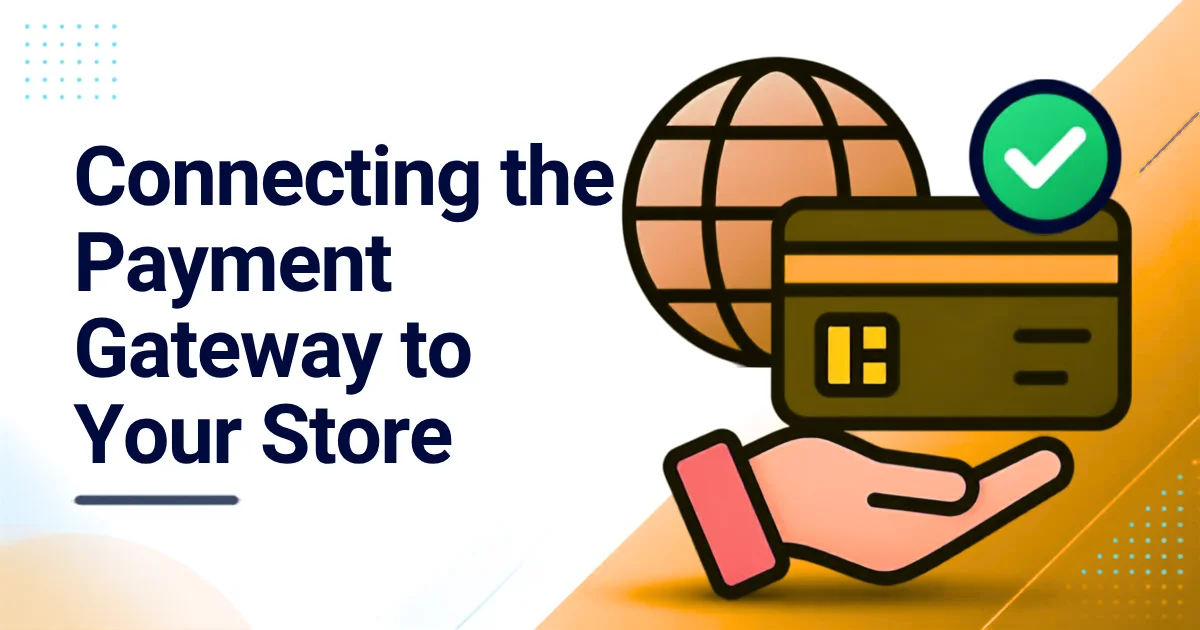
Install the relevant integration or plugin, enter your credentials or API keys, configure your payment settings, and enable the specific payment methods you want live.
Step 5: Configure Your Checkout
Set up guest checkout, keep required fields to a minimum, display your accepted payment methods clearly, show transparent pricing and totals, and confirm order confirmations are sending correctly.
Step 6: Secure Your Payment Process
Confirm SSL and HTTPS are active, keep your software updated, enable fraud protection tools, use strong administrator passwords, and turn on two-factor authentication for anyone with admin access.
Step 7: Test Your Payment System
Run test transactions covering successful payments, declined payments, refunds, and each payment method you’ve enabled. Confirm order confirmations and payment notifications are firing correctly before you rely on any of it live.
Step 8: Start Accepting Payments
Once live, keep an eye on your first real transactions, confirm payouts are settling as expected, and watch for failed payments or customer issues that need quick attention in these early days.
Payment Methods You Can Accept on an Ecommerce Website
No single payment method works best for every business. Here’s what’s actually available.
- Credit and debit cards: Visa, Mastercard, American Express, and other major networks remain the most universally accepted option.
- Digital wallets: PayPal, Apple Pay, and Google Pay offer faster checkout, especially on mobile, where typing card details is more of a hassle.
- Buy Now, Pay Later: Split-payment and pay-over-time options can boost conversion for higher-priced items, letting customers commit without paying the full amount upfront.
- Bank payments: ACH payments, direct bank transfers, and other account-to-account options often carry lower fees than card processing.
- Local payment methods: Many markets have strongly preferred regional options, so research what your specific target customers actually use before assuming cards are enough.
How Much Does It Cost to Accept Payments Online?
Costs typically come from a combination of sources:
- Payment gateway fees
- Transaction fees
- Payment processing fees
- Monthly platform fees
- Currency conversion fees
- Chargeback fees
- Refund-related costs
How to Reduce Payment Processing Costs
- Compare providers based on your actual transaction volume, not generic advertised rates.
- Read the full fee structure, not just the headline percentage.
- Choose payment methods strategically, since some cost meaningfully less to process than others.
- Review your fees periodically, since providers do change their pricing over time.
- Remove payment services you’re not actually using, since some carry standing monthly fees regardless of activity.
How to Keep Ecommerce Payments Secure
- Use SSL and HTTPS across your entire site, not just the checkout page.
- Follow PCI DSS requirements, which apply to any business handling cardholder data, even through a third-party gateway.
- Enable strong customer authentication, adding an extra verification layer for higher-risk transactions.
- Use fraud detection tools built into your gateway or added as a separate service.
- Protect customer information by minimizing what you store and encrypting what you must retain.
- Keep your ecommerce software updated, since outdated plugins are a common entry point for attackers.
- Monitor suspicious transactions, watching for unusual patterns like repeated failed attempts or mismatched billing details.
A secure store starts with secure infrastructure underneath it. Truehost provides the hosting foundation, including SSL support and security-conscious infrastructure, that makes the rest of this list easier to maintain consistently.
How to Reduce Failed Payments and Abandoned Carts
- Offer the payment methods your customers actually prefer, not just the ones easiest for you to set up.
- Keep checkout as simple as possible, cutting unnecessary steps and fields.
- Show all costs clearly upfront, including shipping and taxes, before the final payment screen.
- Optimize checkout specifically for mobile, where most abandonment tends to happen.
- Display security indicators like SSL badges and trusted payment logos visibly.
- Write useful payment error messages that tell customers what actually went wrong.
- Let customers retry a failed payment without restarting the entire checkout process.
How to Handle Refunds, Chargebacks, and Failed Payments
- Refunds: Maintain a clear, visible refund policy, process approved refunds promptly, and notify customers once it’s complete.
- Chargebacks: Understand the common causes, from fraud to simple customer confusion, keep detailed transaction records, and respond to disputes quickly with supporting evidence. Visa’s own chargebacks guide breaks down exactly how the dispute process works from a card network’s perspective.
- Failed payments: Identify why a transaction was declined where possible, offer an alternative payment method, and make retrying simple rather than forcing a customer to start over.
Common Ecommerce Payment Problems and Their Solutions
- Payment gateway isn’t connecting: Usually an API key, credential, or plugin configuration issue. Recheck your integration settings against your gateway’s current documentation.
- Customer’s payment is declined: Often caused by insufficient funds, bank fraud flags, or incorrect billing details entered at checkout. Encourage the customer to verify their details or contact their bank.
- Payment succeeds but the order isn’t created: Typically a webhook or integration failure between your gateway and your platform. Check your integration logs for the specific error.
- Customer is charged but the order shows as unpaid: This usually points to a delayed or failed webhook notification. Manually verify the transaction in your gateway dashboard and update the order status.
- Payments are delayed: Check your gateway’s standard settlement schedule first, since delays are often just standard processing time rather than an actual problem.
- Refund isn’t appearing: Refund processing times vary by bank, often taking several business days even after your gateway confirms it was issued.
- Payment gateway fees are higher than expected: Review your actual fee structure against your transaction mix, since certain card types or international transactions often carry higher rates than advertised base pricing.
Common Mistakes to Avoid When Setting Up Ecommerce Payments
- Offering too few payment options, losing customers who don’t see their preferred method.
- Choosing a gateway based only on price, without checking security, support, or platform compatibility.
- Making checkout unnecessarily complicated, adding fields and steps that don’t serve a real purpose.
- Not testing payments before launch, discovering problems only after real customers hit them.
- Ignoring mobile checkout, where a large share of your traffic likely converts.
- Failing to secure the website, leaving both your business and customers exposed.
- Hiding additional fees until checkout, a fast way to trigger cart abandonment.
- Not having a clear refund policy, creating confusion and eroding trust after the sale.
FAQs
Can I accept ecommerce payments without a business?
In most cases, you will need at least a registered sole proprietorship or equivalent business structure, since payment gateways typically require this for verification and compliance.
How long does it take to set up online payments?
Basic setup can take anywhere from a few hours to a few days, depending mostly on how quickly your gateway completes its verification process.
Can I accept international payments from customers in other countries?
Yes, as long as your chosen gateway supports the relevant countries and currencies, though international transactions often carry additional conversion fees.
What happens if a customer disputes an ecommerce payment?
The transaction enters a formal chargeback process, where you will typically have an opportunity to respond with evidence before the bank issues a final decision.
Can I change my payment gateway after launching my online store?
Yes, though it usually requires reconfiguring your checkout integration and may involve a short transition period to avoid disrupting active transactions.
Are online payments secure?
Online payments can be secure when reliable payment systems are used. Most modern payment platforms protect transaction data with encryption, fraud monitoring, and other security measures designed to prevent unauthorized access and detect suspicious activity. They also follow established security and compliance standards to help keep customer information and payments protected.
Ready to Start Accepting Payments on Your Ecommerce Website?
A smooth payment experience often decides whether a customer completes their purchase or abandons it at the last second. Choosing the right payment methods, a dependable gateway, and a genuinely secure checkout process gives you the best possible shot at capturing every sale you’ve worked to earn.
None of that works reliably without solid infrastructure underneath it. Truehost gives ecommerce businesses the secure, dependable hosting foundation needed to run a payment system customers can actually trust.
Ready to get started? Get reliable ecommerce builder and build your store on infrastructure designed to support real transactions from day one.