 Domain RegistrationFind and register the perfect domain for your website.
 .COM DomainChoose a widely recognized domain to build global credibility.
 Domain TransferSeamless domain transfers with zero downtime and complete control.
 All TLDsFind and register your perfect domain. Choose from local and global extensions.
 SSL CertificatesKeep your website safe with reliable SSL Certificates that protect customer data and build trust.
 whoisCheck domain ownership details, expiration dates, and registrar information.
 US DomainRegister a .US domain and build trust in the USA.
 Web HostingEverything your website needs to run smoothly
 WordPress HostingWordPress hosting that just works
 Windows HostingReliable hosting for Windows environments
 Reseller HostingTurn hosting into your business
 Email HostingEmail that looks professional and works anywhere
 cPanel HostingFull control of your hosting with cPanel
 Affiliate ProgramJoin as a partner and earn commissions on every referral you send our way.
 Vps HostingScalable virtual servers that expand as you need.
 Dedicated ServersGet complete access and full control over your dedicated physical server.
 Managed vpsNot tech-savvy? We will take care of everything with our fully managed VPS hosting for you.
 AI Website BuilderCreate stunning websites in seconds with AI.
 Online ShopSet up a professional online store. No coding required.
 Web design serviceGet a tailored website designed to match your brand and support your goals.
 BlogFind helpful guides on web hosting, online selling, digital marketing, and more.
 Contact USYou can reach us anytime, day or night, through chat or email.
 SupportBrowse helpful guides and answers for all of our services.
You come up with what feels like the perfect name for your website. You search for it, taken. You tweak it, also taken. You try a completely different angle still taken.
Sound familiar? Figuring out how to choose a domain name is one of those things that sounds easy until you actually try to do it. But the right domain name can make a huge difference for your brand, your credibility, and how easy it is for people to find you online.
This guide walks you through everything you need to know from what makes a great website domain name to how to register one that works for the long haul.
Ready to find your perfect domain? Search available domain names on Truehost , it takes less than 60 seconds.
Why Your Domain Name Matters
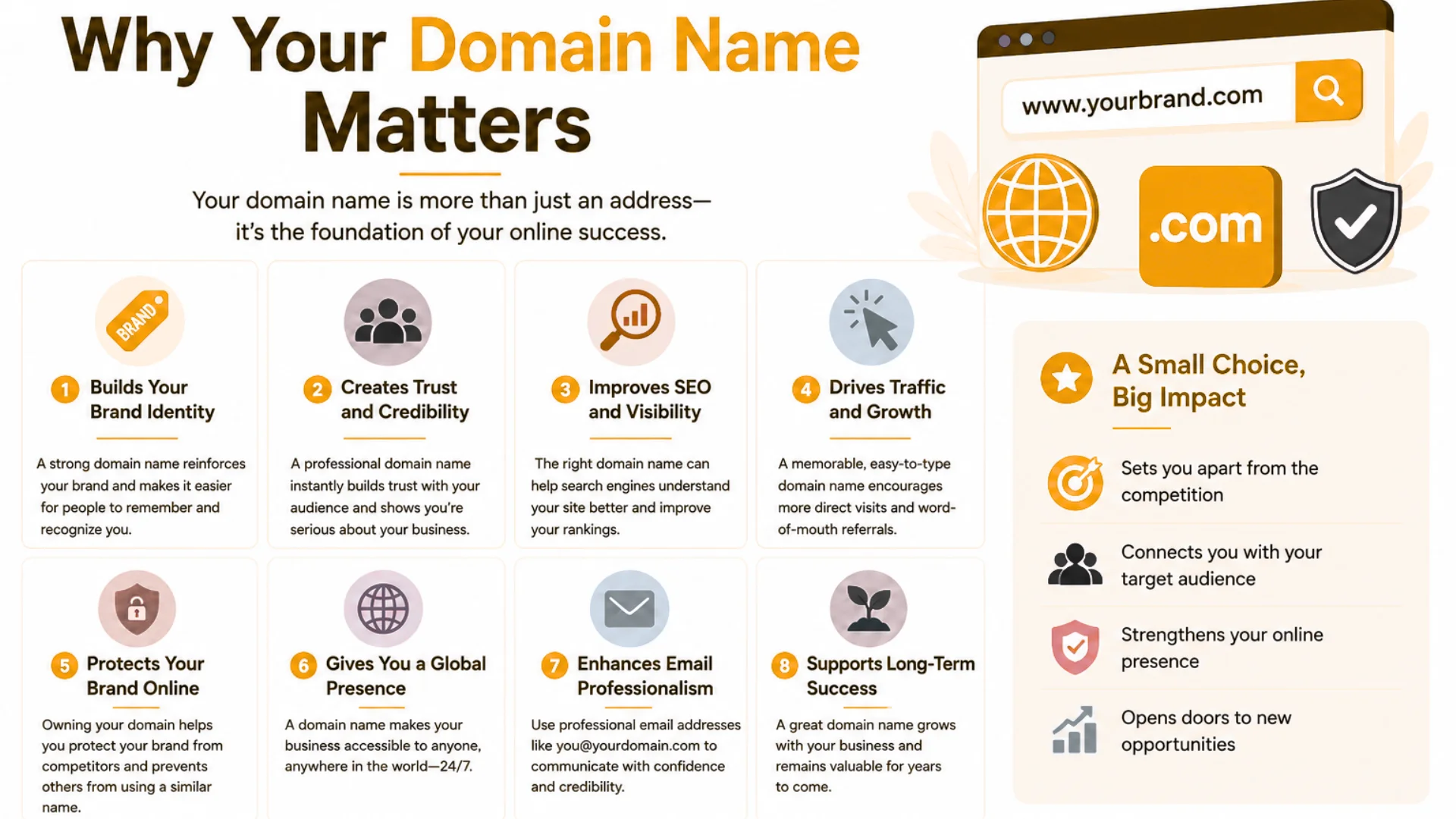
Your domain name is the first thing people see when they look you up online. It shapes how they feel about your brand before they even land on your site.
1) Branding
A great domain name reinforces your brand identity. It tells people who you are, what you stand for, and why they should care, all in just a few words.
2) Credibility
A clean, professional domain signals that you take your business seriously. A cluttered or confusing one can make people question whether you’re legitimate.
3) Customer Trust
People trust what they recognize. A domain name that’s easy to read and understand makes first-time visitors more comfortable clicking through and sticking around.
4) Memorability
The best domain name is one people can remember after hearing it once. If someone has to ask you to spell it out, you may want to go back to the drawing board.
5) Long-Term Growth
Your domain name is something you’ll carry for years, possibly decades. Choosing one that scales with your business saves you from a costly rebrand later.
What Makes a Good Domain Name?
Not all domain names are created equal. The best ones share a few key traits.
a) Short and Simple
Shorter names are easier to type, easier to remember, and less likely to be mistyped. Aim for something clean and concise, ideally under 15 characters.
b) Easy to Spell
If someone hears your domain name and has to guess how it’s spelled, you’ll lose traffic. Stick to common, straightforward words that people can type without thinking.
c) Easy to Pronounce
Say your domain name out loud. Does it flow naturally? If it’s a tongue-twister, it’ll be hard for people to share it verbally, and word of mouth still matters.
d) Easy to Remember
A memorable domain name is one that feels natural and intuitive. Think of names like zoom.com or canva.com: simple, punchy, and impossible to forget.
e) Relevant to Your Brand or Website
Your domain should give people a sense of what you do or who you are. It doesn’t have to be literal, but it should feel connected to your niche or purpose.
How to Choose a Domain Name
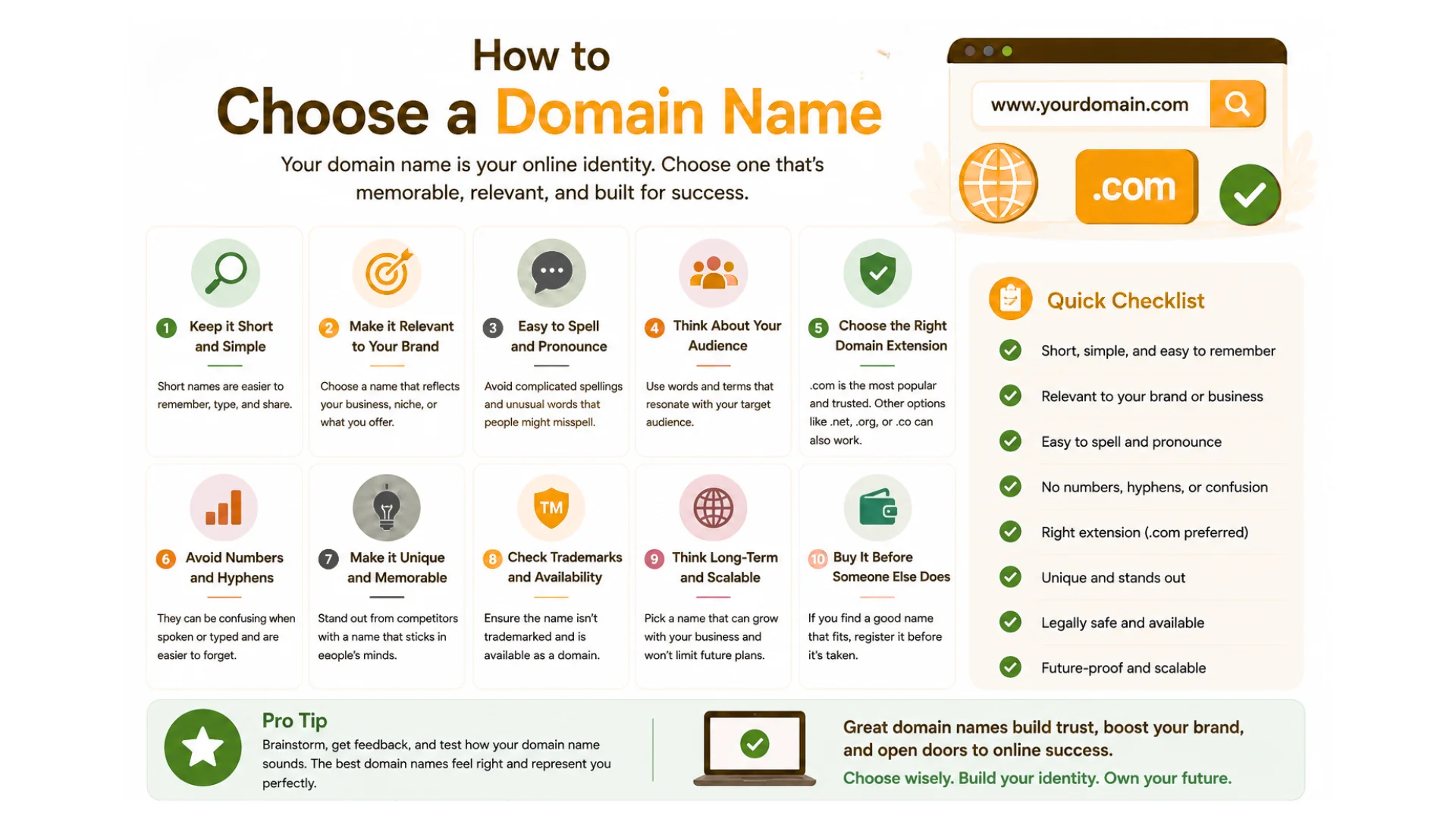
Here are the steps to follow when picking your domain name.
Step 1: Start With Your Brand or Website Purpose
Before anything else, get clear on what your site is for. What problem does it solve? What do you want people to feel when they hear your name? Let your purpose guide your brainstorming.
Step 2: Brainstorm Keyword Ideas
Write down words that relate to your business, your products, and your audience. Tools like Ubersuggest can help you discover popular terms in your niche. Mix and match until something clicks.
Step 3: Keep It Unique
You want a name that stands out, not one that gets confused with another brand. A unique domain name also makes it easier to trademark and protect down the line.
Step 4: Think About Future Growth
Don’t name yourself into a corner. If you’re selling coffee today but might expand into a full café franchise, “QuickEspresso.com” might not serve you five years from now. Think broad enough to grow into.
Step 4: Check Availability Early
Fall in love with a name after you confirm it’s available, not before. Checking domain name availability early saves you the heartbreak of building a brand around a name you can’t actually use.
Step 5: Get Feedback Before Registering
Run your top choices by a few friends or colleagues. Ask them to spell it after hearing it once. If they struggle, that’s useful feedback before you commit.
Found a name you love? Don’t wait. Check if it’s available on Truehost before someone else grabs it.
Choosing the Right Domain Extension
The extension (.com, .net, .org, and so on) is the part that comes after your name. It carries more weight than most people realize.
.com
Still the most trusted and widely recognized extension. When people type a domain name from memory, they almost always add .com by default. If you can grab a .com, do it.
.us
A smart choice for businesses serving a US-based audience. It communicates local relevance and can help with local SEO signals.
.net
Originally built for networking companies, .net is now used across all kinds of sites. It works as a solid fallback if your .com isn’t available, though .com is still the stronger choice.
.org
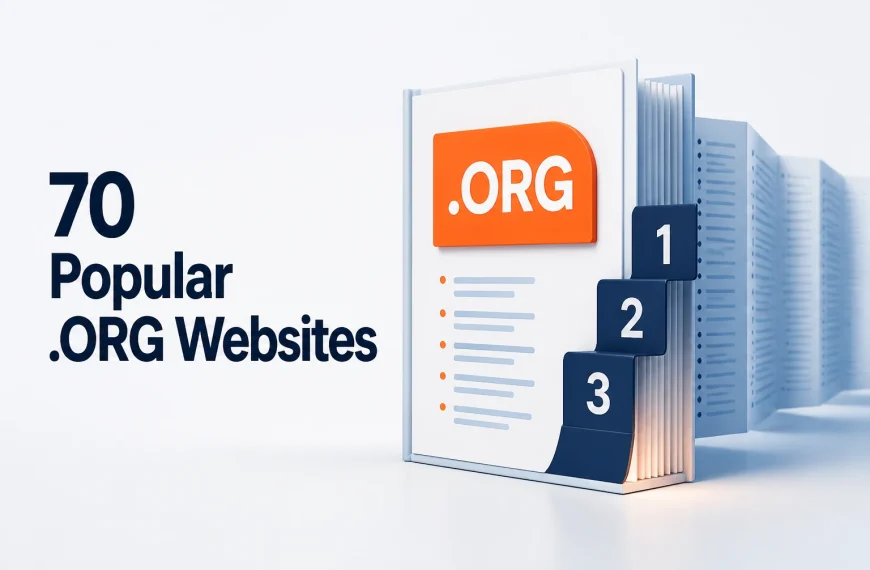
Traditionally associated with nonprofits and community organizations. If you’re running a cause-driven or charitable site, .org adds instant credibility.
.site
A newer, more flexible extension that works well for personal projects, portfolios, and small businesses. It’s widely available and easy for anyone to understand.
When in doubt, start with .com. If it’s not available, explore alternatives, but be mindful of how your extension affects perception. See all available domain extensions and pricing on Truehost’s domain registration page.
Common Domain Naming Mistakes to Avoid
Knowing how to choose a domain name also means knowing what not to do.
- Using long domain names. Anything beyond 20 characters gets messy. Longer names are harder to type, harder to remember, and more likely to get mistyped.
- Adding unnecessary numbers. A domain like “Top5Deals.com” looks spammy and creates confusion. Is it the number 5, or the word “five”?
- Using hyphens excessively. One hyphen might work in a pinch, but multiple hyphens make your domain harder to type and easier to forget.
- Choosing difficult spellings. Clever or creative spellings might feel unique, but they create friction. People will misspell it and end up on someone else’s site.
- Following short-term trends. A name built around this year’s buzzword can feel dated fast. Go with something timeless over something trendy.
- Ignoring trademark issues. Before you register anything, check whether the name is already in use. The USPTO trademark search tool is a free place to start.
How to Check If a Domain Name Is Available
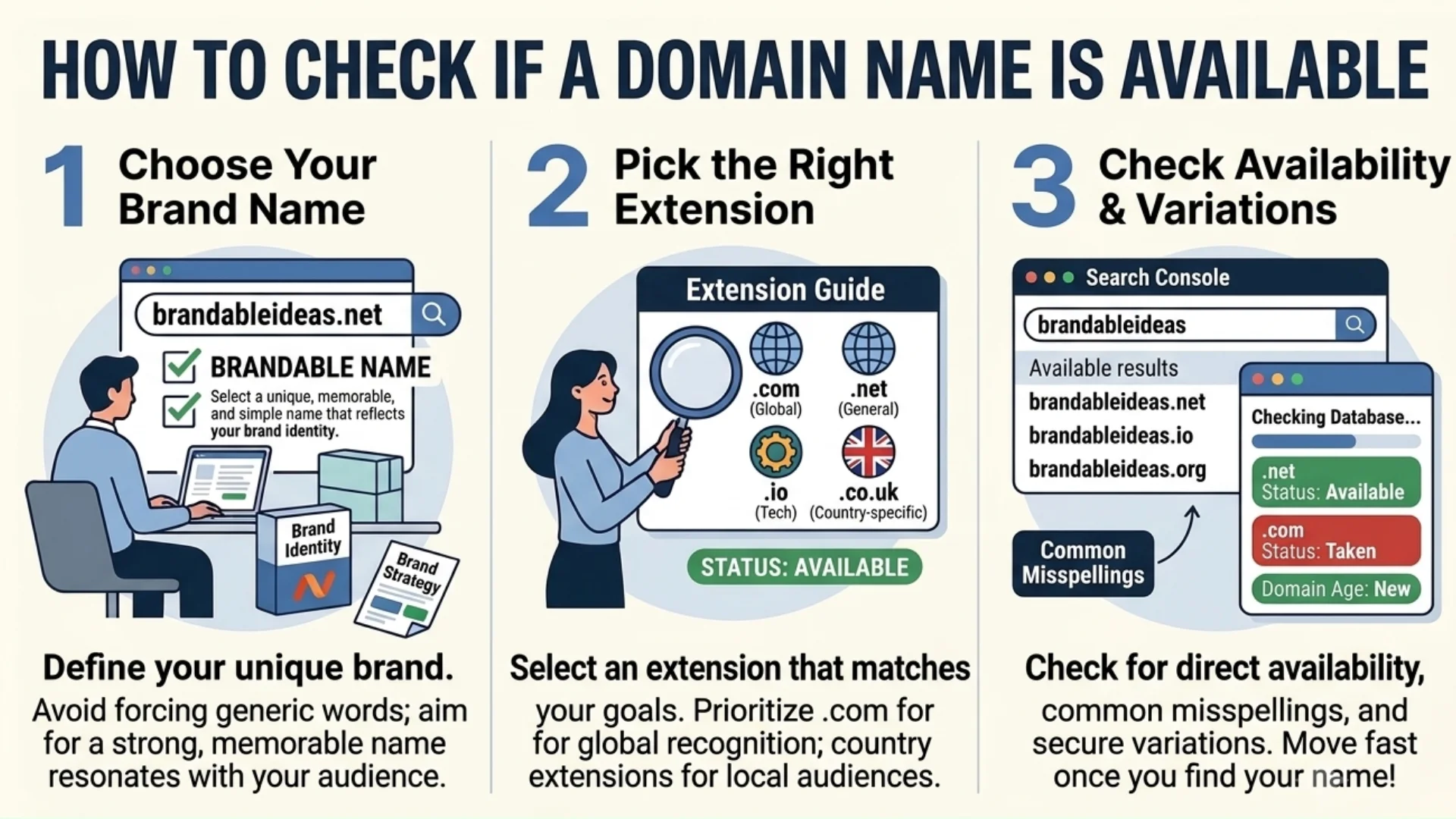
Checking domain name availability is quick. Here’s how to do it properly.
Domain Search Tools
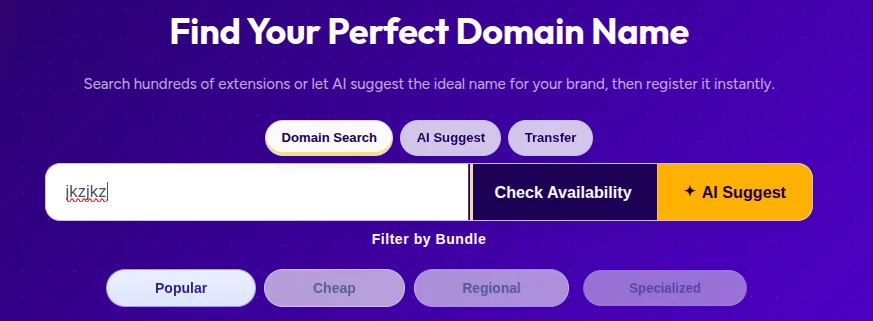
Most registrars have a built-in search bar. Just type in your desired name and you’ll instantly see whether it’s available. Truehost’s domain search tool makes it easy to search and register in one place, with no account needed to check availability.
Checking Social Media Availability
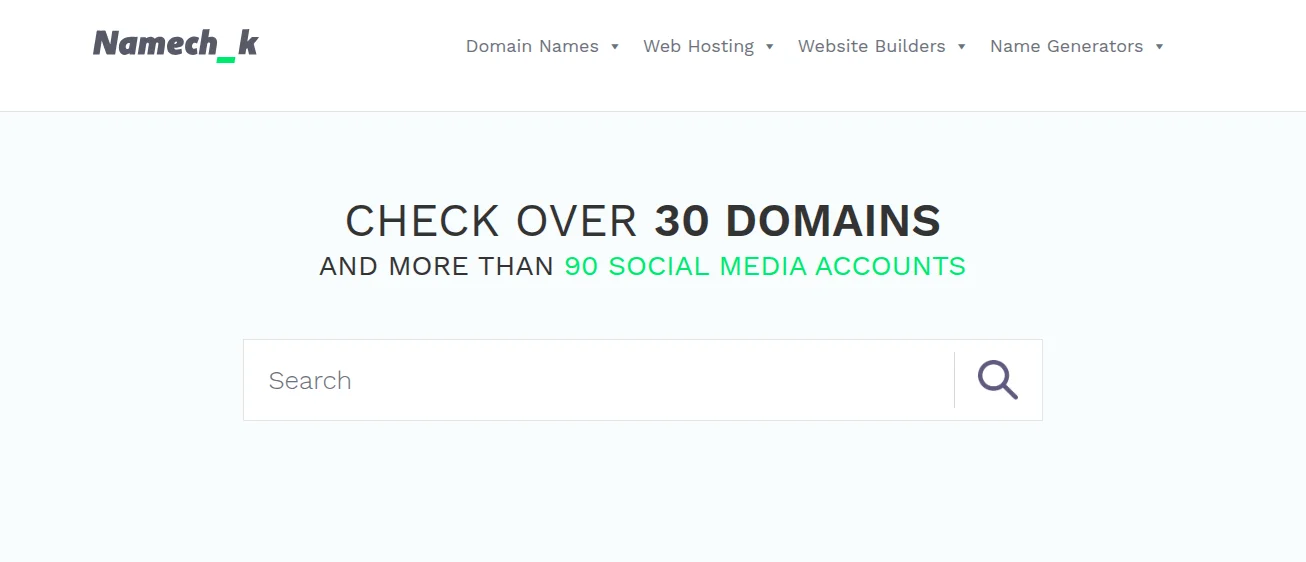
Ideally, your domain name and your social media handles should match. Use a tool like Namechk to quickly check availability across multiple platforms at once.
Trademark Considerations
A domain being available doesn’t mean it’s legally safe to use. Always run a trademark check to make sure you’re not stepping on someone else’s brand.
Alternative Naming Options
If your first choice is gone, don’t panic. There are still plenty of great options. See the next section for practical ways to find a strong alternative.
What to Do If Your Preferred Domain Is Taken
It’s frustrating, but it happens to almost everyone. Here’s how to move forward without settling for something you don’t love.
Trying Different Extensions
If YourBrand.com is taken, check YourBrand.net, YourBrand.site, or YourBrand.co. Sometimes a different extension is the simplest solution.
Modifying the Name
Adding a small word in front, like “get,” “try,” or “use,” can open up a lot of options. Think GetYourBrand.com or TryYourBrand.com. Many well-known companies have taken this exact approach.
Contacting the Owner
If the domain appears parked or unused, you may be able to buy it directly from the current owner. Look up the WHOIS registration details and reach out. Be prepared for a range of prices, from affordable to eye-watering.
Exploring Brandable Alternatives
Sometimes the best move is a fresh start with a completely new name. AI name generators can help you come up with creative domain name ideas you wouldn’t have thought of on your own. You can also browse tips on the Truehost blog for naming inspiration and domain strategies.
Domain Name Ideas for Different Types of Websites
The right naming approach depends on what kind of site you’re building.
Small Businesses
Use your business name or a short phrase that describes your service. If you serve a specific city or region, including it in your domain can help with local search visibility.
Blogs
Personality-forward names work well for blogs. Think about your niche, your tone, and your audience. A name that reflects your voice will attract the right readers.
Online Stores
For e-commerce, clarity is your friend. Your domain should give shoppers an immediate sense of what you sell. Words like “shop” or “store” can help signal what your site is.
Portfolios
For freelancers and creatives, your own name is often the cleanest option. It builds your personal brand and is easy for clients to find and remember.
Startups
Startups often go for short, punchy, invented words that are easy to trademark and scale globally. Think Stripe, Notion, or Figma: simple, unique, and built to grow.
FAQs
How do I choose a good domain name?
Keep it short, easy to spell, and relevant to your brand or niche. Check availability early, avoid numbers and hyphens, and get feedback from others before you commit.
What makes a domain name memorable?
Memorable domain names are short, easy to pronounce, and feel natural when you say them out loud. Avoid unusual spellings and anything that requires explanation.
Should I use keywords in my domain name?
Keywords can add clarity, but branding usually matters more. A unique, memorable name will serve you better in the long run than one stuffed with search terms.
How long should a domain name be?
Aim for 6 to 14 characters if possible. The shorter and simpler, the better. Fewer characters means fewer chances for typos.
Should my domain name match my business name?
Ideally, yes. Matching your domain to your business name keeps things consistent and makes you easier to find across search engines and social platforms.
Do domain names affect SEO?
Keywords in a domain name have less impact than they once did. What matters more is your content quality, your backlink profile, and the overall user experience on your site.
How much does a domain name cost?
Most standard domain names cost between $10 and $20 per year for a .com. Premium or previously owned domains can cost significantly more depending on demand and history. Check current domain pricing on Truehost for an accurate, up-to-date quote.
Ready to Register Your Domain Name?
Learning how to choose a domain name doesn’t have to be overwhelming. The best domain names are simple, memorable, relevant to your brand, and built to last. Not just for today, but for wherever your business is headed next.
Keep it short. Make it easy to spell and say. Avoid numbers, hyphens, and anything tied to a passing trend. Always think about how it’ll feel five years from now, not just this week.
Your next step is simple: Search for your domain name on Truehost, check what’s available, and register it today before someone else does. It takes less than five minutes, and it’s the first real step toward building your online presence.