 Domain RegistrationFind and register the perfect domain for your website.
 .COM DomainChoose a widely recognized domain to build global credibility.
 Domain TransferSeamless domain transfers with zero downtime and complete control.
 All TLDsFind and register your perfect domain. Choose from local and global extensions.
 SSL CertificatesKeep your website safe with reliable SSL Certificates that protect customer data and build trust.
 whoisCheck domain ownership details, expiration dates, and registrar information.
 US DomainRegister a .US domain and build trust in the USA.
 Web HostingEverything your website needs to run smoothly
 WordPress HostingWordPress hosting that just works
 Windows HostingReliable hosting for Windows environments
 Reseller HostingTurn hosting into your business
 Email HostingEmail that looks professional and works anywhere
 cPanel HostingFull control of your hosting with cPanel
 Affiliate ProgramJoin as a partner and earn commissions on every referral you send our way.
 Vps HostingScalable virtual servers that expand as you need.
 Dedicated ServersGet complete access and full control over your dedicated physical server.
 Managed vpsNot tech-savvy? We will take care of everything with our fully managed VPS hosting for you.
 AI Website BuilderCreate stunning websites in seconds with AI.
 Online ShopSet up a professional online store. No coding required.
 Web design serviceGet a tailored website designed to match your brand and support your goals.
 BlogFind helpful guides on web hosting, online selling, digital marketing, and more.
 Contact USYou can reach us anytime, day or night, through chat or email.
 SupportBrowse helpful guides and answers for all of our services.
Many people start a web hosting business each year, but only a few manage to keep it running beyond the first few months. The problem is rarely the industry itself in 2024, web hosting was worth over $100 billion globally. The real issue is starting without a clear structure or direction.
A common pattern is choosing a reseller plan, putting up a basic website, and expecting customers to arrive on their own. Those who grow beyond the early stage take a different approach. They treat web hosting as a serious service business that needs strategy, not just setup.
This is not a quick way to make money. It requires planning, patience, and consistent effort. But when done right, it can become a stable and scalable online business.
Web hosting simply means providing the space and systems that allow websites to stay online. Every website you use is stored on a server, and hosting companies make that storage available so people can access sites at any time.
You do not need to own physical servers to get started. Most new hosting businesses begin as resellers, renting infrastructure from larger providers and building their own brand around it. The real growth comes from how you position your services, support your customers, and define your niche.
This article will take you through the steps of building a web hosting business from scratch in a practical and straightforward way.

Advantages of Starting a Web Hosting Business
Before diving into the how, it helps to know the why. Here is what makes the web hosting business model worth your time:
- You can manage client accounts from anywhere, with tools that are already built for you
- White-labelling options, like what we offer at Truehost, let you sell hosting entirely under your own brand
- The barrier to entry is low; you do not need a degree or a large team to get started
- You can scale at your own pace, growing your infrastructure as your client base grows
- Recurring revenue means once a customer is signed up, you earn from them every single month
- You have the freedom to customise your plans and pricing to match your specific market
The hosting industry is not going anywhere. Every new business, blogger, school, or startup needs a home on the internet. Your job is simply to provide it.
Step 1: Teach Yourself the Basics First
Before you sell hosting, you need to know how it works. This does not mean becoming a full-blown sysadmin overnight, but you do need enough knowledge to support your customers when things go sideways.
Start with cPanel. It is the most widely used hosting control panel in the world, and your clients will be using it to manage their websites, emails, and databases. cPanel offers free beginner to advanced courses, go through at least the beginner set before you launch.
WHM (Web Host Manager) is just as important. This is where you, as the reseller, manage all your client accounts from one dashboard. Skipping WHM knowledge is one of the fastest ways to get caught off guard when a client has a critical issue.
Step 2: Define Your Goals Before You Spend a Cent
Unlike many businesses, starting a web hosting company requires upfront investment. That makes it even more important to be honest with yourself before you commit.
Ask yourself these questions:
- What do you want from this business? Full-time income, a side revenue stream, or a service add-on for existing clients?
- How many hosting plans do you need to sell each month to break even?
- Can you commit time to this every day, including weekends when servers do not care what day it is?
- Will you handle support alone or do you have someone to help?
- Do you have enough technical knowledge, or do you need to upskill first?
- Do you already have potential clients lined up, or are you starting from zero?
Getting these answers on paper before you spend a cent is not overthinking. It is the difference between a business plan and a wishful experiment.
Step 3: Find Your Niche
The biggest mistake when starting a web hosting business is trying to serve everyone. You do not need to compete with the biggest brands right away. What you need is focus.
Pick a niche. Choose a specific group with clear needs that larger providers often overlook or cannot serve well.
Here are niches that work in the real world:
- Local businesses that need nearby support, familiar payment options, and someone they can reach.
- WooCommerce store owners who need fast, reliable hosting built for PHP and MySQL
- Nonprofits and NGOs that value affordable plans with email and domain support
- Freelance web designers who need a dependable white-label hosting partner
- Schools and institutions that prefer stable, long-term hosting with predictable costs
- Bloggers and content creators who start small but grow into add-ons like email or CDN
Serving SMEs requires more than low pricing. It means offering local payment options, support in the same time zone, and servers closer to users.
Start with one group. Learn their pain points. Build your offer around solving those problems well.
You can also shape your niche around your own skills. If you design websites, include theme setup. If you manage social media, bundle a basic branding package. A small, useful extra can win more customers than cutting your prices.
Step 4: Choose the Right Hosting Partner
Your hosting partner runs everything you sell. Pick the wrong one and you risk losing clients, time, and trust.
Here is what to check before you decide:
- Uptime guarantee and a clear SLA
- White-label options so you can sell under your own brand
- Control panels like cPanel, DirectAdmin, or Plesk
- What is included: SSL, backups, billing tools
- Support speed and quality
- Real customer reviews on Trustpilot or Google
Support tells you a lot. If a provider takes hours to respond to issues, your clients will feel it.Truehost is built for resellers who need a reliable partner. You get white-label hosting, WHM access, automated billing, WHMCS integration, and a 99.9% uptime guarantee so you can focus on growing your business.
Step 5: Set Up Your Tech Stack
A web hosting business runs on several tools working together. Getting these right from day one saves you from messy and expensive migrations once you have paying clients on board.
i) Billing and Client Management
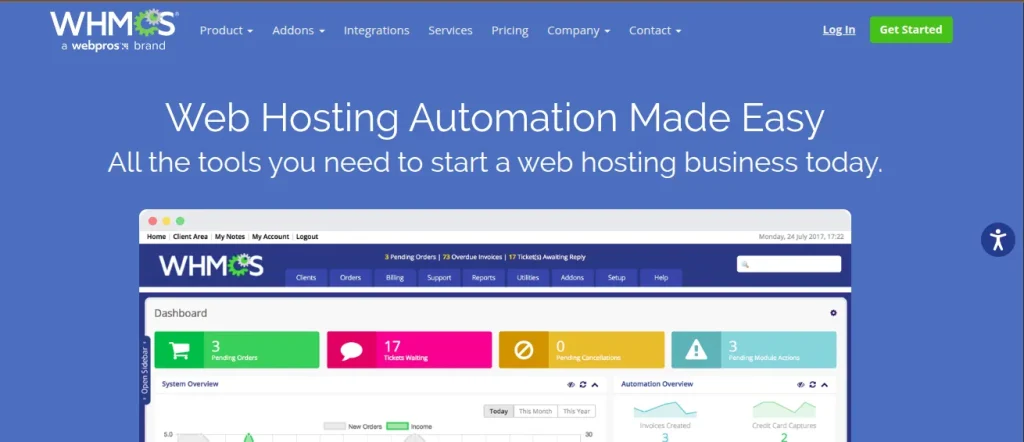
Use WHMCS to handle clients, invoices, and support. When a customer pays, their account is created automatically.
ii) Control Panel Options
Use a control panel to manage your website, domains, emails, and files from one place. It gives you full control without needing technical skills.
iii) Security Basics
- Imunify360 or ClamAV for real-time malware scanning across all accounts
- CSF (ConfigServer Security & Firewall) to block brute force login attempts
- ModSecurity as a web application firewall layer
- Let’s Encrypt automation so every new account gets a free SSL certificate on provisioning
iv) DNS and Email Infrastructure
Use Cloudflare or a BIND server for DNS. Start email with clean IPs. Tools like MXroute help keep delivery strong.
v) Automate Everything
Manual work slows you down. Set up:
- Instant account setup after payment
- Auto suspension for overdue invoices
- Renewal reminders before expiry
- Uptime alerts so you act fast
- Ticket routing to the right team
Step 6: Build Your Web Hosting Website
Your website is your storefront and your credibility statement. Potential clients will visit it before they ever speak to you, and they will judge your hosting quality by how your own site performs.
A slow, cluttered website for a hosting company is the worst possible advertisement.
Pages You Need at Launch
- Home: Your value proposition, featured plans, and trust signals above the fold
- Plans and Pricing : A clear comparison table with no hidden renewal surprises
- Features: Uptime SLA, support hours, included tools, and data center locations
- About: Your story; this is where human connection converts hesitant buyers
- Blog: SEO content that draws organic traffic over time as the site matures
- Contact and Support: Live chat link, ticket portal, and WhatsApp number for mobile-first markets
Three to six pages is enough to launch. Keep the design clean, the language simple, and the load time fast.
What Makes a Hosting Website Convert
- Display your uptime percentage clearly, 99.9% or higher
- Show real customer reviews with names and photos pulled from Trustpilot or Google
- State your money back guarantee plainly, not buried in the terms and conditions
- List the data center regions you use so clients know where their data physically lives
- Make sure your billing and sign-up pages are visibly SSL-secured
Use a lightweight WordPress theme or a static framework like Astro. Run it on LiteSpeed or Nginx with Cloudflare CDN active. Compress every image before it goes on the site.
Step 7: Craft Your Pricing and Plans
Pricing is where most new hosting businesses either undersell themselves into thin margins or overprice themselves out of their first sale.
Use a Three-Tier Structure
Almost every successful hosting company runs three core plans.
A Starter plan gets customers through the door and should be priced just below local competitors. A Business plan is your most popular tier with the best margin and should be packed with features clients use daily. A Pro or Agency plan serves power users and web designers. Justify the higher price with generous resources and priority support.
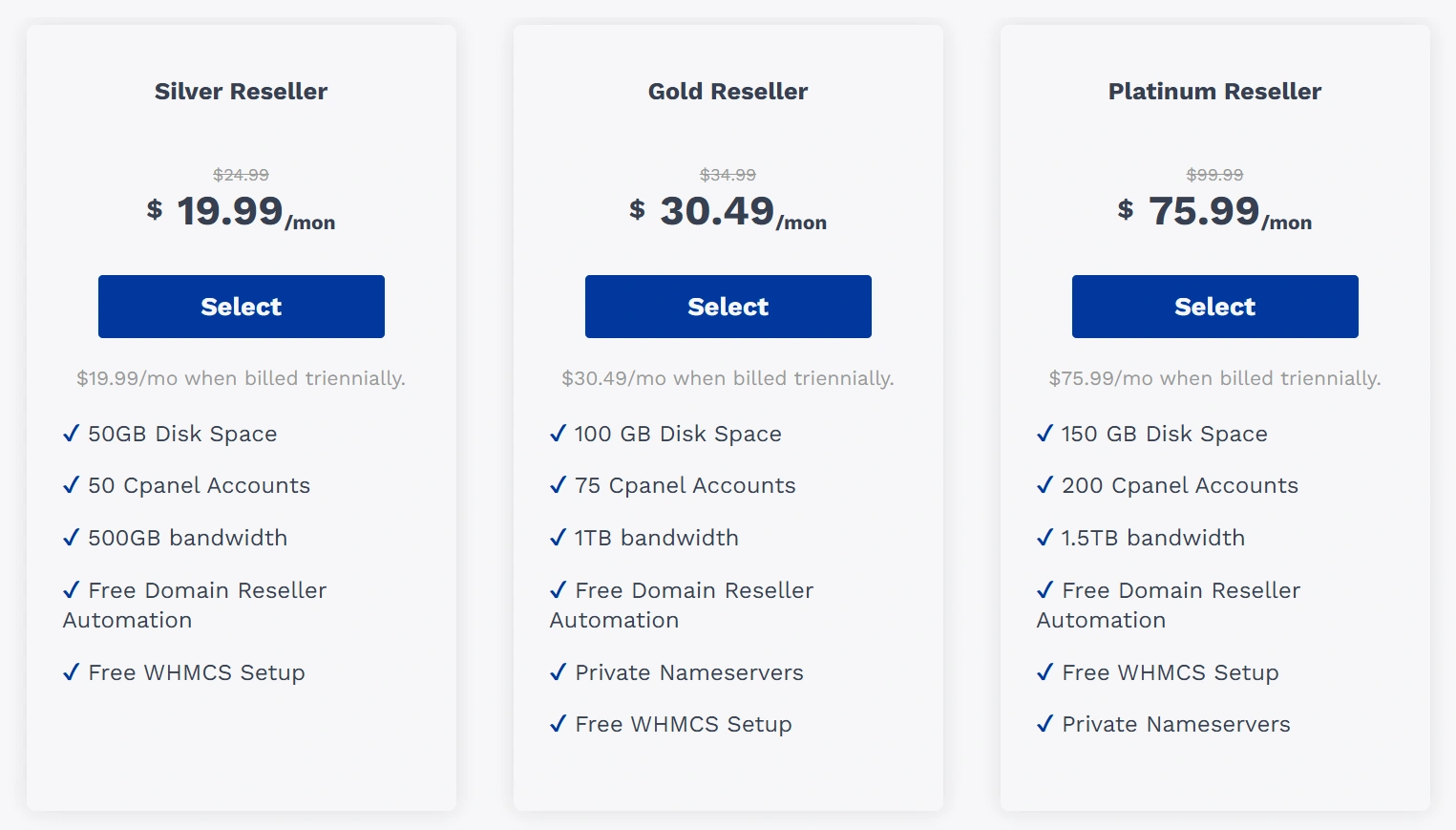
Be fully transparent about renewal prices. Put them on the pricing page, not in a footnote. Hidden renewal hikes are the single biggest reason clients leave hosting providers and never return.
Step 8: Build a Brand Worth Remembering
Branding in the web hosting business is not about having a polished logo. It is about being the company your customers think of first when their website goes down at midnight and they need someone to pick up.
Brand Basics to Lock In Before Launch
- Tagline: One sentence that captures exactly what makes you different from the next option
- Name: Short, easy to spell, and available as a .com or .us domain
- Logo: A clean wordmark works far better than generic clipart server icons
- Colour palette: Blues, greens, and dark teals signal reliability and trust in the hosting space
- Tone of voice: Decide early are you a corporate infrastructure partner or a friendly local expert?
Step 9: Prioritize Customer Support
Support is not a cost centre. In the web hosting business, it is your strongest retention tool and your most visible differentiator, especially against faceless international providers.
When a client’s website goes down, it is a mountain for them even if it is a two minute fix for you. Treat every issue with the urgency it deserves.
Channels to Launch With
- Live chat: Tawk.to is free and works well for early-stage operations
- Ticket system: WHMCS includes one as a standard feature
- Knowledge base: document clear answers to the 30 most common questions before you open your doors
Do not promise 24/7 support if you cannot deliver it. Honest hours that are consistently met, say Monday to Friday, 8 AM to 8 P
Step 10: Monitor Your Numbers and Scale Deliberately
Once clients are paying, your focus shifts from acquiring customers to keeping them. Track these metrics every single month:
- Monthly Recurring Revenue (MRR). Aim for 10 to 20% growth month on month. Track it in WHMCS reports
- Churn Rate. Keep it under 5% monthly. A rising churn rate means fix support before spending on marketing
- Average Ticket Resolution Time. Target under 4 hours using WHMCS or Freshdesk
- Server Uptime. Monitor with UptimeRobot or BetterStack. Target 99.9% or higher
- Cost per Acquisition (CPA). Track per channel in Google Analytics to know where your best clients come from.
Why Build Your Web Hosting Business on Truehost

We have helped hundreds of entrepreneurs across the US and beyond launch their own hosting brands from scratch. We know what the early stages feel like, and we have built our reseller program specifically to make those stages easier and less risky.
Here is what partnering with us gives you:
- Full white-label branding. Your customers see your company name, not ours
- 99.9% uptime SLA backed by enterprise-grade infrastructure
- WHMCS integration for automated provisioning and billing from day one
- Free SSL on every plan. No extra cost to you or your clients
- 24/7 infrastructure support. When something breaks at 2 AM, our team is awake
- Local payment options including card, and bank transfer
We are not just a wholesaler. We are the infrastructure partner that grows alongside your business as you scale
FAQs
What is reseller web hosting ?
Reseller hosting is a type of hosting where you buy hosting resources from a provider and then sell them to your own customers under your own brand.
It allows you to create and manage multiple hosting accounts using a single plan, making it easy to run a hosting business without owning physical servers. The main provider handles the server maintenance, while you focus on branding, pricing, and customer support.
How much does it cost to start a web hosting business?
The cost of starting a web hosting business depends on the tools and setup you choose.
You will need a reseller hosting plan to provide hosting services, billing and automation software to manage customers and payments, a domain name, and a website to represent your brand. You may also need basic marketing and support tools to attract and serve clients.
Overall, the cost varies based on your setup and how advanced your systems are, but it can be kept low at the beginning and increased as your business grows.
Do I need technical skills to run a hosting business?
You need enough to support your customers, knowing how cPanel works, how DNS propagates, and how to troubleshoot basic email delivery issues. You do not need to be a server administrator. A managed reseller plan handles the heavy infrastructure work behind the scenes.
How long before a hosting business turns a profit?
Most operations break even somewhere between months 6 and 12. With focused direct outreach and a tight niche from the start, some resellers reach profitability by month 3.
Can I start this business while working a full-time job?
Yes. Many successful hosting business owners started part-time and transitioned fully once their monthly recurring revenue matched or exceeded what their job was paying them.
Ready to turn your idea into reality?
Starting a web hosting business from scratch is more achievable than most people think. With the right reseller partner, a clear niche, and a commitment to your customers, you can build a strong, recurring-revenue business.
Choose the hosting partner that chooses you back. At Truehost, we provide the infrastructure, tools, and experience to help you launch, grow, and scale without going it alone.
Prioritise customers, stay consistent, and take the first step today.