 Domain RegistrationFind and register the perfect domain for your website.
 .COM DomainChoose a widely recognized domain to build global credibility.
 Domain TransferSeamless domain transfers with zero downtime and complete control.
 All TLDsFind and register your perfect domain. Choose from local and global extensions.
 SSL CertificatesKeep your website safe with reliable SSL Certificates that protect customer data and build trust.
 whoisCheck domain ownership details, expiration dates, and registrar information.
 US DomainRegister a .US domain and build trust in the USA.
 Web HostingEverything your website needs to run smoothly
 WordPress HostingWordPress hosting that just works
 Windows HostingReliable hosting for Windows environments
 Reseller HostingTurn hosting into your business
 Email HostingEmail that looks professional and works anywhere
 cPanel HostingFull control of your hosting with cPanel
 Affiliate ProgramJoin as a partner and earn commissions on every referral you send our way.
 Vps HostingScalable virtual servers that expand as you need.
 Dedicated ServersGet complete access and full control over your dedicated physical server.
 Managed vpsNot tech-savvy? We will take care of everything with our fully managed VPS hosting for you.
 AI Website BuilderCreate stunning websites in seconds with AI.
 Online ShopSet up a professional online store. No coding required.
 Web design serviceGet a tailored website designed to match your brand and support your goals.
 BlogFind helpful guides on web hosting, online selling, digital marketing, and more.
 Contact USYou can reach us anytime, day or night, through chat or email.
 SupportBrowse helpful guides and answers for all of our services.
It’s 10 PM on April 14th, and your client is frantically trying to upload their tax documents to your portal. They click, they wait, and then: error message. Your website crashed right when they needed it most.
For accounting firms handling tax returns, financial statements, and sensitive client data, a website isn’t just nice to have, it’s the backbone of your practice. And your accounting firm hosting should be as good as your website.
Otherwise, when your hosting fails, you’re not just losing convenience; you’re losing trust, clients, and potentially exposing confidential information to security risks.
So what hosting basics do accounting firms in the USA need to know?
Join use as we cover;
- The best hosting types for accounting firms
- Why accounting firms can’t afford unreliable hosting
- Types of websites accounting firms run
- Accounting firm hosting security and compliance features you can’t skip
- What to look for when choosing accounting firm hosting
- Whether Truehost fits your accounting practice
Let’s get into it.
The Best Hosting Types for Accounting Firms
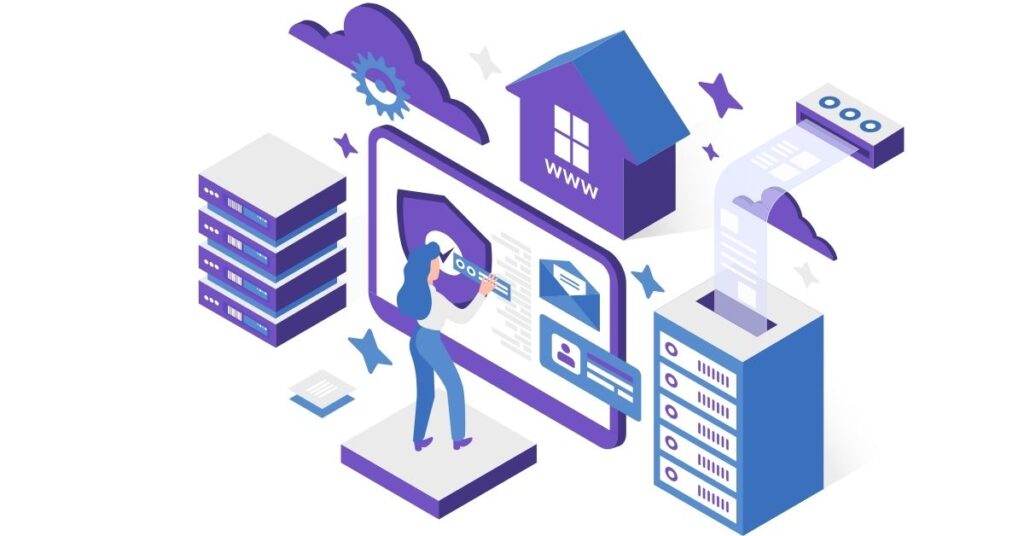
When you’re shopping for accounting firm hosting, you’ll see four main types: shared, VPS, cloud, and dedicated servers.
Let’s cut through the confusion.
Shared Hosting
Shared hosting means your website shares a server with dozens or hundreds of other sites. It’s the cheapest option, but here’s the problem:
- You’re storing tax returns
- Social Security numbers
- Bank statements on a server where you can’t control who your neighbors are.
If another site on that server gets hacked, your clients’ data could be at risk too. For accountants, this is a gamble you shouldn’t take.
VPS hosting
VPS hosting gives you a virtual private server. Think of it as your own apartment in a building. You share the physical hardware, but your space is completely separate and secure. You get dedicated resources, better security controls, and the ability to customize settings for financial software.
For most small to mid-sized accounting firms, VPS hits the sweet spot between security and cost.
Cloud hosting
Cloud hosting spreads your website across multiple servers. If one goes down, another takes over instantly. This is brilliant for accounting firms because tax season brings massive traffic spikes. According to the IRS, over 90% of tax returns are filed electronically, and most of that happens between January and April. Cloud hosting handles these seasonal surges without breaking a sweat.
Dedicated servers
Dedicated servers give you an entire server to yourself. It’s the most secure and powerful option, but it’s expensive and requires technical know-how to manage. Unless you’re a large firm with an IT department, dedicated servers are probably overkill.
For most accounting practices, VPS or cloud hosting makes the most sense. You get the security needed for client data hosting without paying for features you’ll never use.
Why Accounting Firms Can’t Afford Unreliable Hosting
Here’s a sobering fact.
The average cost of a data breach in the financial sector reached $6.08 million in 2024, making it the second-most expensive industry for breaches.
Security

Accounting firms are prime targets because they hold exactly what cybercriminals want, that is, Social Security numbers, tax IDs, bank account details, and financial records.
But security isn’t the only concern.
Speed and uptime are critical, too.
Research shows that 40% of people abandon websites that take more than three seconds to load.
Imagine a business owner trying to access their quarterly financials before a bank meeting. If your client portal loads slowly or doesn’t load at all, they’re not just frustrated; they’re questioning whether you’re the right accountant for them.
Then there’s tax season.
From January through April, your website traffic can triple or quadruple. Clients are uploading W-2s, downloading tax organizers, and checking on their refund status. If your hosting can’t handle the surge, your site crashes right when you need it most.
Every minute of downtime during tax season means missed deadlines, angry clients, and potential malpractice issues.
Plus, consider the IRS e-file requirements.
Many accounting software platforms integrate directly with your website to submit returns electronically. If your hosting goes down or has connectivity issues, you can’t file returns on time. The IRS doesn’t accept “my hosting was down” as an excuse for late filing.
Reliable, secure hosting for accountants isn’t optional, it’s professional liability insurance for your digital presence.
Types of Websites Accounting Firms Run

Not every accounting firm needs the same website, but most fall into these categories:
Informational sites are the foundation.
These showcase your services (tax preparation, bookkeeping, payroll, audit), introduce your team, and provide contact details. Even basic accounting sites need solid hosting because they’re often the first place potential clients check your credibility.
Client portals are where the real work happens.
These secure areas let clients upload tax documents, download completed returns, view financial statements, and communicate with you privately. Your hosting must support encrypted file transfers, user authentication, and reliable access 24/7.
Tax document upload systems are essential during filing season.
Clients need a simple way to send you their W-2s, 1099s, receipts, and other documents without emailing sensitive information. These systems require hosting with strong security protocols and enough storage for thousands of PDF files.
Payment processing sites handle retainer fees, monthly bookkeeping charges, and tax preparation invoices.
If you accept credit cards or ACH payments online, your accounting firm hosting must support PCI DSS compliance, that is, the security standard for processing payments. Non-compliant hosting puts you at risk for fines and liability.
Appointment booking systems let clients schedule tax consultations, business advisory meetings, or financial planning sessions. These tools need hosting that can send automated email reminders, sync with your calendar, and handle multiple time zones if you serve clients across states.
Many firms combine these features into one comprehensive site. Your hosting needs to support all of it without slowdowns or security gaps.
Accounting Firm Hosting Security and Compliance Features You Can’t Skip
When it comes to client data hosting, security isn’t negotiable. Here’s what your accounting firm hosting must include:

SSL certificates encrypt data traveling between your website and visitors. That little padlock in the browser bar tells clients their information is protected. Without SSL, browsers warn visitors that your site is “not secure.” Not exactly confidence-inspiring for a financial professional.
Data encryption needs to happen both when files are being transferred and when they’re stored on servers. Tax returns sitting unencrypted on a server are a lawsuit waiting to happen. Look for hosting that offers at least 256-bit encryption.
Automatic backups should run daily, preferably multiple times per day during tax season. Financial data loss isn’t just inconvenient, it can shut down your practice. You need the ability to restore your site and all client files to yesterday’s version (or earlier) in minutes.
Firewall protection blocks malicious traffic before it reaches your website. Think of it as a security guard checking IDs at the door. Combined with intrusion detection systems, firewalls catch attacks before they compromise client data.
Two-factor authentication adds an extra layer of protection for client portal access. Even if someone steals a password, they can’t get in without the second verification step. For accountants, this is especially important given that financial credentials are high-value targets.
U.S.-based servers keep your data under U.S. jurisdiction, which simplifies compliance with federal and state regulations. It also improves site speed for American clients since data doesn’t have to travel halfway around the world.
The IRS Publication 4557 outlines safeguarding requirements for tax preparers. While it doesn’t mandate specific hosting features, it requires reasonable measures to protect client information.
Good secure hosting for accountants meets these standards automatically.
What to Look for When Choosing Accounting Firm Hosting
Shopping for the right accounting firm hosting? Here’s your checklist:
Speed is non-negotiable.
Look for SSD storage (not old spinning hard drives) and content delivery networks (CDNs) that store copies of your site in multiple locations. Fast loading times keep clients happy and help your site rank better in Google searches.
Security features should be comprehensive.
At minimum: free SSL certificates, malware scanning, DDoS protection, and regular security updates. Better hosts add web application firewalls and security monitoring. For accounting firms, ask specifically about compliance with financial data protection standards.
Support needs to be available 24/7.
Tax deadlines don’t respect business hours. When your client portal crashes at midnight before April 15th, you need immediate help. Not a ticket system that responds in two days. Look for live chat or phone support with actual humans who understand financial websites.
Uptime guarantees should be 99.9% or higher.
That’s about 8 hours of downtime per year split across the entire year. During tax season, even that might be too much. Check if the host offers uptime monitoring and compensation if they miss their guarantee.
Scalability lets you grow.
Today you’re a solo CPA. Next year, maybe you’ve added two staff members and 200 new clients. Your hosting should let you upgrade resources without migrating to a completely new platform.
Cloud hosting excels here because you can scale up during tax season and scale down in summer.
Email hosting with security.
This keeps your communications professional. You need @yourfirm.com email addresses, not Gmail or Yahoo. More importantly, your email needs the same security standards as your website. That is encryption, spam filtering, and virus protection.
Storage capacity.
This varies by firm size, but accounting firms need more than typical businesses. Tax documents, financial statements, and backup files add up quickly. Budget for at least 50GB to start, with room to expand.
Is Truehost Right for Your Accounting Practice?
Let’s talk straight about Truehost for accounting firm hosting.
At Truehost, our VPS and cloud hosting plans check the boxes most CPAs need. You get SSD storage for quick load times, free SSL certificates right out of the gate, and daily automated backups that protect client files.
We run U.S.-based data centers, which helps with both compliance and performance for American clients.
What makes Truehost work well for accountants specifically?
We have built security features into every plan rather than charging extra for basic protections. Malware scanning, firewalls, and DDoS protection come standard.
Our support team responds quickly. Very important when you’re troubleshooting portal access issues while clients are waiting.
The platform supports the kind of client portal software most accounting firms use, and scaling up during tax season is straightforward. You’re not locked into a plan that either wastes resources in July or crashes in March.
Is Truehost perfect for every accounting firm?
Yes. Solo practitioners, small firms, and growing practices up to about 50 staff members, Truehost delivers solid, secure hosting for accountants without unnecessary complexity.
We’re focused on reliability and security rather than flashy marketing. For accountants who need their website to simply work, especially during crunch time, that focus is exactly right.
Conclusion
Choosing an accounting firm hosting comes down to three priorities: security, reliability, and performance. You need hosting that;
- Protects sensitive financial data with encryption and regular backups
- Stays online during tax season traffic spikes
- Loads quickly enough to keep clients from bouncing to competitors.
VPS or cloud hosting works best for accounting practices, offering dedicated resources and security controls without enterprise-level costs.
Ready to give your accounting firm the reliable hosting it deserves? Explore Truehost’s plans built for professional service providers who need security and performance they can count on year-round.