 Domain RegistrationFind and register the perfect domain for your website.
 .COM DomainChoose a widely recognized domain to build global credibility.
 Domain TransferSeamless domain transfers with zero downtime and complete control.
 All TLDsFind and register your perfect domain. Choose from local and global extensions.
 SSL CertificatesKeep your website safe with reliable SSL Certificates that protect customer data and build trust.
 whoisCheck domain ownership details, expiration dates, and registrar information.
 US DomainRegister a .US domain and build trust in the USA.
 Web HostingEverything your website needs to run smoothly
 WordPress HostingWordPress hosting that just works
 Windows HostingReliable hosting for Windows environments
 Reseller HostingTurn hosting into your business
 Email HostingEmail that looks professional and works anywhere
 cPanel HostingFull control of your hosting with cPanel
 Affiliate ProgramJoin as a partner and earn commissions on every referral you send our way.
 Vps HostingScalable virtual servers that expand as you need.
 Dedicated ServersGet complete access and full control over your dedicated physical server.
 Managed vpsNot tech-savvy? We will take care of everything with our fully managed VPS hosting for you.
 AI Website BuilderCreate stunning websites in seconds with AI.
 Online ShopSet up a professional online store. No coding required.
 Web design serviceGet a tailored website designed to match your brand and support your goals.
 BlogFind helpful guides on web hosting, online selling, digital marketing, and more.
 Contact USYou can reach us anytime, day or night, through chat or email.
 SupportBrowse helpful guides and answers for all of our services.
Ooh… you go to log in to your website or check your emails, and nothing works.
-
Pages won’t load.
-
Emails keep bouncing.
You start realizing your domain isn’t there. Your website is gone. Hey man, you forgot to renew your domain, and now it’s just one step away from being sold to someone else.
That’s why domain name renewal is so important. It’s the simple step that keeps your digital home yours.
Here’s what’s at stake if you don’t renew your domain:
- Your website goes offline, and visitors can’t find you.
- Email services linked to your domain stop working.
- Search engine rankings and traffic can drop.
- Competitors could snap up your domain once it expires.
In this article, we’ll cover everything you need to know about domain name renewal:
- How the domain renewal process works and when to plan ahead
- Costs and pricing for domain renewal
- How auto-renewal works
- What happens if a domain expires, including grace and redemption periods
- How to recover an expired domain
- Renewal specifics for popular registrars like Truehost
By the end, you’ll know exactly how to keep your digital assets safe, maintain business continuity, and protect your brand from costly downtime.
Let’s dive into the details.
What is Domain Name Renewal?
Think of a domain like the address to your online home. When you register a domain, you get the right to use that address for a certain number of years, usually 1 to 10 years, depending on the plan you choose.
But that right doesn’t last forever. Even for your home, you have to keep paying the rent.
So, renewing a domain is like paying rent for your digital home. If you forget, your website can disappear, your email stops working, and someone else could take your address.
The Domain Renewal Process Explained

Here are the steps to follow to avoid losing your online space.
Step-by-Step Renewal Process.
- Log in to your domain registrar account: This is the website where you first bought your domain, like Truehost. Think of it like going to the landlord to pay your rent.
- Access the domain management section: Here, you can see all your domains, their expiration dates, and renewal options. This is your control center.
- Select the domain for renewal: Pick the correct domain, especially if you have more than one. Choosing the wrong one is like paying the wrong rent.
- Choose the renewal period (1–10 years): You can renew for one year or several years. Paying for multiple years is like paying rent in advance. It protects your domain and sometimes saves money.
- Complete payment: Costs depend on the type of domain. Standard .com domains usually cost $10–$20 per year. Country-code domains like .uk or .us cost $10–$50. Newer domains can cost $15–$100+. Premium domains may cost more. Make sure your payment method is up to date.
- Wait for 24 hours: After payment, your website, email, and other services may take up to a day to start working again.
Renewal Timeline & Planning
Registrars must send reminders about your domain. That is one month before it expires and another week before.
Still, about 27.7% of all domain registrations fail to renew, which translates to millions of lost domains annually, because people miss the reminders or payment fails.
To avoid problems:
- Keep a calendar or phone reminder for your domain expiration.
- Check your registrar dashboard regularly to see which domains are coming due.
- Renew early if you can. It stops your website and email from going offline, keeps your search traffic, and protects your brand.
- Multi-year renewal gives extra security and sometimes a discount on the renewal fee.
Domain Name Renewal Costs & Pricing (2025)
I’ll keep saying, paying for a domain is like paying rent for your online home. You pay a little every year to keep your website, email, and online space safe. But the cost depends on the type of domain you choose.
Some are cheap, others can be expensive, especially if they are popular or special.
At Truehost, domain renewal prices vary depending on the extension you pick.
Here’s how it works.
- .com: One of the most popular types. It costs $7.79 to register, and renewing it later is $11.40 per year.
- .info: Cheap to start at $3.58, but the renewal jumps to $29.27. That’s why it’s important to know the renewal price before choosing.
- .net: New domains like this are $13.62 to register and the same to renew.
- .org: Often used by organizations, starts at $10.67 and renews for $12.23.
Country codes and special extensions also have different prices:
- .us: Great for American sites, registers for just $1.99, and renews at $8.87
- .us.com: Costs $21.95 to register and the same to renew.
- .us.in: Simple and affordable, $7.00 to register and renew.
- .us.org: Also $21.95 for registration and renewal.
The key thing to remember is that registration and domain name renewal prices are not always the same. Some domains are cheap at first but can cost a lot to renew, like .info at Truehost.
So always check the renewal cost before you buy a domain.
Factors that affect the renewal cost include the type of domain, the registrar’s pricing rules, and whether the domain is a premium name.
Setting Up Automatic Domain Renewal
Paying rent every month can be easy if it’s automatic. You set up your bank account to pay on time, and you never worry about forgetting.
Domain renewal works the same way with auto-renewal. Once you turn it on, your domain gets renewed automatically before it expires, so your website and email stay live.
When you enable auto-renewal, your registrar, like Truehost, usually processes the renewal 30 days before your domain’s expiration.
This gives time to fix any billing problems before the domain actually expires. Even if you forget, your domain stays safe, and you don’t have to scramble at the last minute.
How to Enable Auto-Renewal
- Log in to your registrar account.
- Go to the domain management section and select the domain.
- Turn on the auto-renewal option.
- Make sure your payment method is current so the automatic payment can go through.
Once auto-renewal is on, you can even choose to manage multiple domains at once.
Why Auto-Renewal Helps
- Prevents accidental expiration: No more last-minute panic emails from your registrar.
- Keeps your website and email live: Services continue without interruption.
- Protects your brand: Losing your domain can hurt your reputation and traffic.
- Works with multi-year renewal: If you combine auto-renewal with a multi-year plan, you get maximum security and can sometimes save on fees.
Even with auto-renewal, it’s still smart to check your email notifications and occasionally review your registrar dashboard. Payment methods can expire, and sometimes updates are needed.
What Happens When a Domain Expires?
Think of your domain like paying rent for your digital home. If you stop paying, your landlord changes the locks. That’s what happens when a domain expires.
Your website disappears, your email stops working, and someone else can eventually take it. But domains have a few safety nets before they’re lost for good.
Immediate Impact of Expiration
The moment your domain expires.
- Your website stops loading. Visitors see errors instead of your pages.
- Email linked to your domain stops sending or receiving messages.
- DNS connections break, meaning all services tied to your domain go offline.
This is why keeping track of your expiration date is so important. Missing it is like walking away from your rent check. The consequences are instant.
Post-Expiration Phases
Domains don’t disappear immediately. They go through a few phases that give you a chance to recover them.
A. Auto-Renew Grace Period (Days 1–30/45)
- Most domains have a grace period of up to 45 days.
- You can renew at the standard rate, no extra fees.
- Some TLDs only allow renewal within 28 days.
- It’s your first chance to reclaim your digital home without extra cost.
B. Redemption Grace Period (Days 30–75)
- If you missed the first period, some domains enter redemption.
- You can still get the domain back, but now there’s a redemption fee, usually around $150, in addition to the renewal fee.
- It takes about 72 hours for the domain to become active again after payment.
- Think of this like paying extra to get back to your house after being locked out.
C. Pending Delete Period (Days 75–80)
- After redemption, the domain enters a 5-day period where it cannot be renewed.
- The registry prepares to release it to the public.
- At this stage, it’s almost impossible to recover.
D. Public Release (Day 80+)
- Once this period ends, the domain becomes available for anyone to register.
- If someone else takes it, you lose it permanently.
Missing the grace period is like walking away from your home and letting someone else move in. By renewing early, tracking your expiration dates, and keeping payment info current, you make sure your digital home stays yours.
How to Renew an Expired Domain Name
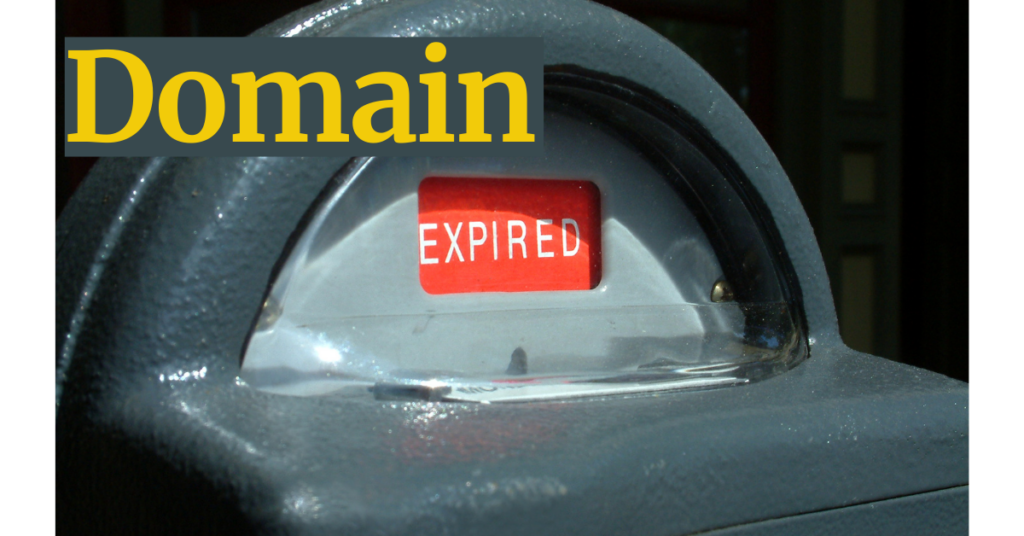
Missing a domain renewal is stressful, but there’s usually a way to fix it. The steps depend on how long the domain has been expired.
1.1 Renewing During the Grace Period (Days 1–30/45)
- Most domains give you a grace period immediately after expiration.
- During this time, you can renew your domain at the standard renewal price.
- Steps to renew:
- Log in to your registrar account (Truehost or your provider).
- Go to the domain management section.
- Select the expired domain.
- Choose the renewal period (1–10 years).
- Complete payment.
- Once paid, your website and email services are usually restored within 24 hours.
1.2 Redeeming a Domain in the Redemption Period (Days 30–75)
- If you missed the grace period, the domain may enter a redemption period.
- The domain is still recoverable, but you must pay a redemption fee in addition to the normal renewal fee (often around $150 USD).
- Steps to redeem:
- Contact your registrar’s support team.
- Request redemption for the expired domain.
- Pay the redemption fee plus the regular renewal fee.
- Wait 72 hours for the domain and services to be fully restored.
- Think of this like paying extra to get back a home you’ve already lost the keys to.
1.3 Prevention vs. Recovery
- Renewing during the grace period is always cheaper and faster. Redemption is expensive and slow.
- To avoid expired domains:
- Enable auto-renewal so the registrar renews it automatically.
- Track expiration dates using calendars or dashboard reminders.
- Keep payment info updated to prevent failed charges.
- Consider a multi-year renewal to lock in ownership and reduce stress.
Losing a domain can break services, cost money, and even let someone else take your address, so timely renewal is far better than trying to recover it later.
How to Renew with Truehost
Renewing a domain with Truehost is straightforward, and knowing the steps keeps your website and email safe.
Step-by-Step Renewal with Truehost
- Log in to your Truehost account: Given it’s where you first registered your domain.
- Go to the domain management section: Here you’ll see all your domains, expiration dates, and renewal options.
- Select the domain you want to renew: Make sure it’s the correct domain, especially if you manage multiple ones.
- Check renewal pricing: Truehost has clear renewal costs:
- .com – $11.40 per year
- .info – $29.27 per year
- .net – $13.62 per year
- .org – $12.23 per year
- .us – $8.87 per year
- .us.com – $21.95 per year
- .us.in – $7.00 per year
- .us.org – $21.95 per year
- Choose the renewal period (1–10 years): Multi-year renewal is a wise choice. It locks in your domain and sometimes saves money.
- Complete payment: Make sure your payment method is up-to-date to avoid failed renewal.
Truehost Registrar Policies:
- Grace Period: Truehost allows a grace period of up to 30 days after expiration. During this time, you can renew at the standard rate.
- Redemption Period: If you miss the grace period, the domain enters redemption. Truehost requires a redemption fee (usually around $150 USD) plus the renewal fee.
- Auto-Renewal: You can enable auto-renewal for all your domains. Truehost processes payments 30 days before expiration, so your domains stay safe even if you forget.
- Bulk Renewal: If you manage many domains, Truehost allows you to renew multiple domains at once.
Tips for Truehost Users:
- Always check your email for renewal reminders.
- Keep your payment information current to prevent accidental expiration.
- Use multi-year renewal or auto-renewal to avoid service disruption.
- Review your registrar dashboard regularly to track all domains and expiration dates.
Special Cases & Considerations
Sometimes renewing a domain isn’t as simple as paying rent. Specific rules and situations can change the process. Knowing these exceptional cases keeps your website and email safe and avoids surprises.
1. TLD-Specific Renewal Rules
- Country-code domains (ccTLDs): Domains like .uk, .de, or .au have their own rules. Some have shorter grace periods or slightly different renewal fees.
- New generic TLDs (gTLDs): Extensions like .tech, .store, or .design may have higher renewal costs than registration fees.
- Premium domains: Special, highly desirable domains may cost much more to renew. Always check the renewal fee before buying.
Think of this like different landlords having different rent rules for their buildings. You need to know what each one requires.
2. Multi-Domain Management
- If you own several domains, Truehost lets you renew multiple domains at once.
- Use a renewal calendar or dashboard reminders to track all expiration dates.
- Managing many domains together saves time and prevents accidental expiration.
3. Domain Transfer & Renewal Timing
- After registering or transferring a domain, ICANN rules lock it for 60 days. You cannot transfer it again during this time.
- When you transfer a domain, it usually adds an extra year to your registration.
- Timing matters: avoid transferring right before expiration, because missed renewals during a transfer can cause problems.
How to Manage Domain Renewals Effectively
Managing your domains is like keeping track of rent for your digital homes. The easier you make it, the less risk your websites or emails disappear.
a) Plan Your Renewals
- Set calendar reminders for each domain’s expiration date.
- Enable auto-renewal to process payment automatically 30 days before expiration.
- Consider multi-year registration to lock in ownership and save money.
- Keep contact information updated so you receive all notices.
b) Manage Your Budget:
- Check renewal fees for each domain ahead of time.
- Compare registrar prices if you manage multiple domains.
- Look for multi-year discounts to save money and reduce stress.
c) Protect Your Domains:
- Use domain privacy services to hide your contact info in WHOIS.
- Enable registrar lock features to prevent unauthorized transfers.
- Review dashboard alerts regularly to make sure auto-renewal and payment info are current.
Treat your domains like valuable property. Missing a renewal can stop your website and email, damage your brand, and even let someone else take your address.
Common Domain Renewal Mistakes to Avoid
Missing a domain name renewal is like forgetting to pay your rent. It can shut down your website, stop your email, and let someone else take your digital home.
Here are the most common mistakes and how to avoid them.
- Outdated Payment Information
- If your credit card or payment method has expired, auto-renewal will fail.
- Fix it: Keep your payment details current in your registrar account.
- Ignoring Renewal Notifications
- Many domain owners ignore emails about upcoming expiration.
- Fix it: Use calendar reminders, app alerts, or dashboard notifications to track dates.
- Confusing Hosting and Domain Renewal
- Some people think paying for website hosting also renews the domain. It doesn’t.
- Fix it: Always check your domain’s renewal status separately.
- Not Understanding Grace Periods
- Missing the grace period can push your domain into redemption, which is expensive.
- Fix it: Know your registrar’s grace period (usually 30–45 days) and act quickly.
- Assuming Free Domains Stay Free
- Some domains are “free” for the first year but have a cost to renew.
- Fix it: Always check renewal pricing before registering.
Conclusion
Your domain is like your digital home. If you forget to renew it, your website and email can stop working, and someone else could take it. Watch expiration dates, turn on auto-renewal, and keep payment info updated to keep your domain safe. Renewing for multiple years can make things even easier.
Truehost makes it simple to buy, renew, or transfer domains. With clear prices, easy auto-renewal options, and fast support, your online home stays safe. Don’t risk losing your website or email.
Buy your domain, renew it, or transfer it to Truehost today and keep your digital space entirely under your control.
Domain Name Renewal FAQs
You can register a domain or renew it for 1 to 10 years at a time. Longer registrations keep your online home safe without worrying about renewing every year.
If you forget to renew, your website and emails stop working. After a grace period, the domain could go into redemption, and someone else can buy it.
Most registrars, including Truehost, don’t refund domain renewals once paid. That’s why it’s smart to double-check before renewing.
Check your registrar dashboard or email notifications. Registrars send alerts 1 month and 1 week before expiration.
No. Domain renewal keeps your website address active, while hosting renewal keeps your website files and email running on the server.
Yes, you can renew an expired domain. If it’s in the grace period, you can renew at the regular price. If it’s in redemption, you’ll pay a fee plus the renewal cost.
To redeem a domain name will cost you around $150 USD, in addition to the normal renewal price.
During the grace period, you can renew your domain at the normal price, while the redemption period comes after and lets you recover it for an extra cost and a few days’ wait.
Yes. Once the redemption period and pending delete phase end, the domain becomes available for public registration.
Yes. Auto-renewal ensures your domain is renewed before expiration, avoiding downtime and extra fees.